Elon Musk Baited Into $80M Memecoin Trap — Here's How It Unfolded
Key Takeaways
- •Hackers compromised the X account of Neuralink executive Shivon Zilis to trick Elon Musk into replying to a post promoting the fraudulent SLINK memecoin.
- •SLINK's market capitalization surged past $80 million within hours of Musk's emoji reply before crashing by more than 95% to below $1 million.
- •Four whale wallets accumulated losses exceeding $807,000, while the top 30 insider wallets — likely connected to the hacker — collectively profited $4.70 million, a return of more than 1,200x.
- •Podcaster Ryan Tanaka initially flagged the post as likely compromised, and investigations after the crash confirmed the account had been hacked.
- •The rug pull compounds crypto scam losses that already included $2 million stolen in technical DeFi hacks during the first five days of September.
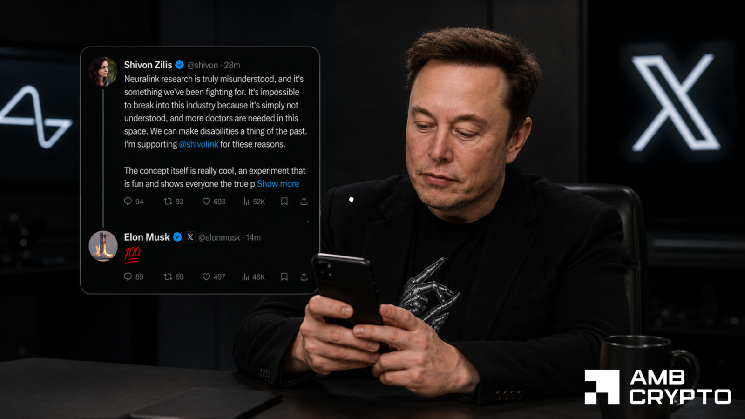
Crypto scams are becoming increasingly difficult to contain, with social engineering emerging as one of the most effective attack vectors. In the latest incident, Elon Musk was baited into promoting a fraudulent memecoin token, SLINK, that was linked to his company, Neuralink.
The token, Shivolink [SLINK], surged past $80 million in market capitalization within hours before crashing by more than 95%. Here is how the events unfolded.
How Musk was socially engineered into promoting SLINK
The X account of Shivon Zilis — a Neuralink executive and the mother of Elon Musk's four children — was compromised. Using the hijacked account, the hacker published a post that did not immediately appear to be crypto-related, an effective social-engineering tactic designed to provoke a reaction from Musk.
Ryan Tanaka, a podcaster who covers Neuralink, was among the first to flag the compromise, writing: "This post below is very likely compromised."
However, after Musk replied to the post with an emoji, Tanaka acknowledged he had been wrong — a response that appeared to signal Musk's backing of the project. The memecoin then rallied aggressively on the back of that reply.
The tactic is not new: Musk's public enthusiasm for cryptocurrencies such as Dogecoin has repeatedly made him a target for scammers, and tokens referencing him or his companies have a history of launching around his posts. What set this incident apart is that the scammers did not need to impersonate Musk directly — by hijacking the account of someone close to him, they elicited a genuine reply from Musk himself, lending the token apparent legitimacy no fake account could match.
The rally proved short-lived. The aftermath revealed a classic pump-and-dump scheme: the post on Zilis's account was deleted, and the coin's market cap collapsed below $1 million — a fall of more than 95%. The crash vindicated Tanaka's original suspicion, and subsequent investigations confirmed the compromise. The YouTuber later wrote:
"This was a deep hack that appeared real. If you are ever trading a crypto coin, please be very careful."
The rug pull adds another layer to the crypto scam problem, coming on top of technical DeFi hacks that had already cost $2 million in the first five days of September.
FOMO traders absorb losses as insiders profit
Musk's emoji reply lured many traders into buying the memecoin out of fear of missing out. According to on-chain analytics firm Onchain Lens, four whales were sitting on losses exceeding $807,000 — only a fraction of the total damage, as most traders lost money while SLINK's market cap fell by more than $80 million.
Meanwhile, the top 30 insider wallets — likely connected to the hacker — turned a profit. These wallets bought SLINK tokens early and sold quickly, collectively making $4.70 million, a return equivalent to more than 1,200x.
This asymmetry — insiders pre-positioned before the hype, retail buyers arriving after — is a hallmark of pump-and-dump schemes, which thrive on low-liquidity memecoins where a handful of wallets can drive and then exit a price spike.
The episode is a reminder for the crypto community to remain cautious and verify information through multiple sources before committing funds to any project. For public figures and their inner circles, it also underscores that even a single reply from a verified account can be weaponized — and that account security for family members and colleagues is part of the attack surface.
Source: AMB Crypto
