Elon Musk Declares AI Has Become Superhuman in Many Areas, Says Humanity Is Entering the Singularity
Key Takeaways
- •Elon Musk stated that AI already surpasses human performance in many areas and asserted that humanity has entered the technological singularity, a timeline considerably shorter than many mainstream researchers have publicly endorsed.
- •While AI systems exceed human capabilities in specialized tasks such as image classification, language translation, and protein structure prediction, most experts emphasize that current technology remains narrow rather than possessing general human-level intelligence.
- •The definitions and expected timelines for both the singularity and Artificial General Intelligence remain contested among researchers, with some predicting AGI within years and others arguing major scientific breakthroughs are still required.
- •Governments are developing regulatory frameworks to address AI risks, including the European Union's AI Act agreed upon in 2024 and U.S. executive orders establishing safety standards for the most powerful AI systems.
- •Enterprise investment in AI infrastructure continues to accelerate across nearly every major economic sector, driving record spending on data centers, semiconductors, GPUs, and cloud computing resources.
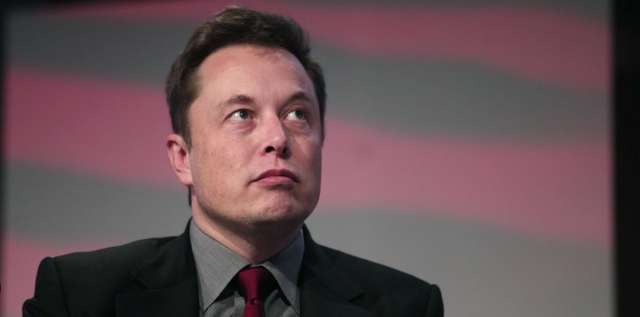
Elon Musk Declares AI Has Become Superhuman in Many Areas, Says Humanity Is Entering the Singularity
Speaking about the current trajectory of artificial intelligence development, Elon Musk stated that "AI is already superhuman at many things. We are in the singularity." His remarks reflect a perspective increasingly shared among certain technology leaders who maintain that AI progress has outpaced earlier projections.
The statement rapidly drew widespread attention across both the technology and cryptocurrency communities. It was highlighted by the X account of Cointelegraph (source post). Beyond social media discussion, Musk's comments contribute to an ongoing broader debate among researchers, policymakers, and industry executives regarding how advanced artificial intelligence could reshape economies, businesses, and everyday life.
Understanding the Singularity
The technological singularity refers to a hypothetical point at which artificial intelligence surpasses human intelligence across a broad range of cognitive tasks, potentially triggering rapid and unpredictable technological progress. The concept was popularized by mathematician and science fiction author Vernor Vinge in the 1990s and later expanded by inventor and futurist Ray Kurzweil, who has forecasted a singularity-era milestone around 2045. Although experts differ in how they define the term, it generally describes an era in which increasingly capable AI systems begin improving themselves or substantially accelerating scientific and economic development.
For decades, the singularity remained a largely theoretical concept. Today, advances in generative AI, robotics, machine learning, and autonomous systems have moved the discussion closer to mainstream public debate. Musk's latest remarks suggest he believes aspects of that transition are already underway—a notably shorter timeline than many mainstream researchers have publicly endorsed.
AI's Superhuman Capabilities in Specialized Tasks
Many researchers agree that modern AI systems already surpass human performance in several narrowly defined activities. These include:
- Pattern recognition
- Large-scale data analysis
- Image classification
- Language translation
- Strategic game playing
- Protein structure prediction
- Certain forms of software development
In many of these applications, AI systems demonstrate greater speed, consistency, and scalability than human experts. However, most specialists also emphasize that today's AI remains specialized rather than possessing general human-level intelligence across every cognitive domain. The distinction matters because superhuman performance in a narrow task—such as classifying images or predicting protein folding—does not imply the kind of broad, flexible reasoning that defines human intelligence.
Accelerated Progress During the AI Boom
Artificial intelligence development has accelerated dramatically over the past several years. Major technology companies continue to invest billions of dollars into AI infrastructure, research, and computing capacity. Leading areas of innovation include:
- Large language models
- Autonomous agents
- Robotics
- Multimodal AI
- Scientific research tools
- Enterprise automation
This pace of innovation has fueled growing discussions about AI's long-term societal impact.
Musk's Long-standing Engagement With AI
Elon Musk has remained one of the technology industry's most prominent voices on artificial intelligence throughout the past decade, expressing both optimism and concern about its development. His involvement includes:
- Founding xAI
- Early support for AI research
- Calls for responsible regulation
- Advocacy for AI safety
- Investment in advanced computing infrastructure
Musk was also an early co-founder of OpenAI in 2015, though he later departed the organization's board citing potential conflicts with his other ventures. He has since positioned xAI as a competitor in the large language model market. Musk has repeatedly argued that artificial intelligence represents one of humanity's most transformative technologies.
AI Is Reshaping Industries Worldwide
Artificial intelligence now plays an increasingly significant role across nearly every major economic sector. Businesses deploy AI to improve:
- Customer service
- Manufacturing
- Financial analysis
- Drug discovery
- Software engineering
- Logistics
- Marketing
- Scientific research
Governments and educational institutions are also expanding AI adoption to enhance operational efficiency and public services.
The Debate Over Artificial General Intelligence
One of the central questions facing AI researchers involves the timeline for achieving Artificial General Intelligence (AGI). AGI refers to an AI system capable of performing nearly any intellectual task at a human level.
Some researchers believe AGI could emerge within years. Others argue that substantial scientific breakthroughs remain necessary before such systems become possible. Musk's comments imply that current AI capabilities already represent an important milestone on that path. The gap between these predictions underscores how the definition of AGI itself remains contested—some define it as matching human performance on all cognitive benchmarks, while others set the bar at autonomous reasoning and learning across unfamiliar domains.
Supporters See Significant Opportunities
Many technology leaders believe advanced AI could unlock substantial economic and scientific benefits. Potential advantages include:
- Medical breakthroughs
- Faster scientific discovery
- Improved education
- Increased productivity
- Enhanced software development
- Climate research
- Space exploration
Advocates argue AI may become one of history's most important drivers of innovation.
Researchers Continue Urging Caution
Despite rapid progress, numerous researchers emphasize the importance of responsible AI development. Areas receiving particular attention include:
- AI safety
- Cybersecurity
- Transparency
- Model alignment
- Privacy
- Ethical governance
Governments worldwide continue evaluating regulatory frameworks designed to encourage innovation while reducing potential risks. The European Union's AI Act, agreed upon in 2024, represents one of the first comprehensive attempts to regulate AI by risk category, while the United States has issued executive orders aimed at establishing safety standards for the most powerful AI systems.
Enterprise Investment Continues to Accelerate
Businesses are increasingly allocating substantial budgets toward AI integration. Enterprise adoption now spans banking, healthcare, manufacturing, retail, transportation, and telecommunications. Organizations view AI as a strategic technology capable of improving efficiency while reducing operational costs, a trend that continues driving record investment across the global technology industry.
Infrastructure Expansion Supports AI Growth
Rapid AI development requires significant computing resources. Technology companies continue investing heavily in:
- Data centers
- Semiconductor manufacturing
- Graphics processing units (GPUs)
- Cloud infrastructure
- High-speed networking
Demand for specialized AI accelerators, particularly GPUs from suppliers such as NVIDIA, has driven record revenues across the semiconductor supply chain and intensified competition among chipmakers to produce next-generation hardware. These investments form the foundation supporting increasingly sophisticated AI systems.
Public Policy Takes on Greater Importance
As AI capabilities expand, governments around the world continue discussing regulatory approaches. Key policy priorities include consumer protection, national security, competition, intellectual property, workforce transition, and responsible innovation. Balancing technological progress with appropriate oversight remains one of the most significant policy challenges facing regulators.
Looking Ahead
Artificial intelligence continues advancing at a pace few experts predicted only a few years ago. Future developments may include more capable AI assistants, autonomous scientific research, advanced robotics, personalized education, improved healthcare diagnostics, and greater workplace automation.
Whether or not humanity has already entered the singularity remains a matter of ongoing debate, but few experts dispute that AI is transforming the global economy.
Elon Musk's assertion that artificial intelligence is already superhuman in many areas and that humanity has entered the technological singularity reflects the growing confidence among some technology leaders that AI development has reached a historic turning point. While opinions differ regarding the exact meaning and timing of the singularity, the rapid progress of artificial intelligence is reshaping industries, accelerating innovation, and raising significant questions about the future relationship between humans and intelligent machines.

