Journalist Warns of Growing Number of Election Deniers Seeking Offices That Oversee U.S. Elections
Key Takeaways
- •At least 25 individuals who denied or questioned the 2020 election results are currently working within county election systems across the United States.
- •Thirty-two election deniers are running for statewide offices that oversee elections, including 20 for governor, 10 for secretary of state, and nine for attorney general.
- •The 2020 presidential election results were upheld by more than 60 court rulings at state and federal levels, including by judges appointed by both Republican and Democratic presidents.
- •Statewide offices such as governor, secretary of state, and attorney general hold substantive powers over election administration, certification, and enforcement of election laws.
- •At least 102 election deniers have won primaries for U.S. House and Senate seats and will appear on ballots in November.
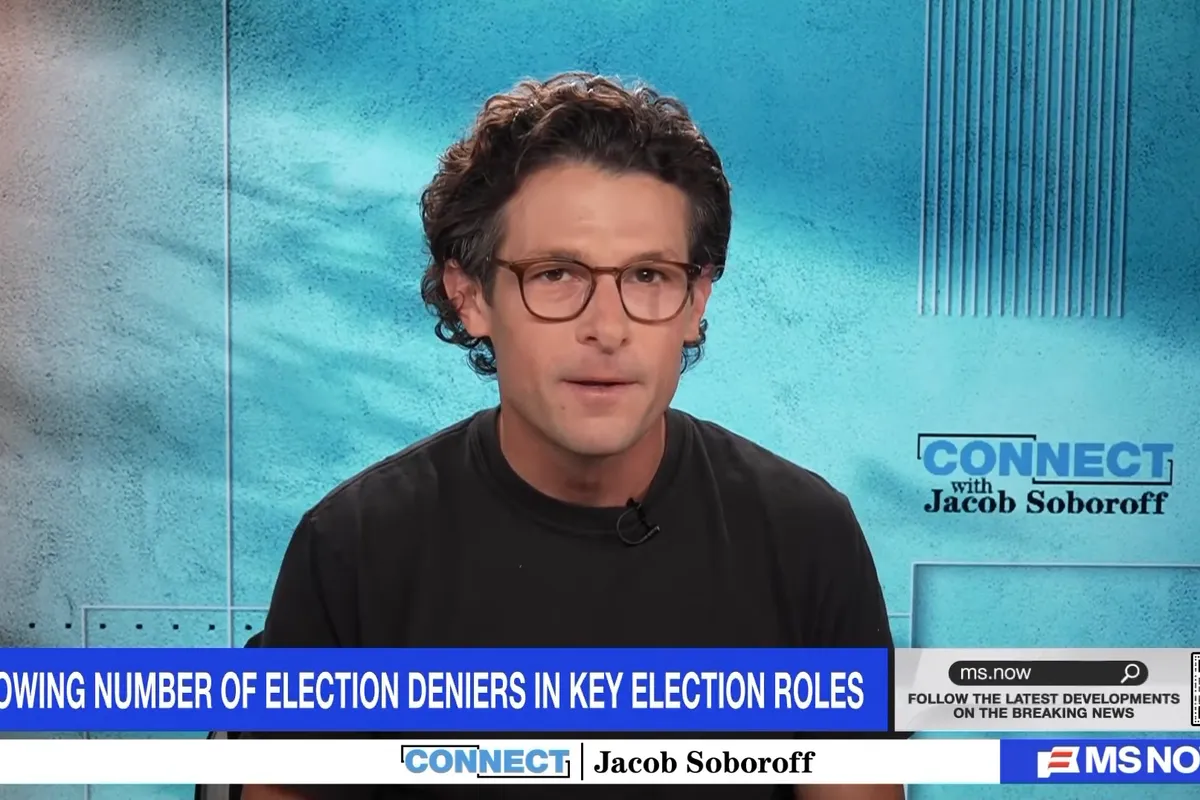
MSNBC journalist Jacob Soboroff issued a stark warning on Saturday about the increasing number of election deniers running for offices that would grant them direct authority over how future elections are administered and certified in the United States.
Drawing on data from the nonpartisan organization Voting Rights Lab, Soboroff noted that at least 25 election deniers are already working within county election systems across the country. He cautioned that the problem is poised to grow significantly heading into this year's elections.
The term "election denier" refers to individuals who have publicly questioned, rejected, or promoted unsupported conspiracies about the outcome of the 2020 U.S. presidential election, despite numerous court rulings, audits, and reviews that upheld the results as legitimate. More than 60 lawsuits challenging the 2020 results were dismissed or ruled against by courts at both the state and federal levels, including by judges appointed by both Republican and Democratic presidents.
"According to States United Action, this year, there are 92 races for statewide offices that oversee elections. That's governor, attorney general and secretary of state. Of those races, 32 election deniers are vying for positions in which they would be overseeing elections," Soboroff said.
"Let me say that one more time: 32 people who have questioned, or denied, or spread conspiracies about the 2020 election – which has been litigated over, and over, and over again – are running for positions that would oversee and administer future elections. This is a mayday situation, you guys."
Soboroff broke down the figures further, noting that 20 election deniers are running for governor, 10 for secretary of state, and nine for attorney general, three of whom are incumbents currently holding those offices.
Governors in most U.S. states play a role in appointing election officials and signing election-related legislation into law. Secretaries of state typically serve as the chief election officers in their states, responsible for certifying election results and overseeing voting procedures. Attorneys general are responsible for investigating election-related crimes and defending state election laws in court.
"These are not ceremonial offices," Soboroff said. "Governors appoint election officials. Secretaries of state oversee election administration. Attorney generals investigate election-related crimes and defend election laws in court. This is scary stuff. I am not exaggerating."
The United States runs one of the most decentralized election systems among democracies, with administration split across more than 10,000 local election jurisdictions operating under 50 distinct sets of state laws. That architecture means the individuals filling these statewide and county-level offices can shape everything from voter roll maintenance and ballot design to the timeline and procedures for certifying results.
Soboroff added that the trend extends well beyond statewide offices. According to his analysis, at least 102 election deniers have already won primaries for U.S. House and Senate seats and will appear on ballots in November.
"And it does not stop there," Soboroff said.

