Trump’s Backlash May Be Reshaping the Southern Political Map
Key Takeaways
- •The author reports that Hispanic and Black voters in the American South are turning out in large numbers, driven by high prices and by backlash against President Trump and the Republican Party.
- •According to the analysis, control of the Senate will hinge largely on these voters, and the South and Sun Belt are positioned to replace the Rust Belt as the route to the presidency.
- •The article argues that Trump's expansion of the Republican base among low-propensity voters may be eroding, with a Trump staffer telling The New Yorker that the party squandered a generational opportunity.
- •The author contends that the Supreme Court's actions making the Voting Rights Act unenforceable may have awakened Black voters described as a sleeping giant in states including Texas, Florida, South Carolina and Tennessee.
- •The piece concludes that a decisive Democratic win, as polling and early-vote totals suggest, would create an imperative to pursue accountability and institutional reforms, beginning with the Supreme Court and extending to adding states.
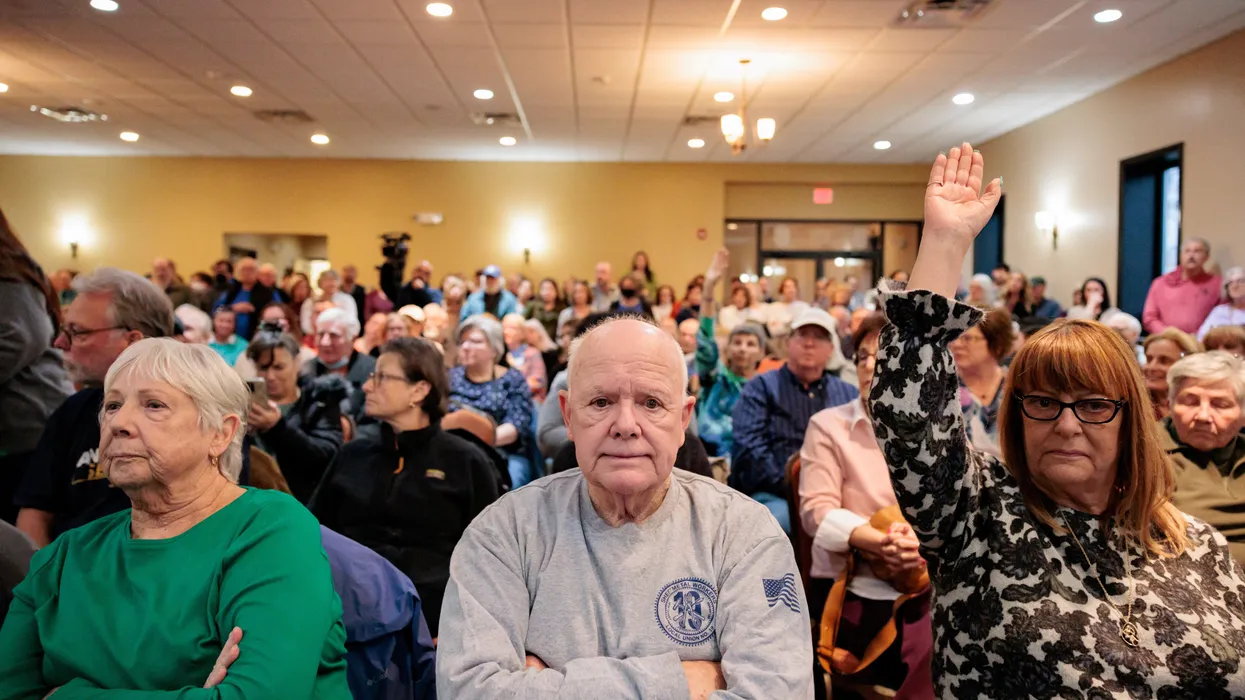
It is time for Democrats to revitalize democracy, writes the author. Because it is Election Day, the author notes that the analysis could be overtaken by events before the day ends, although they do not expect that to happen.
The author argues that Democrats with national ambitions should closely watch Hispanic and Black voters in the American South and shape their presidential priorities around what those voters say they want. Other Democrats, particularly liberal white supporters, should do the same, the author writes.
Hispanic and Black voters are turning out in large numbers, according to the article, driven by high prices and, more importantly, by what the author describes as the political failures of Donald Trump and the Republican Party. One group, the author says, has been radicalized by a lawless president who unleashed a secret police force, identified as ICE. The other has been radicalized by a Supreme Court that, in the author’s view, gutted the Voting Rights Act. These voters will largely determine control of the Senate, the author writes.
Inflation remains too high and wages too low, but the election is about more than the economy, according to the article. Over two years, Trump and the GOP have mounted what the author calls an assault on freedom, the Constitution, the Bill of Rights and the rule of law. Voters most exposed to those threats are responding by voting for their survival and may continue doing so into the next election cycle. Accountability, voting rights and court reform will be as important as affordability, the author argues.
The author also sees an opportunity for an ambitious Democrat in the coalition Trump built. Across three presidential elections, Trump brought people into politics who had not typically participated. He expanded the Republican base by attracting “low-propensity voters,” many of whom were drawn in by MAGA. But in the aftermath of war, inflation and corruption, those voters may be leaving, raising concerns among party elites that they will return to their pre-Trump political habits.
A Trump staffer told The New Yorker: “We took over and we just kind of f------ botched it. The Democrats didn’t create some b------. We had a generational opportunity and we basically squandered it. Look at the coalition we had in 2024. Those people might not ever vote again in their lives.”
The author says Trump has therefore created two opportunities for Democrats. He has put many infrequent voters back to sleep while awakening what the author calls a sleeping giant in the South, where Black and brown voters are disproportionately young. The article compares the potential backlash against Trump with the reaction to former California Gov. Pete Wilson’s anti-Hispanic policies in the 1990s. The Supreme Court’s treatment of voting rights, the author adds, may have triggered a second backlash among Black voters.
“A lot of people are going to wake up Wednesday and realize we're in a new era of American politics,” political scientist Joshua Zingher told the author in an interview.
“Joe Biden didn't or couldn't attempt major institutional reforms and we ended up in a worse place because of it,” Zingher said. “The cycle will continue unless the Democrats actively break it, which starts with dealing with the Supreme Court but includes adding states and other institutional reforms. There is no path forward where things get better without renewing and revitalizing our democracy, and they owe it to their voters to try.”
The author asks whether Trump is doing to the United States what Wilson did to California. That process took years in California, but the author believes Trump may be accelerating it in the short term. Over the long term, however, the author does not expect the same pattern to continue indefinitely.
The backlash among Latino and Asian voters against ICE brutality, racism and what the author calls self-inflicted economic damage shaped 2026 and will remain relevant in 2028. Over a longer period, however, these large and growing groups are likely to display greater political diversity, as the 2016-2024 period suggests. The more significant effect of Trump may be on where the parties obtain their votes. The South and the Sun Belt, the author writes, are positioned to replace the Rust Belt as the route to the presidency.
The article then turns to Black voters, whom the author describes as a sleeping giant in states including Texas, South Carolina, Florida and Tennessee. The author asks whether the assault on the Voting Rights Act has awakened that group.
The long-term consequences of the Supreme Court making the VRA unenforceable are unclear, the author says. Southern politics had been stable, with guaranteed Black representation traded for Republican control of statewide offices. In the author’s assessment, the Supreme Court ended that arrangement, and it is not clear what will replace it.
The changes are taking place as the South’s population undergoes major shifts through in-migration, particularly as African Americans from the North move to places such as Atlanta and Houston. Georgia illustrates the political consequences, according to the article. The VRA created uncompetitive districts with long-serving incumbents, many of them very old. Those districts will disappear in most places, the author predicts, leaving the central question of how state party systems will respond to changing populations and electoral rules.
The author argues that the movement among Hispanic and Black voters should be a national political story but has received limited attention. One reason, the article says, is that the voices of marginalized groups are underrepresented in elite media. The author cites the previous day’s coverage of Haley Stevens as an example, arguing that political reporters are more interested in palace intrigue and conflicts among elites than in structural changes affecting demographic groups outside those media circles.
More broadly, the author says Americans learn in school that the country is a democracy and may therefore overlook major violations of democratic principles occurring in plain sight. American history and politics have been shaped by conflicts over minority rights, particularly the rights of African Americans, and the current period is no exception. In the author’s estimation, the Supreme Court’s erosion of the VRA “via 1,000 cuts” is by far the most consequential action it has taken in the 21st century, yet it receives less attention than it should.
The article also asks what will happen in Texas and whether the political upheaval will last through at least 2028. The author expects James Talarico to win and describes the other statewide races as too close to call. It is uncertain whether the potential wave will be large enough to move a significant number of state House seats.
Ken Paxton’s defeat could be dismissed because of what the author calls his record of “cartoon villain corruption.” But a loss by Gov. Greg Abbott to an underfunded Latina candidate would produce a psychological shock across the political spectrum, the author writes. Beyond Texas, races that were not considered important enough to poll could also produce unexpected results. The author quotes a friend’s observation that “our imaginations are insufficient” and argues that expectations for the election have been too limited.
If Hispanic and Black voters are using their ballots to punish Republicans, the author argues, Democrats would have a basis to pursue accountability, including impeachments, and institutional reforms, including adding states.
Democracy, or its absence, forms the backdrop to Trump’s second presidency, and Election Day may make that subtext explicit, the author writes. Ethnic and racial minority groups are described as “the canaries in the coal mine” because their socially vulnerable position means they experience the effects of democratic erosion first. Without action, however, the consequences will affect people across the social hierarchy.
If Democrats win decisively, as polling and early-vote totals suggest, they will have an imperative to pursue accountability and reform, the author concludes. Biden did not, or could not, pursue major institutional reforms, leaving the country in a worse position. The cycle will continue unless Democrats actively break it, beginning with the Supreme Court and extending to statehood and other institutional changes. The author argues that there is no path to improvement without renewing and revitalizing American democracy, and that Democrats owe their voters an effort to do so.
Source: Alternet

