El Salvador's Sivar Payments App Plans Dollar-Backed Stablecoin Remittances
Key Takeaways
- •Sivar, an El Salvador-based payments app, intends to process remittances with dollar-backed stablecoins, but has not confirmed a launch date, partner network, or specific token.
- •El Salvador is targeting roughly $9 billion in annual transfer flows using stablecoins rather than bitcoin, an amount exceeding a fifth of its gross domestic product.
- •The country was the first to adopt bitcoin as legal tender in 2021 but scaled back central parts of that policy in early 2025 under a financing agreement with the International Monetary Fund.
- •The global average cost of sending money stands at about 6 percent of the amount transferred, double the 3 percent target set in the United Nations Sustainable Development Goals.
- •Key unresolved questions include how users convert between local currency and stablecoins, who holds custody of funds during transfers, applicable fees, and the added regulatory scrutiny from the IMF.
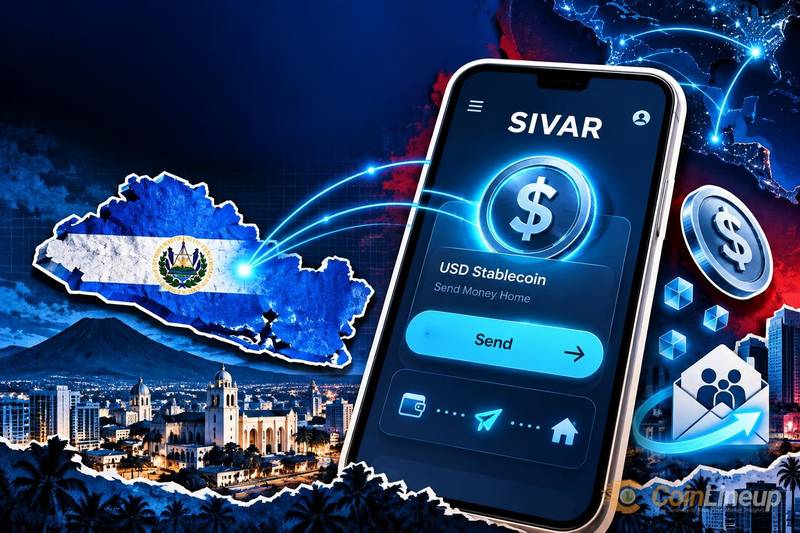
El Salvador-based payments app Sivar is planning to process remittances using dollar-backed stablecoins, adding a digital currency layer to one of the country's most vital financial lifelines. The initiative remains a plan rather than a completed rollout: no launch date, partner network, or specific stablecoin has been confirmed.
Sivar's Plan to Use Dollar-Backed Stablecoins for Remittances
Sivar is a payments application based in El Salvador that aims to simplify sending and receiving money. Under its reported plan, the app would process remittances using dollar-backed stablecoins — digital tokens pegged to the value of the US dollar. If implemented, the feature would place digital dollars at the center of a payment flow that many Salvadoran households depend on.
The proposal reflects a broader shift in El Salvador's approach to crypto. According to reporting by CryptoSlate, the country has set its sights on $9 billion in annual transfer flows and is actively exploring stablecoins, rather than bitcoin, as the instrument of choice for that goal. Inflows of that size amount to more than a fifth of El Salvador's gross domestic product — among the highest shares recorded worldwide, according to World Bank data — a measure of how much economic weight rides on that payment flow. El Salvador's standing as one of the world's highest-ranked countries for crypto adoption makes the pivot one to track.
The country was also the first in the world to adopt bitcoin as legal tender, doing so in 2021, before scaling back central parts of that policy in early 2025 under a financing agreement with the International Monetary Fund, which had long urged limits on bitcoin's role in the economy. That episode forms part of the backdrop against which any new digital-asset payment product in El Salvador will be judged.
So far, the announcement identifies direction rather than detail. Sivar has not disclosed a partner network, a rollout timeline, or a named stablecoin.
Why Stablecoins Could Matter for Cross-Border Payments
A dollar-backed stablecoin is a digital token designed to hold a value of one US dollar. Circle, the issuer of the widely used USD Coin (USDC), describes the asset as a digital dollar that moves on blockchain rails rather than through traditional bank wires. The peg is a natural fit for El Salvador, which has used the US dollar as its official currency since 2001 — a dollar-backed token would simply mirror the money many households already earn and spend.
For remittance users, that stability matters. People sending money home to family need the amount to arrive predictably, and a token tied to the dollar removes the price swings that make assets like bitcoin unsuitable for day-to-day transfers. The goal is predictability of value rather than appreciation.
Routed through an app like Sivar, a stablecoin transfer could move as a digital token from sender to recipient, with conversion to local currency taking place at the edges of the transaction. Whether that translates into lower fees or faster settlement depends entirely on how Sivar builds and prices the service — a live question in a sector where the World Bank has long measured the global average cost of sending money at around 6 percent of the amount transferred, double the 3 percent target set in the United Nations Sustainable Development Goals. The growing regulatory infrastructure around dollar-pegged stablecoins suggests the broader ecosystem is maturing, which could support products like Sivar's over time.
What to Watch as Sivar Develops Its Remittance Offering
Several critical details remain unknown. Sivar has not publicly named which stablecoin it intends to use, when the feature will be available to users, or which remittance corridors it will serve first.
Key implementation questions include how users convert between local currency and the stablecoin, who holds custody of funds during a transfer, what fees apply, and what consumer protections exist if something goes wrong. For people who rely on remittances to cover rent, food, and bills, these questions matter more than the underlying technology.
El Salvador's ongoing relationship with international financial institutions adds another layer to watch. Regulatory approvals, compliance requirements, and licensing across sending and receiving countries will all shape whether a stablecoin remittance product can reach the scale needed to serve everyday users. The International Monetary Fund's close attention to El Salvador's crypto policies means any new stablecoin product will face scrutiny beyond domestic regulators.
For anyone in El Salvador who receives money from abroad, the practical test is straightforward: does the money arrive in full, on time, and at a fair cost? Sivar's stablecoin plan is worth watching because it frames that goal in terms of dollar stability rather than crypto speculation. Execution will determine whether it delivers.
Disclaimer: This article is for informational purposes only and does not constitute financial or investment advice. Cryptocurrency and digital asset markets carry significant risk. Always research thoroughly before making financial decisions.

