Eintracht Frankfurt Pays Triple Market Value for Brazilian Defender Otávio — No Crypto Involved
Key Takeaways
- •Eintracht Frankfurt paid €4.5 million to acquire Otávio from CF Estrela Amadora, roughly triple the defender's estimated market value of approximately €1.5 million.
- •Estrela Amadora realized a substantial profit on a player they signed less than a year ago, highlighting the role of smaller Portuguese clubs in the Brazil-to-Europe talent pipeline.
- •Frankfurt's acquisition aligns with a Bundesliga-wide culture of identifying and developing young centre-backs for competitive use and potential future transfer gains.
- •Despite cryptocurrency's prominent marketing presence in European football, the transfer involved no digital assets and was processed entirely through traditional banking and FIFA's Transfer Matching System.
- •The gap between crypto's sponsorship footprint in football and its absence from actual transfer mechanics indicates that blockchain adoption has not penetrated the sport's core operational processes.
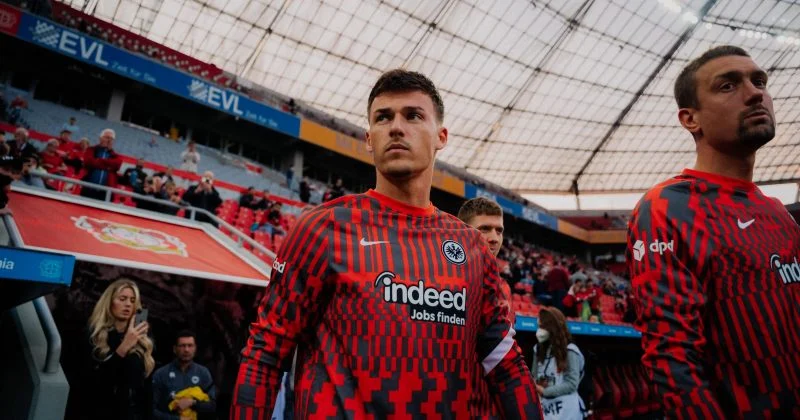
Eintracht Frankfurt has completed the signing of 20-year-old Brazilian centre-back Otávio Manoel Galdino Fernandes, commonly known as Otávio, from Portuguese Primeira Liga club CF Estrela Amadora for €4.5 million — roughly three times his estimated market value of approximately €1.5 million.
Transfer Details
Born November 25, 2005, Otávio joined Estrela Amadora in October 2025 on a contract running through 2029. Despite his limited tenure in Portugal's top flight, Frankfurt opted to pay a significant premium above the defender's assessed market valuation.
For Estrela Amadora, the deal represents a substantial return on a player acquired less than a year ago. The Portuguese club effectively functioned as a developmental stepping stone, providing Otávio with European league experience before facilitating his move to a higher-profile competition in Germany's Bundesliga. This pathway — Brazilian talent moving through Portuguese football before landing at a larger European league — has become one of the most established talent pipelines in global football, with clubs like Benfica, Porto, and Sporting historically profiting from the model and smaller Primeira Liga sides increasingly participating in it.
For Frankfurt, the investment aligns with a broader Bundesliga culture of identifying and developing young defenders for both competitive contribution and future transfer value. The club has regularly competed in European competition, making squad depth at centre-back a recurring priority.
The Conspicuous Absence of Cryptocurrency
What stands out about this transaction is its entirely conventional nature. In a sporting landscape increasingly saturated with fan tokens, NFT-based ticketing, blockchain transfer platforms, and crypto exchange sponsorships, this deal was executed without any involvement from the digital asset sector.
No tokens were issued. No smart contracts were deployed. No cryptocurrency exchange branding accompanied the official announcement.
This is particularly noteworthy given that European football has emerged as one of the cryptocurrency industry's most aggressively contested marketing arenas. Clubs across the Premier League, La Liga, and Serie A have entered into sponsorship agreements valued at hundreds of millions with crypto exchanges and Web3 platforms. Socios, through its Chiliz-powered fan token platform, has established partnerships with dozens of prominent clubs. Crypto.com, Coinbase, and the now-defunct FTX have all competed for stadium naming rights and jersey sponsorships.
Nevertheless, the fundamental mechanics of player transfers remain firmly anchored in traditional financial infrastructure. Deals continue to be processed through conventional banking systems, negotiated by licensed agents, and finalized using established administrative procedures overseen by FIFA's Transfer Matching System, which requires international transfers to route through affiliated banks and documented regulatory channels.
The disparity between cryptocurrency's prominent marketing footprint in football and its near-total absence from the sport's core operational processes — the actual business of buying and selling players — remains a revealing indicator of where blockchain adoption genuinely stands within established traditional industries. While fan engagement and sponsorship have proven receptive entry points for crypto brands, the regulatory, legal, and financial frameworks governing transfers have shown little inclination to migrate on-chain.

