DuckDuckGo's 'Normal F***ing Sunglasses' Sell Out in Under a Week
Key Takeaways
- •DuckDuckGo sold out the first production run of its technology-free sunglasses, a $35 collaboration with Knockaround that launched on July 30, within under a week.
- •The glasses contain no camera, microphone, AI, battery, or any electronics, and are positioned as a privacy-conscious alternative to smart glasses from Meta and Google.
- •Meta's Ray-Ban smart glasses have faced a class action lawsuit, a Texas Attorney General investigation, event bans, and criticism over covert filming, yet continue to see strong commercial demand.
- •Approximately 90% of DuckDuckGo users polled opposed integrating AI into search results, prompting the company to move generative AI to a separate opt-in page.
- •Traffic to DuckDuckGo's no-AI search page tripled after Google rebuilt its search engine around AI-generated answers and has remained 84% above baseline levels since.
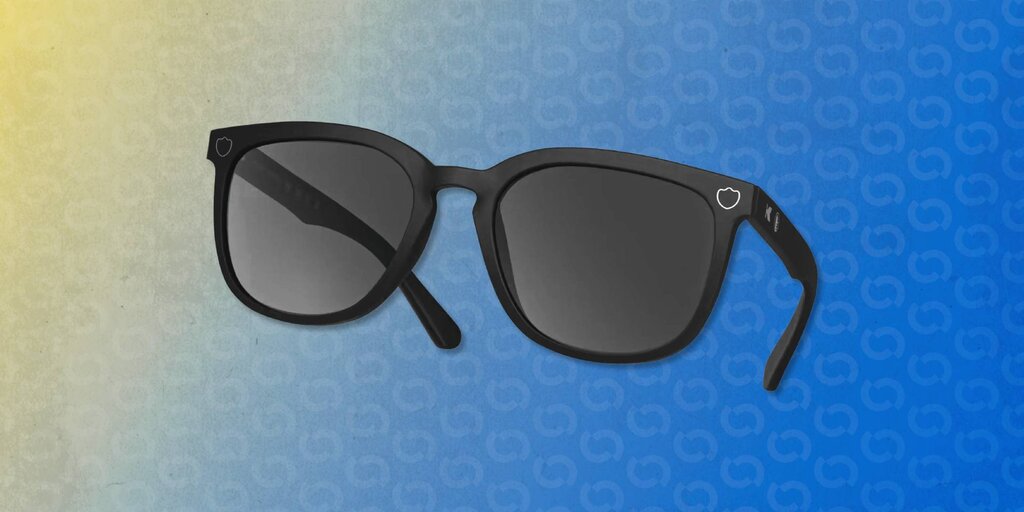
Privacy-focused search company DuckDuckGo has sold out of its first production run of "Normal F***ing Sunglasses"—a product whose defining feature is the complete absence of technology—in under a week.
The sunglasses, a collaboration with San Diego eyewear brand Knockaround, went on sale July 30 priced at $35. The product page now confirms the initial batch has sold out and opens pre-orders for a second run. DuckDuckGo told TechSpot that a significant share of inventory had moved but that it was too early to provide full sales figures.
Built on Knockaround's Paso Robles frame in matte black with a blackout finish, the glasses feature polarized lenses with UV400 protection, FDA-compliant impact resistance, and a debossed hard case. The product listing is emphatic about what has been omitted: "No camera, no microphone, no AI, no battery, no electronics of any kind."
Accordingly, the glasses tout an infinite charge life, a "seamless offline mode," "zero notifications guaranteed," and 0% surveillance risk.
No camera. No AI. Just Normal Sunglasses. From DuckDuckGo x @Knockaround. (Yes, these are actually real. Get a pair here: ) pic.twitter.com/TU5C81ls2 — DuckDuckGo (@DuckDuckGo) July 30, 2026
A jab at Meta and Google smart glasses
The launch comes amid a wave of privacy concerns surrounding camera-equipped smart glasses from Meta and Google. On launch day, DuckDuckGo cited tech journalist Tatum Hunter, who commented that "examples of people using smart glasses in unethical and frightening ways keep piling up," referencing incidents of harassment, inappropriate use, and broader privacy issues.
Yes, we made our own (camera-free) wearable. But there's a deeper reason we think camera-enabled glasses deserve serious pushback. Meta and Google smart glasses open the door to a host of frightening privacy problems. Hands-free recording isn't worth the risks to our safety and… pic.twitter.com/bU32f7hcKY — DuckDuckGo (@DuckDuckGo) July 30, 2026
Meta's Ray-Ban smart glasses have attracted particular criticism online, with a growing number of detractors labeling them "pervert glasses." A BBC investigation in January found that women were being covertly filmed, with clips subsequently posted to TikTok. Swedish reporting in February revealed that contractors training Meta's AI had reviewed footage of people undressing and using bathrooms.
The backlash has escalated across multiple fronts. A class action lawsuit was filed in March. In April, the ACLU and 75 other organizations issued a statement calling the addition of facial recognition "a red line society must not cross." In May, Texas Attorney General Ken Paxton launched an investigation into the technology. Both DEF CON and Comic Con organiser Monopoly Events have banned the devices from their events.
Yet the same period has seen Meta's Ray-Ban smart glasses become a rare hardware hit for the company, with Meta and Luxottica repeatedly reporting strong demand and expanding the product line into new frame styles and markets. Google, meanwhile, has confirmed partnerships with eyewear brands including Gentle Monster and Warby Parker to build Android-based smart glasses. The tension between accelerating adoption and intensifying scrutiny is exactly the opening DuckDuckGo has seized.
DuckDuckGo's broader anti-AI stance
The sunglasses fit into DuckDuckGo's year-long effort to position itself against the tech industry's AI defaults. The company polled its own users on whether they wanted AI results integrated into search; roughly nine in ten said no. Generative AI now resides on a separate opt-in page rather than appearing in main search results.
Marketing the absence of AI has proven to be a viable business strategy for the company. Traffic to its no-AI search page tripled after Google rebuilt its search engine around AI-generated answers in May and has since remained 84% above baseline levels. That surge prompted DuckDuckGo to release No-AI extensions for both Chrome and Firefox. While rival search engines and browser makers have continued deepening AI integration—Google's AI Overviews, Microsoft's Copilot, and Apple's Apple Intelligence among them—DuckDuckGo's growth signals a measurable audience for explicitly opt-out products, and the sunglasses extend that brand positioning into physical merchandise for the first time.

