Dry Weather and Uneven Rainfall Reduce Michigan Corn Yield Potential
Key Takeaways
- •Michigan corn conditions dropped from the nation's highest rating in June to about 60 percent good to excellent due to sporadic rainfall.
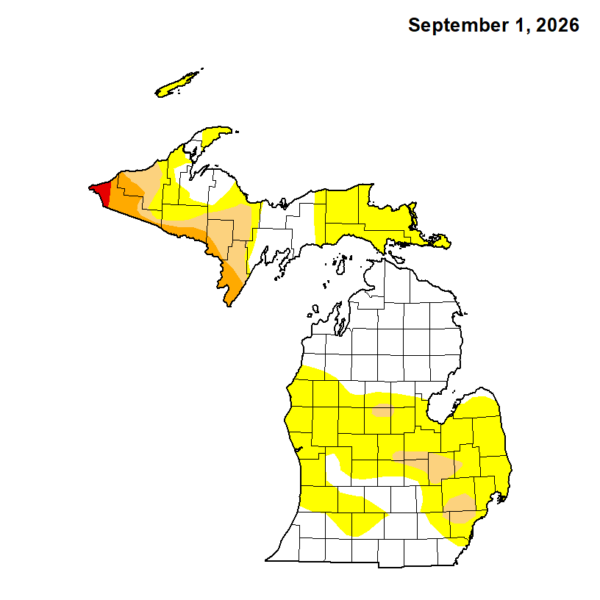
- •The U.S. Drought Monitor slightly expanded moderate drought areas in Michigan, with more than half the state experiencing some form of dry conditions concentrated in the Upper Peninsula and central Lower Peninsula.
- •Michigan State Climatologist Jeff Andresen said Midwest storms will bring a short-term cool-off, but broader outlooks favor continued unusual warmth.
- •Damage from dry conditions during earlier reproductive stages is largely locked in, though late-season rains can still support kernel fill before the late September-to-October harvest.
- •Michigan typically ranks among the top corn-producing states east of the Mississippi River, so statewide weather stress could meaningfully affect regional supply.
Dry conditions and inconsistent rainfall during the growing season have reduced corn yield potential in Michigan, according to growers and climate officials in the state.
Michigan farmer Matt Frostic told Brownfield that sporadic rain has cut the top end off his corn yield expectations. “In June, I think we had the highest rating corn conditions in the nation, and then we’ve went from that down to I think around 60 percent good to excellent,” he said. “The weather’s kind of taken its toll.”
Frostic said recent rains have helped recharge some soils, but pockets of struggling crops remain across his area. With corn typically reaching maturity and beginning harvest in late September into October in Michigan, late-season rains can still support kernel fill in some fields, though damage during earlier reproductive stages is largely locked in.
Michigan State Climatologist Jeff Andresen said storm systems moving across the Midwest through the Labor Day weekend are expected to bring a short-term cool-off. However, broader outlooks point to continued unusual warmth. “Much of the lower 48 is still projected to be warmer than normal,” he said. “And then Michigan sort of right on the dividing line between an area of wetter than normal conditions to our west and drier than normal conditions to our south and east.”
The U.S. Drought Monitor, a weekly drought assessment produced jointly by the National Drought Mitigation Center at the University of Nebraska-Lincoln, the U.S. Department of Agriculture, and the National Oceanic and Atmospheric Administration, slightly expanded areas of moderate drought in Michigan in its Thursday report. More than half of the state is now experiencing some form of dry conditions, concentrated mainly in the Upper Peninsula and across the central region of the Lower Peninsula.
Corn condition ratings, such as the “good to excellent” figures cited by Frostic, are tracked weekly by the USDA in its Crop Progress reports, which state agriculture departments compile from producer surveys. Condition declines during key stages of kernel development can limit the number and weight of kernels per ear, which directly affects final yields. Michigan typically ranks among the top states in corn production east of the Mississippi River, so statewide weather stress can be a meaningful factor in regional supply. Growers and market watchers will be looking to the coming weeks of Crop Progress releases and Drought Monitor updates for indications of whether conditions stabilize or deteriorate further heading into harvest.
The report was filed by Nicole Heslip for Brownfield Ag News on September 4, 2026.
Source: Brownfield Ag News
