Dow Slides for Third Week as 10-Year Treasury Yield Approaches 5% Mark
Key Takeaways
- •The Dow fell approximately 0.2% to 51,682.64 on Friday, extending its losing streak to three straight weeks and marking its most difficult week since March.
- •The 10-year Treasury yield ended the week at 4.995%, just below the 5% threshold, while the 2-year yield settled at 4.741%, its highest 3 p.m. close since July 1, 2024.
- •The Federal Reserve raised its key interest rate by 25 basis points on Wednesday, its first hike in three years, and CME FedWatch data indicated a 47.1% chance of another quarter-point increase.
- •Crude oil retreated below $100 per barrel as energy markets reacted to potential supply disruptions linked to the Iran conflict and transportation risks through the Strait of Hormuz.
- •Semiconductor stocks rebounded from mid-week selling pressure that followed Anthropic and OpenAI statements advocating a slower pace of AI development, with the PHLX Semiconductor Index ending the week with slight gains.
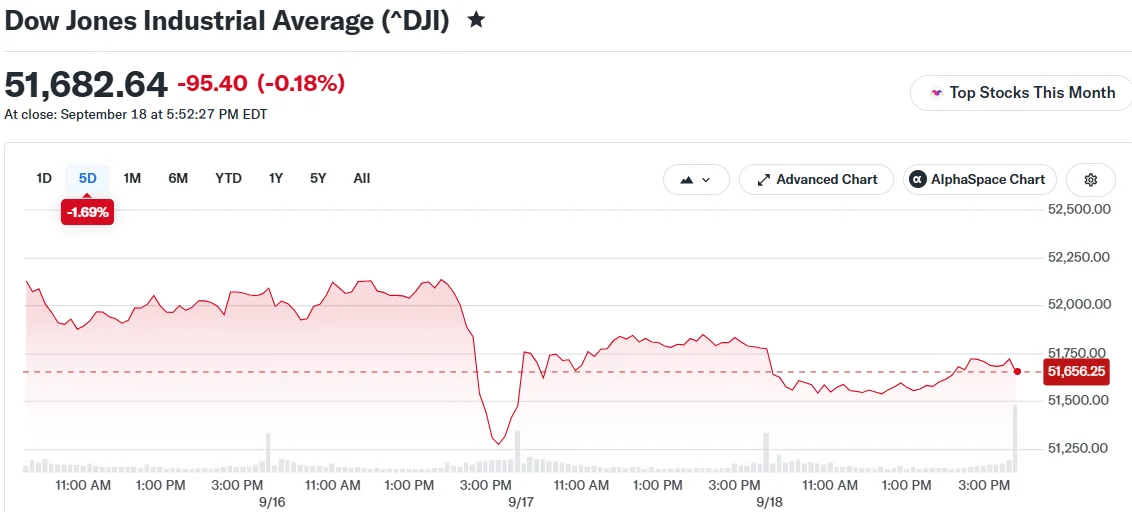
U.S. equity markets closed Friday's session with mixed results as market participants digested the implications of elevated interest rates, bond yields approaching the psychologically important 5% level, and ongoing inflation concerns.
The Dow Jones Industrial Average slipped approximately 0.2% to settle at 51,682.64, a downturn that extended the benchmark index's losing streak to three straight weeks and marked its most challenging week since March. The S&P 500 climbed 0.2% on Friday, finishing at 7,650.50, though it still registered a modest decline for the week. The Nasdaq Composite advanced roughly 0.4%, securing a positive result for the week.
Bond Yields Climb Following Federal Reserve Action
Rising bond yields continued to weigh heavily on equity markets. The benchmark 10-year Treasury yield concluded the week at 4.995%, stopping just shy of the 5% marker. The threshold carries practical weight beyond symbolism: the 10-year yield underpins mortgage rates and a broad range of corporate borrowing costs, and its rise raises the return investors can earn on essentially risk-free government debt.
The 2-year Treasury yield settled at .741%. According to Dow Jones Market Data, this represented its highest 3 p.m. close since July 1, 2024. Barchart highlighted the move on X:
U.S. 2-Year Treasury Yield jumps to 4.76%, the highest level since July 4 pic.twitter.com/YUHLoLwrkC
— Barchart (@Barchart) September 19, 2026
The upward movement in yields came after the Federal Reserve's announcement on Wednesday to lift its key interest rate by 25 basis points, marking the central bank's first rate hike in three years. Changes in the federal funds rate filter through to credit card, auto loan, and business borrowing costs across the economy. Short-term yields climbed in response, and market participants are now evaluating the likelihood of additional increases ahead. Data from CME FedWatch indicated a 47.1% chance of another quarter-point hike and a 42.4% probability of cumulative half-point increases extending through December.
Investor attention remains centered on inflation dynamics, particularly as recent energy price spikes have intensified cost pressures for both consumers and businesses. Jamie Dimon, CEO of JPMorgan Chase, remarked to Yahoo Finance this week that uncertainty persists regarding whether inflation has been adequately contained.
Crude Retreats as Technology Shares Rebound
Friday's action saw crude oil retreat below the $100 per barrel mark — providing a measure of relief after prices had previously climbed above that benchmark — even as chip stocks rebounded from mid-week losses. Energy markets continue to react to potential supply disruptions associated with the conflict in Iran and transportation risks through the Strait of Hormuz, a narrow waterway that serves as a critical artery for global oil shipments. Crude's path also matters well beyond energy portfolios, since fuel prices feed into the inflation readings now shaping the policy debate.
Technology equities outperformed most other market segments. Semiconductor shares recovered ground lost mid-week, with the PHLX Semiconductor Index concluding the week with slight gains. Chip manufacturers had faced selling pressure following statements from Anthropic and OpenAI advocating for a reduced pace of AI development due to safety considerations. The episode highlights how closely semiconductor sentiment has become tied to expectations for AI infrastructure spending, giving statements from leading AI labs notable sway over the group.
Daniel Skelly, a portfolio manager at Morgan Stanley Wealth Management, noted that crude oil fluctuations, elevated bond yields, and the upcoming U.S. midterm elections may continue driving market turbulence in the near term.
With the Dow's third straight week of losses now on record, investors will turn their attention to movements in Treasury yields, energy prices, and Federal Reserve policy expectations heading into the central bank's October meeting.
Source: Blockonomi

