Dormant Bitcoin Wallet from 2013 Moves $31 Million Amid Coldcard Security Crisis
Key Takeaways
- •A Bitcoin wallet inactive since 2013 transferred 500 BTC worth approximately $31.3 million when Bitcoin was trading around $64,011, compared to the roughly $500,000 the coins were worth when last moved 12.7 years ago.
- •Attackers have exploited a Coldcard hardware wallet vulnerability dating to March 2021, draining approximately $130 million in BTC since July 30 according to estimates from Galaxy researchers.
- •On-chain data shows approximately 935 BTC dormant for ten or more years moved on August 3, the largest single-day movement in that age band since March 20, while roughly 6,388 BTC dormant for five to seven years moved on July 31.
- •Analysts observed increased BTC inflows to exchanges over the weekend, attributing the trend to declining confidence in self-custody solutions following the Coldcard incident.
- •The clustering of large long-dormant transfers immediately after the Coldcard hack suggests some holders may be proactively relocating funds due to security concerns, though long-dormant coins can also move for reasons such as estate transfers or custodial migrations.
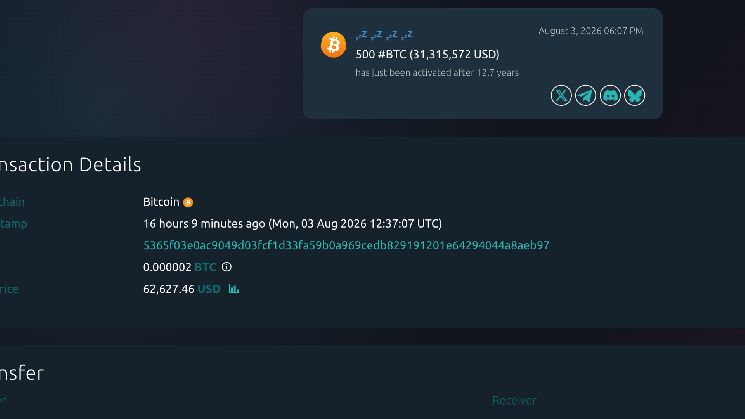
A Bitcoin wallet that had been inactive since 2013 transferred 500 BTC, valued at approximately $31.3 million, on Monday — and it was not the only long-dormant wallet to reactivate in recent days.
The transaction by the wallet labeled 18TExP was first flagged by on-chain tracker Whale Alert. When the coins last moved 12.7 years ago, they were worth roughly $500,000. At the time of Monday's transfer, Bitcoin was trading around $64,011.28.
The reactivation occurred during an ongoing security crisis involving Coldcard, a widely used Bitcoin-only hardware wallet. Since July 30, attackers have exploited a vulnerability dating back to March 2021 to drain thousands of BTC from wallets generated using Coldcard devices. Researchers at Galaxy estimate the total losses at approximately $130 million in BTC. The exploit undermines what has been a core tenet of the cryptocurrency ethos — that self-custody via hardware wallets offers superior protection compared to leaving funds on exchanges, which have suffered their own string of high-profile collapses, including FTX in 2022.
Blockchain analytics account Lookonchain noted the timing on X: "Wallet 18TExP, holding 500 $BTC ($31.27M), transferred all 500 $BTC to a new wallet 1 hour ago after over 12 years of inactivity. The owner may have moved the funds to a new wallet due to security concerns following the Coldcard hack."
Over the weekend, some analysts observed increased BTC inflows to exchanges, attributing the trend to eroding confidence in self-custody solutions following the hack. Exchange inflows are typically monitored as a potential indicator of selling intent, since deposited coins can be liquidated more quickly than those held in cold storage.
Broader Spike in Old-Coin Movement
On-chain data from CryptoQuant, which tracks spent output age bands — an indicator grouping all Bitcoin moved on a given day by the length of prior dormancy — reveals a pronounced spike in old-coin activity within the same timeframe.
Coins dormant for 10 years or longer saw approximately 935 BTC move on August 3, marking the largest single-day movement in that band since March 20. Separately, coins dormant for five to seven years saw an even larger spike, with roughly 6,388 BTC moving on July 31.
Long-dormant coins can change hands for a variety of reasons unrelated to any single security incident, including estate transfers, exchange consolidations, and custodial migrations. However, the clustering of large, long-dormant transfers in the days immediately following the Coldcard incident suggests that some holders may be proactively relocating funds due to security concerns.

