America Mourns Its Legends Like Family — But Trump Will Get a Very Different Send-Off
Key Takeaways
- •Dolly Parton died on Tuesday at age 80, prompting an extraordinary national outpouring of praise and mourning.
- •The columnist notes Parton and Trump shared fame, wealth, extravagance, and durable personal brands sustained for over fifty years, including Parton's co-founding of Dollywood in 1986.
- •Parton's Imagination Library, launched in 1995, grew into an international program that distributed more than 200 million books to children.
- •Parton donated $1 million to Vanderbilt University research that contributed to the development of the Moderna COVID-19 vaccine.
- •The article identifies self-deprecating humor, generosity with money, and a reciprocal relationship with fans as the three sharpest distinctions between Parton and Trump.
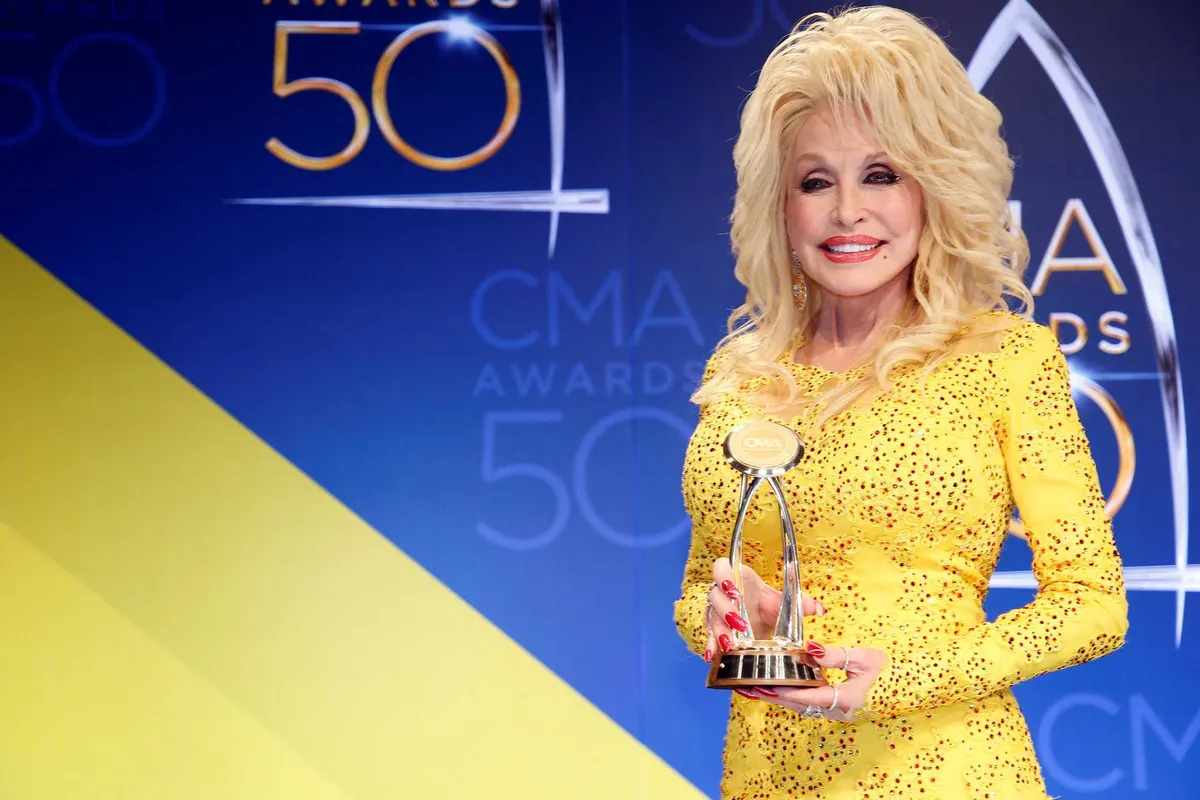
I have rarely, if ever, witnessed an outpouring of praise and adoration like the one that followed news of Dolly Parton's death on Tuesday at age 80. And it is understandable. On every conceivable measure of humanity — talent, beauty, intelligence, warmth, wit, grace, generosity, decency, compassion, courage, humility, authenticity, integrity, wisdom, kindness, empathy, dignity and sheer goodness — Dolly was the real deal.
In other words, she was the very antithesis of our president. Duh, right?
Well, not so fast.
Yes, Parton seemed to embody everything good about human beings, while Donald Trump personifies everything horrid. Yet dig a little deeper, and Dolly may have had more in common with Trump than any of us care to acknowledge.
I know this sounds completely blasphemous, but stay with me. It is at least worthy of an intriguing compare-and-contrast — beyond the fact that both of their first names begin with "D-o."
Like Trump, Parton was a quintessentially American creation: fabulously famous, outrageously wealthy, instantly recognizable, relentlessly branded, and possessed of hair that utterly defied the laws of nature. Both turned themselves into trademarks. Trump has his towers, banners, golf courses, hats, fragrances and gold-plated everything. Dolly had Dollywood — the Tennessee theme park she co-founded in 1986 that became one of the most visited attractions in the Southeast — along with records, movies, books, resorts and enough Dolly-themed products to stock a small republic.
Both understood, decades before the age of influencers, that in America a personality could become a multinational corporation. It is a distinctly modern American pattern — from P.T. Barnum through Oprah to the influencer economy — and Parton and Trump stand as two of its most durable practitioners, each sustaining a single, endlessly repeated brand for more than half a century.
Nor should we forget that Parton shared with Trump a fondness for extravagance. Neither was ever accused of minimalism. Trump loves his gold and marble and rooms that look as though Louis XIV had been handed an unlimited credit line at a Las Vegas furniture store. Dolly favored rhinestones, puffy wigs, sequins and dresses visible from low Earth orbit.
But right there is where the similarity between these two ends, because their contrasts could not be more glaring.
Dolly spent six decades constructing an outrageously artificial exterior around what was, by all accounts, a remarkably authentic person. Trump, meanwhile, has spent roughly the same amount of time erecting a veneer of faux authenticity to mask an interior of pitiful emptiness.
Trump emerged from the womb with a solid gold spoon in his mouth, born into a family of staggering wealth in Queens, New York — despite his mythological claims of being self-made. Parton was as genuinely rags-to-riches as they come, born into wrenching poverty in rural Tennessee — one of twelve children in a two-room cabin in the Great Smoky Mountains — and she always credited her roots for driving her to success and compassion. She never forgot where she came from.
And while Trump has never stopped complaining about how much the world owes him, Parton consistently made a point of expressing massive gratitude and a glorious sense of generosity. She led with stories of her dirt-poor youth and how it kept her humble. Humility, as you may have noticed, is not part of the Trump arsenal.
Parton always asked, "How can I make these people happy?" Trump only wonders, "How can these people make me richer and more powerful?"
Dolly wore a towering blonde wig and six pounds of rhinestones and somehow projected decorum. Trump wears a dark suit and red tie and conveys theatricality.
But there are three primary areas where the distinction between Dolly and Donald is sharpest.
The first is having a sense of humor about oneself. Dolly practically turned self-deprecation into an art form and a kind of armor, joking about how expensive it was to look so cheap. She knew exactly what people saw when they looked at her and generally got to the punchline before they did.
A perfect example: she once entered a Dolly Parton lookalike contest at a West Hollywood, California, gay bar filled with drag queens. She made her hair bigger, her makeup heavier, her beauty mark darker. Nobody recognized her. She lost — and found the whole thing hilarious.
Then there is Trump. The man takes himself with utmost seriousness despite his persistent unconscious buffoonery, regarding self-mockery as a dangerous concession. His enormous insecurity will not tolerate his being the butt of any joke. This has the ironic effect of making him an even greater figure of derision and caricature.
Here is what Dolly long understood: if you take your work, but never yourself, seriously, it deprives others of ammunition. She took great glee in poking fun at her wigs, breasts, clothes, cosmetic surgery and over-the-top appearance. It made her immune to humiliation. She did not conflate ego and self-esteem, understanding that self-effacement could be a form of psychological power.
Trump's inability to laugh at himself has served only to diminish him. The harder he works to prevent everyone from making him look small, the more power he gives them to do exactly that. It has also left him considerably easier to provoke.
The second substantial area where Parton and Trump diverged was in their approach to money. Dolly made a fortune and delighted in giving away large portions of it, most famously through her Imagination Library, which she started in 1995 as a book-gifting program for children in her home county in Tennessee and which grew into an international operation that distributed more than 200 million books to children. Her philanthropy also extended to causes like childhood vaccination research — she donated $1 million toward Vanderbilt University's work that contributed to the development of the Moderna COVID-19 vaccine.
Trump? It is all about accruing as much wealth as possible while parting with as little as he can. Charity? Surely you jest. To him, riches are not merely something to possess but evidence that proves success, status, dominance and victory. Those who have less than him are deemed scum unworthy of a dime.
Finally, the third area of greatest difference between Dolly and Donald surrounds loyalty. Dolly's fans adored her at a level almost unprecedented in celebrity annals, yet she seemed to require almost nothing from them aside from the occasional purchase of a concert ticket. It was as pure a reciprocal love as exists between artist and fan.
Trump's relationship with his grossly misguided followers demands unswerving devotion, the chief currency of Trumpism. Anything less than complete dedication risks transforming yesterday's rabid devotee into today's loser or incompetent fool.
As a result of all of this, when Parton died this week, she was mourned with an almost primal sense of national grief while simultaneously being celebrated as the amazing human she so clearly was — a phenomenon Americans have seen before with figures like Mister Rogers and Betty White, whose deaths prompted collective reflection precisely because their public personas matched their private conduct.
When Trump finally shuffles off this mortal coil, you get the sense it will trigger a celebration of a far different sort.
(Ray Richmond is a longtime journalist and author and an adjunct professor at Chapman University in Orange, California.)

