Dollar General (DG) vs. Dollar Tree (DLTR): Comparing the Two Discount Retailers After Strong Quarters
Key Takeaways
- •Dollar General's quarterly same-store sales grew 3.5% year-over-year, and it raised its fiscal 2026 same-store sales growth forecast to 2.5%-2.9%.
- •Both retailers raised full-year EPS guidance, with Dollar General at $7.80-$8.00 and Dollar Tree at $7.70-$8.05, aided by tariff refund benefits.
- •Tariff refunds significantly inflated quarterly margins, with about 680 of Dollar Tree's 850 basis points of gross margin expansion coming from the refunds.
- •Raymond James raised price targets on both stocks while maintaining Outperform ratings, and Bernstein kept Outperform on Dollar General and Market Perform on Dollar Tree.
- •Hedge fund holdings increased for both companies in Q2 2026, with Dollar Tree rising to 54 and Dollar General to 53 funds.
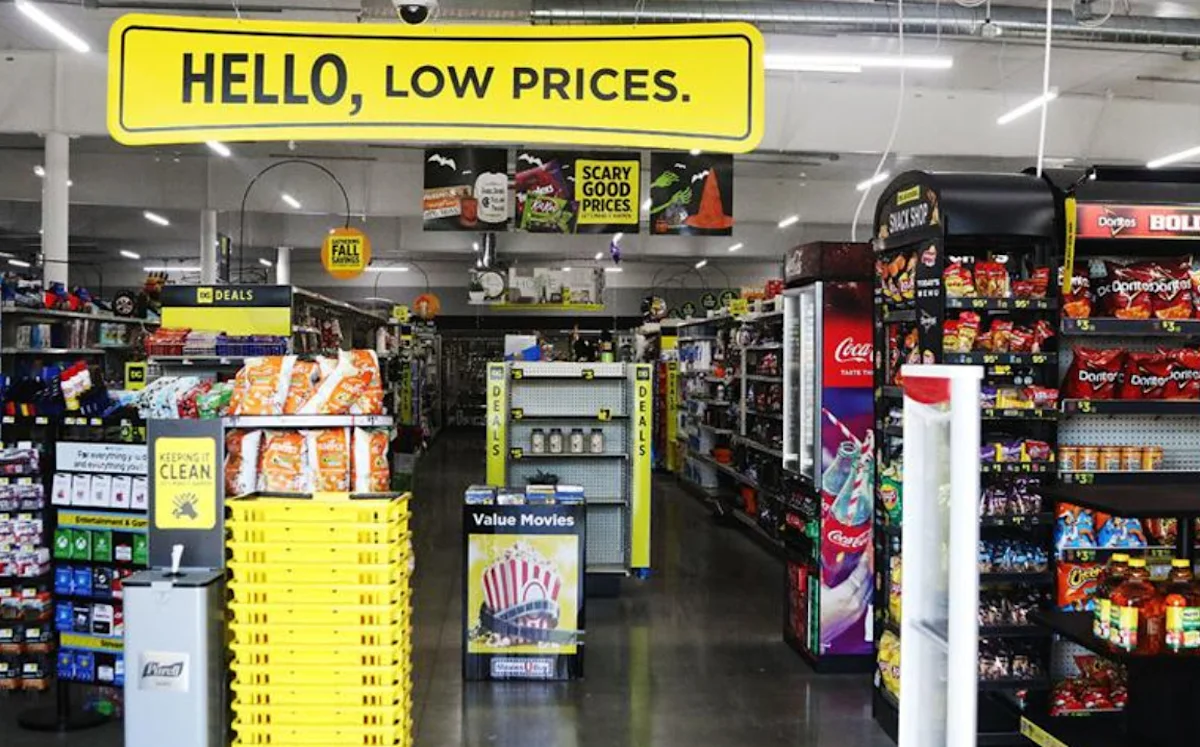
Dollar Tree, Inc. (NASDAQ:DLTR) and Dollar General Corporation (NYSE:DG) both delivered quarterly results that topped sales expectations, as lower-priced essentials continued to draw consumers to their stores amid economic uncertainty. The strength at both chains is consistent with the broader historical pattern for dollar stores, which tend to attract value-seeking shoppers—including higher-income customers trading down—during periods of economic pressure. Both retailers also benefited from tariff refunds, which underpinned their raised full-year profit targets.
Dollar General posted a 3.5% year-over-year increase in quarterly same-store sales, driven by growth in categories including seasonal items, home products, and apparel. The company lifted its fiscal 2026 same-store sales growth forecast to a range of 2.5% to 2.9%, up from its previous range of 2.2% to 2.7%.
Dollar General now expects fiscal 2026 earnings per share of approximately $7.80 to $8.00, including a benefit of roughly 25 cents from tariff refunds after related reinvestments. Dollar Tree also raised its full-year earnings forecast to $7.70 to $8.05 per share, which incorporates a benefit of about 60 cents from tariff refunds.
Bull Case
The latest results point to improving momentum at both discount retailers. Dollar General delivered its seventh consecutive earnings beat, with earnings per share coming in 11% above analysts' expectations. Even excluding the 25-cent net benefit from tariff refunds, the company's earnings rose approximately 20% year-over-year.
Dollar General recorded growth across all four of its product categories, with non-consumables outperforming consumables. Traffic increased 2% during the quarter, and the company reported continued improvement in shrink and damages despite increasingly difficult comparisons. It raised the midpoint of all its key fiscal 2026 guidance metrics. In addition, Dollar General now plans share repurchases of up to $700 million under its existing authorization, whereas previous fiscal 2026 guidance had assumed no buybacks.
Following the results, Raymond James raised its price target on Dollar General to $150 from $145 while maintaining an Outperform rating. Bernstein SocGen Group also kept an Outperform rating and a $160 price target on the stock.
Dollar Tree likewise showed signs of improving performance, with comparable sales and traffic improving on both a one-year and two-year basis, and traffic turning modestly positive in the quarter. Raymond James raised its price target on the stock to $145 from $140 while keeping its Outperform rating, saying Dollar Tree's Q2 results supported its view that the company's underlying earnings trajectory is improving. Bernstein SocGen Group increased its Dollar Tree price target from $127 to $130 but maintained a Market Perform rating.
Bear Case
Despite the impressive quarterly results, a key concern is the temporary contribution from tariff refunds. Dollar General received most of its anticipated tariff refunds during the second quarter and does not expect a material refund benefit after reinvestments in the second half of the year. Excluding the refund benefit, gross-margin expansion was 46 basis points—much smaller than the reported increase of 127 basis points. This profitability benefit is not expected to continue at the same level. Dollar General also expects elevated transportation and fuel costs to remain a headwind during the second half of the year.
Dollar Tree faces a similar issue, having received about $383 million in tariff refunds, which contributed significantly to its strong profitability during the quarter. Gross margin jumped 850 basis points to 42.9%, with approximately 680 basis points of that increase coming from the net impact of tariff refunds. This indicates that the sharp margin improvement is not fully representative of the underlying performance of the business. As the temporary benefit from tariff refunds fades, Dollar Tree's margins and earnings could come under pressure.
What the Numbers Say
According to Insider Monkey's database, hedge fund interest in both companies has increased recently. The number of hedge funds holding Dollar Tree rose to 54 in Q2 2026, up from 43 in the first quarter, while Dollar General's hedge fund count increased to 53 in Q2 2026 from 47 in Q1 2026.
Valuation also appears supportive. Dollar General trades at 16.81 times forward earnings and Dollar Tree at 18.76 times, both below the broader retail-discount stores industry average forward P/E of 26 times.
Short interest, however, points to a relatively more favorable view of Dollar General. As of August 14, 3.34% of its float was sold short, compared with 5.03% for Dollar Tree.
Both Dollar General and Dollar Tree have shown signs of improving operating performance, supported by better traffic, sales growth, and higher earnings expectations. With most of the tariff-refund benefit already booked in the second quarter and Dollar General flagging elevated transportation and fuel costs, the second half of fiscal 2026 will show how much of the recent margin improvement is sustainable, making the upcoming holiday-quarter reports a key checkpoint for both retailers.
