DOJ Employees 'Preparing to Take a Stand' as Leaders Accused of Stonewalling for Trump
Key Takeaways
- •DOJ whistleblowers who previously stayed silent are preparing to come forward with accounts and potentially damaging documents, according to a Bloomberg Law report issued after the 2026 midterm elections.
- •Democrats are prioritizing voluntary disclosures because materials provided voluntarily can reach investigators without first prevailing in court over subpoena enforcement.
- •Whistleblower preparations are aimed at assisting Democratic probes into the tenures of Attorney General Todd Blanche, FBI Director Kash Patel, and former Attorney General Pam Bondi.
- •Investigative committees in both chambers have recruited former DOJ prosecutors and FBI agents as staffers and are informing potential sources of their legal protections against retaliation.
- •The Justice Department says it is unconcerned about the incoming Democratic Congress, while hesitancy among potential whistleblowers persists following the career-ending experience of former Civil Division attorney Erez Reuveni.
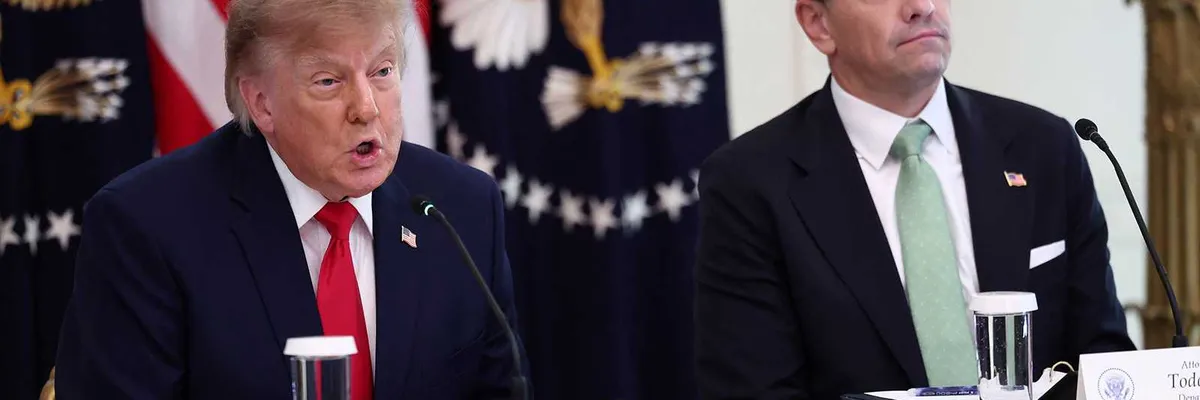
Whistleblowers inside the Department of Justice who previously hesitated to speak out against alleged corrupt actions by President Donald Trump and his appointees are now preparing to come forward, according to a new report from Bloomberg Law. The report details an investigative effort taking shape in the wake of the 2026 midterm elections, which has provided fresh momentum for accountability efforts.
Lawyers and Capitol Hill aides, some of whom described internal deliberations on condition of anonymity, said confidence has grown that individuals will step forward with explosive accounts and potentially damaging documents that could allow Democrats to expose corruption within the DOJ. Threats by administration officials to prosecute Democrats rather than cooperate with newly seated members of Congress have increased the need for civil service employees to serve as alternative sources of information for investigators. The dynamic points to a structural feature of congressional oversight: committees can request documents and summon witnesses, but when an agency declines to cooperate, the people inside it become the primary window into what its records contain.
"There is a clear understanding on the part of those members and their staff of the value of whistleblowers' information to crack open wrongdoing, to create maps for investigations, to testify, to compel testimony, etc.," said Dana Gold, senior director of advocacy and strategy at the Government Accountability Project, a nonprofit that supports whistleblowers, who has represented high-profile DOJ whistleblowers. "They get that especially when the Justice Department stonewalls information; whistleblowers' information breaks the opacity."
It remains unclear how many department lawyers are willing to risk their careers. In light of recent threats from Trump and his administration, some may feel too intimidated to speak on the record.
Other sources, including current and former attorneys, said Democrats are pursuing the whistleblower strategy to accelerate investigations, anticipating that compelled DOJ cooperation could become mired in protracted court battles. The calculation reflects a procedural distinction: materials provided voluntarily do not depend on first prevailing in court over the enforcement of a subpoena, so accounts and documents can reach investigators without that preliminary fight.
Current preparations indicate that whistleblowers on both sides are planning to assist Democrats in probing the tenures of Attorney General Todd Blanche, FBI Director Kash Patel, and former Attorney General Pam Bondi. Disclosures are expected to come from current and former employees, some willing to go on the record and others preferring anonymity. DOJ officials, however, say they are unconcerned about the incoming Democratic Congress.
"DOJ officials are not afraid of threats from Democrats on the Hill: we have followed the law and will continue to do so," one DOJ spokesperson said in a statement. "It is no surprise that rather than focus on bringing down costs for Americans, Democrats in Congress are picking up where their weaponization efforts left off when they were last in power."
As part of the strategy to encourage whistleblowers, potential sources have access to information about their legal protections against possible retaliation. Investigative committees in both chambers have also been recruiting former DOJ prosecutors and FBI agents as staffers to build a circle of trust — people with investigative experience who can corroborate accounts and assess documents as they arrive.
"I'm already starting to see it from folks within the Department of Justice who are actually reaching out generically, not based on anything specific, but over heightened fears that they're going to be asked to do something that is either illegal or at least unethical," said whistleblower attorney Mark Zaid, whose past clients have included the intelligence-community whistleblower whose 2019 complaint led to President Trump's first impeachment. "They're preparing to take a stand."
Hesitancy among potential whistleblowers stems in part from what has happened to those who previously came forward — most notably former Civil Division attorney Erez Reuveni, who said his 15-year career ended abruptly after he claimed he witnessed government lawyers lying in court and evading orders from a judge. Even so, some have been encouraged by Reuveni's example and are now speaking up. Among the open questions as the effort moves forward: how many employees ultimately go on the record, and whether committees can translate voluntary accounts into testimony, documents, and public hearings.

