Trump DOJ Poll-Watching Plan Draws Scrutiny Over “Observers” vs. “Monitors” Distinction
Key Takeaways
- •The Justice Department intends to send 1,000 federal poll watchers, which an official described as the largest such election effort in the department's history.
- •Under federal law, Assistant Attorney General Harmeet Dhillon may deploy only monitors, not observers, yet she repeatedly used the term 'observers' in an interview.
- •Observers hold explicit authority under the Voting Rights Act to enter polling places and watch workers, voters, and voting systems, while monitors have no legal right to enter election sites and depend on state access rules.
- •Several states have already denied monitors access to polling locations during primary elections this year.
- •The poll-watching plan was announced on the same day the administration lost in court for the 25th time in its effort to compel states to hand over voter rolls.
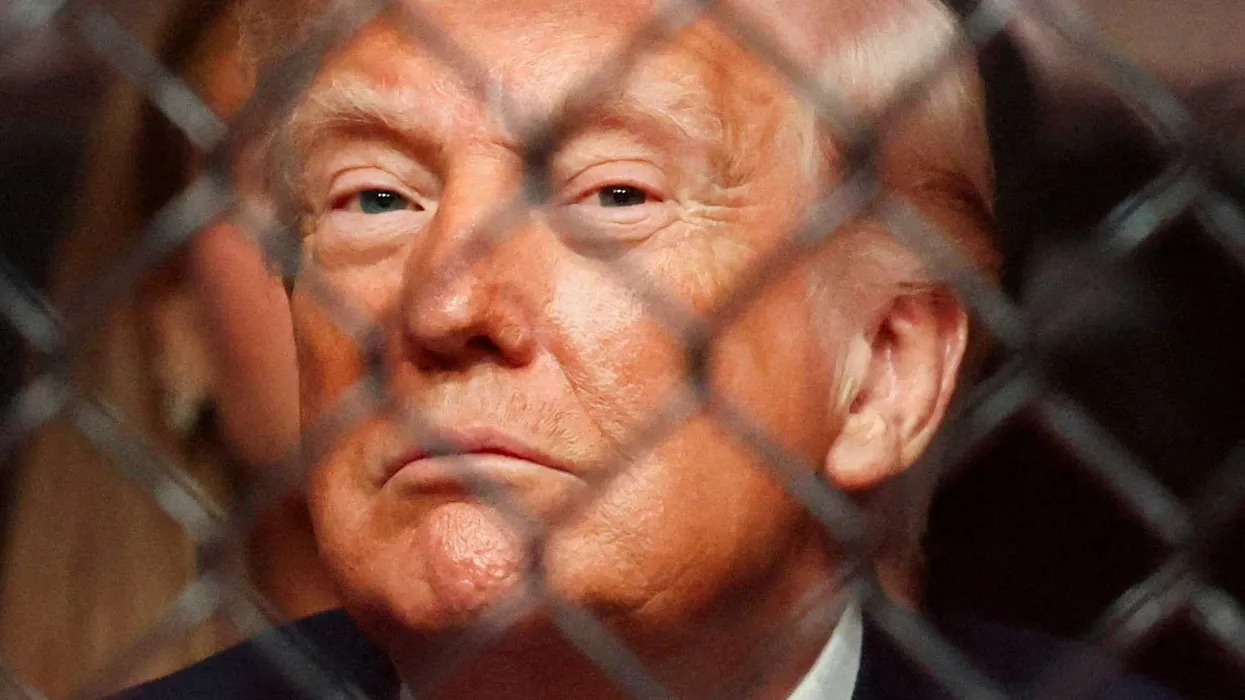
The Justice Department’s plan to send personnel to polling places is drawing scrutiny over a single, consequential word. According to reporting by Democracy Docket’s Jacob Knutson, Assistant Attorney General Harmeet Dhillon — who is overseeing the deployment of 1,000 federal poll watchers — repeatedly referred to them as “observers” rather than “monitors,” a distinction that carries significantly different legal authority under federal law.
Knutson reported on Tuesday that Dhillon “has the authority to deploy only monitors, not observers,” and that her comments “could be a troubling sign that the DOJ may intend to assert expansive powers — far beyond the scope of the department’s traditional monitoring program — for the 1,000 monitors it plans to deploy.”
In an interview cited by Knutson, Dhillon said: “Federal election monitors from the department are — observers, I should say — are similar to other types of observers you see, so they’re not going to be interfering in any way or running the election.”
Knutson noted that Dhillon went on to say “observers” rather than “monitors” for the rest of the interview, and framed the upcoming federal poll-watching push as the “biggest DOJ election observer effort in history.”
“The difference is important, and her switch seemed deliberate,” Knutson wrote. “Under federal law, monitors and observers are two distinct types of poll watchers the federal government can deploy — and observers have a lot more power.”
Observers, whose authority stems from the Voting Rights Act (VRA), “have explicit legal authority to enter polling places and closely watch election workers, voters and voting systems at all stages of the election process,” Knutson wrote. Monitors, by contrast, “have no legal authority to enter election sites or watch any specific aspect of the voting process.” They are subject to state poll access laws, and several states have already refused to permit them access to polling locations for primary elections this year.
The rollout of the poll-watching plan came on the same day the administration lost in court for the 25th time in its effort to compel states to hand over their voter rolls, according to prior Alternet reporting.
Dan Vicuña, Senior Policy Director for Voting and Fair Representation at the nonprofit good-government group Common Cause, told AlterNet in June that the administration’s election-related measures — demanding that states hand over their voter rolls, sending Justice Department officials to “observe” elections, and moving to restrict mail-in voting — amount to anti-democratic efforts.
“What they all add up to is a desire to avoid any accountability to the voters in the midterm elections — to ensure, to preordain the outcome of a midterm that he thinks is going to go badly for him,” Vicuña said at the time. “We know, from the Big Lie of the 2020 election to spurring on a violent revolt to overthrow a free and fair election, that he has no respect for democratic norms, for the voice of the people. This is entirely about his own power and his own ego. He will even invest in protecting that ego and protecting his power at the expense of the needs of the public. People are suffering with high gas prices and affordability issues, and he does not care. All that matters is protecting his power, and he has no interest whether he does that through democratic means.”
He added: “I think this all adds up to a desire to ensure that his party stays in power and his ability to do what he wants — to attack vulnerable communities — remains intact.”
Vicuña also argued that some of the administration’s attempts to nationalize election administration are illegal. “I think some of these attempts to federalize, to nationalize elections are clearly illegal,” he said. “You’ve seen some of that overreach already struck down — attempts to order independent agencies to force a strict voter ID requirement on people. That has been rejected. Common Cause is in court challenging the latest executive order to turn the United States Postal Service into some election administration agency and to create a further bureaucratic layer to make it more difficult to vote by mail. In terms of the president’s authority to order around USPS, it’s illegal. In terms of USPS’s authority to become some sort of national election administration agency, it far exceeds the legal authority that Congress gave to the postal service. The statute describing what kind of work the postal service would do is about postal service work — processing mail and selling stamps. It has nothing to do with election administration.”
Kyle Kondik, editor of Sabato’s Crystal Ball, told AlterNet last week why he expects Trump to suffer setbacks — and likely lose control of one or both chambers of Congress — in the 2026 midterm elections.
“It’s primarily the president’s weak approval rating combined with the usual difficulty that the presidential party has in a midterm,” Kondik said. “I also think there may be even more for voters to react to in 2026 compared to even 2018, because Trump has acted as more of an imperial president and there is more dissatisfaction both with the economy as well as the president’s foreign policy choices.”
He added: “Generally speaking, a president who is this unpopular should see his party lose a lot of ground in Congress. That said, Joe Biden also had poor approval in 2022, but Republicans didn’t do all that well — they flipped the House but not the Senate. However, the Republican lead in the generic ballot was not as large as the Democratic lead is now.”

