Redacted Epstein Email on Trump Surfaces After Lawmaker Reviews DOJ Files
Key Takeaways
- •Representative Madeleine Dean reviewed an unredacted October 2009 email from Jeffrey Epstein to Ghislaine Maxwell with the subject line "Trump" during an on-site visit to DOJ headquarters.
- •Dean stated that the email contradicts Trump's claim he expelled Epstein from Mar-a-Lago, noting that Epstein was never a club member and was never asked to leave.
- •Lawmakers are permitted to view unredacted documents in a secure setting under the Epstein Files Transparency Act but cannot remove or publicly release them in full.
- •Trump signed the Epstein Files Transparency Act into law in November following months of resistance, requiring the DOJ to release a broad trove of investigative materials.
- •Trump's name appears more than 1,000 times across approximately 3 million pages of released files, though the DOJ asserts some documents contain unsubstantiated claims submitted to the FBI ahead of the 2020 election.
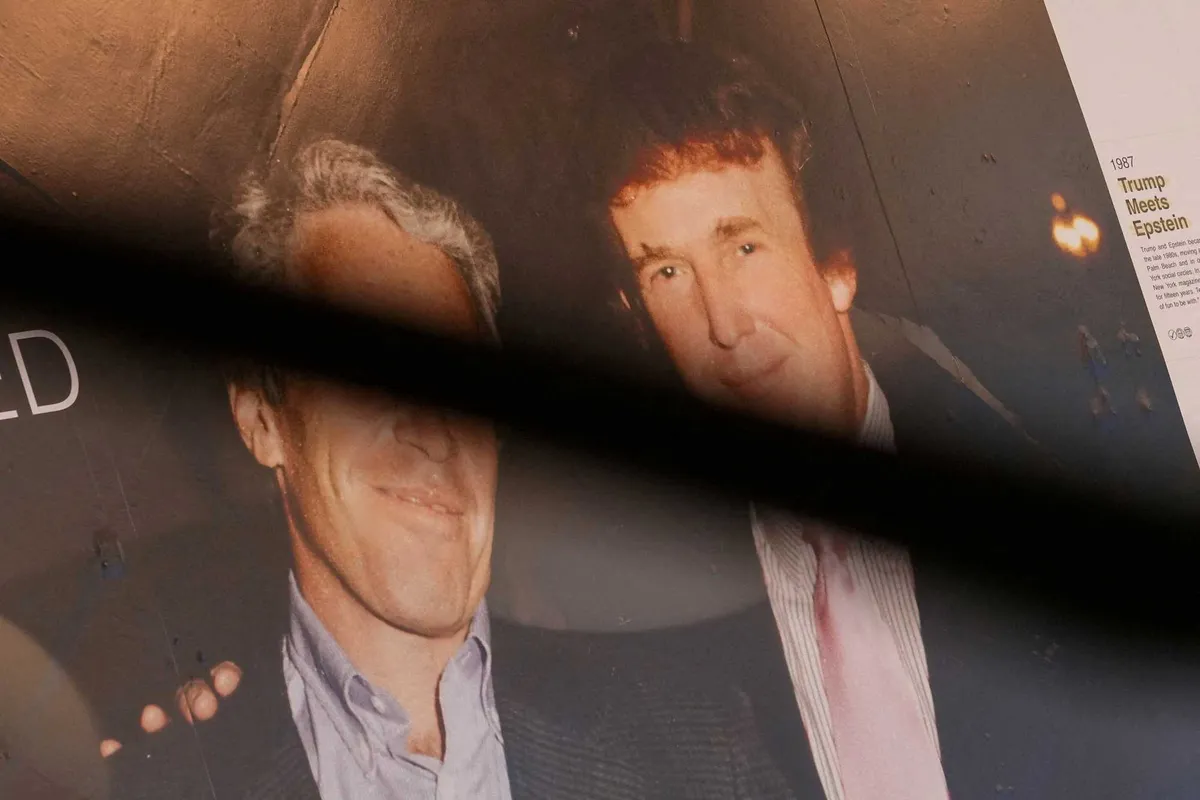
Rep. Madeleine Dean (D-PA) has disclosed the contents of a heavily redacted email from the Justice Department's Jeffrey Epstein-related files after spending hours reviewing unredacted documents at DOJ headquarters in Washington, D.C. The Democratic congresswoman claims the email exposes "lies" told by President Donald Trump regarding his relationship with the late financier, who died in federal custody in August 2019 while awaiting trial on federal sex trafficking charges.
The email in question was sent in October 2009 by Epstein to "Gmax," a name associated with Ghislaine Maxwell, who is currently serving a 20-year prison sentence for sex trafficking and conspiracy. Its subject line reads simply: "Trump." In its publicly released form, the body of the message is almost entirely concealed beneath a large black redaction box.
However, the DOJ has permitted lawmakers to examine unredacted files on-site at its headquarters. Dean arrived with pen and paper to inspect the full contents of the Trump-related communication, a process that reflects the unusual access arrangement under the transparency legislation — lawmakers may view unredacted documents in a secure setting but cannot remove or publicly release them in full.
She later shared her findings with journalist Tara Palmeri, telling her the email "reveals lies of the president" — particularly his frequently repeated assertion that he had thrown Epstein out of his Mar-a-Lago club in Palm Beach, Florida. Trump and Epstein were known to move in overlapping Palm Beach and New York social circles during the 1980s and 1990s, though Trump has said the two had a falling-out years before Epstein's 2008 federal plea deal on Florida prostitution charges.
"Jeffrey Epstein was never expelled from Mar-a-Lago," Dean told Palmeri, reading from handwritten notes she had taken during the review. "No, he was not a member. May have been a guest. He was never asked to leave. [Trump said] 'I've been on a lot of planes, may have been on his plane. No young girls on plane.'"
Dean's disclosure is the latest development stemming from the extensive document release mandated under the Epstein Files Transparency Act, which Trump signed into law in November after months of resisting its publication. The law requires the DOJ to make public a broad trove of investigative materials related to Epstein, whose connections to politicians, business leaders, and royalty on both sides of the Atlantic have fueled years of public scrutiny and conspiracy theories.
Trump's name appears more than 1,000 times across the approximately 3 million pages of files made public thus far. The DOJ has maintained that some of those documents contain "untrue and sensationalist claims" against the president that were submitted to the FBI ahead of the 2020 election.

