DOJ Mounts Aggressive Defense of USPS Mail-In Voting Restrictions as Legal Fight Escalates
Key Takeaways
- •The DOJ filed opposition to requests from pro-voting groups and blue states seeking to block a USPS final rule adding new restrictions to mail-in voting.
- •The rule imposes new ballot envelope designs on states and creates a federal database of voters who request absentee ballots, with USPS refusing to deliver ballots for noncompliance.
- •Federal Judge Indira Talwani issued a new order temporarily blocking the administration's effort, after the Supreme Court had reinstated Trump's March executive order.
- •The League of Women Voters of Massachusetts argues USPS will refuse to deliver eligible voters' ballots based on requirements found nowhere in statute.
- •States preparing for the November midterms must decide whether to redesign ballot envelopes and adjust absentee workflows or await further court rulings.
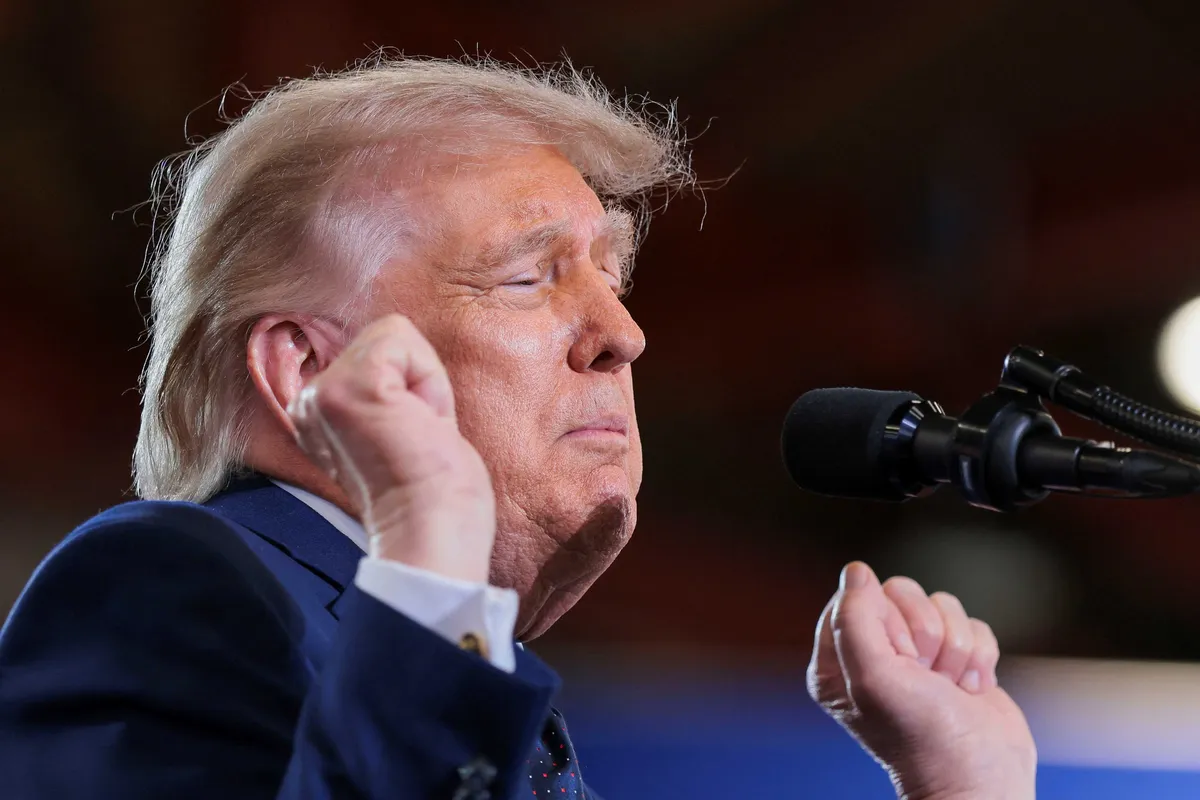
President Donald Trump, armed with the Supreme Court's recent stay of a freeze on his mail-in voting restrictions, is moving ahead at full speed with regulating the U.S. Postal Service. After a coalition of pro-voting rights groups and blue states asked a federal court to block his rule adding new restrictions to mail-in voting, the Trump White House is fighting back aggressively.
"The U.S. Department of Justice (DOJ) filed its opposition late Friday night to requests from pro-voting groups and several blue states for a federal court to block a final rule that would add new restrictions to mail-in voting," Democracy Docket's Brentin Mock reported on Sunday. "In its latest court filing, the DOJ offered its most robust defense of the United States Postal Service's (USPS) final rule, which imposes new ballot envelope designs on states and creates a federal database of voters who've requested absentee ballots."
Mock added: "Under the new rule, USPS would not send out ballots to those who fail to comply with the changes. The rule is the fulfillment of President Donald Trump's March executive order asking USPS to scale back access to mail voting, which he falsely claims has produced massive voter fraud. With the November elections approaching, the new USPS rule would determine whether certain voters or even certain states will be permitted to vote by mail in this year's midterms."
The stakes are considerable: mail ballots have become a fixture of American elections in recent cycles, with tens of millions of voters casting absentee or by-mail ballots in recent federal elections, and any change to how USPS handles ballot mail this close to November could affect delivery timing for voters who rely on it. The dispute also touches a foundational question of election administration, since the Constitution largely assigns the regulation of federal elections to states and Congress, and challengers argue that a federal agency imposing ballot design and voter-list requirements marks a significant shift in that division of authority.
In its court filing, the Trump administration sought to downplay the extent to which the proposed revisions would change the way Americans vote.
"The Postal Service has likewise relied on the same statutory authorities at issue here to adopt special handling and conditions on acceptance for other types of mail that are similarly sensitive yet non-dangerous, raising unique operational concerns—such as cremated remains or replica explosives," the White House filing argued. "There is no material distinction between those prior actions and this one with respect to the legal authority of the Postal Service."
The League of Women Voters of Massachusetts countered that the administration's new policy "tracks the Order's new requirements for the delivery of mail ballots and confirms that USPS will refuse to deliver eligible voters' ballots based on whether voters appear on a list contemplated nowhere in any statute and on whether state ballot envelopes conform to standards required nowhere in any statute."
Beyond the pro-voting rights effort to counter the Supreme Court's recent ruling, the administration is also facing pushback from a lower court that used the Supreme Court's own logic to explain why Trump's restrictions should not be allowed to stand.
"On Thursday evening, federal district Judge Indira Talwani issued a new order that temporarily blocks an effort by the Trump administration that appears designed to sabotage voting by mail in the upcoming midterm election," Vox's Ian Millhiser wrote on Sunday. "Talwani previously blocked an executive order that President Donald Trump issued in March, which ordered the US Postal Service (USPS) to impose a byzantine array of new regulations on voting by mail, but the Supreme Court reinstated the order on Monday."
Millhiser added: "Talwani's new order sets up a new legal fight that is almost certain to return to the justices, and it is unclear whether this Court, with its 6-3 Republican majority, will allow Trump to make sweeping and unilateral changes to how the United States conducts its elections so close to an actual Election Day. That said, while Talwani's new order in League of Women Voters v. Trump is brief, it is well-crafted to persuade at least some members of the Court's Republican majority to break with the leader of their political party."
The immediate practical question now is timing: as the DOJ's opposition and Talwani's order proceed through further briefing and likely appeals, states preparing for November must decide whether to redesign ballot envelopes and adjust absentee ballot workflows in the meantime or wait on the courts.
The push to restrict mail-in voting is only one element of what critics describe as a much broader effort by Trump to influence the outcome of the upcoming midterm elections. As one of Trump's former Homeland Security advisers, Miles Taylor, recently explained, the president is also likely to engage in more drastic measures.
"Evidently," Taylor recently wrote, "all of that controversy was aimed at the wrong place. While Washington officials debated Election Day polling sites, the administration was quietly reassigning battalions of officers to start homing in on the election from their cubicles, combing through voter rolls in a secret operation without precedent."
