Dogecoin vs. Shiba Inu: Key Differences in Technology, Tokenomics and Risk
Key Takeaways
- •Dogecoin operates on an independent proof-of-work blockchain and functions mainly as a peer-to-peer digital currency used for payments, tipping and donations.
- •Shiba Inu is an ERC-20 token on Ethereum whose ecosystem includes ShibaSwap, the Shibarium layer-2 network, the BONE and LEASH tokens, and the Shiboshis NFT collection.
- •Dogecoin has no maximum supply and issues roughly 5 billion new coins annually through mining rewards, while Shiba Inu launched with one quadrillion tokens and incorporates a burn mechanism that reduces supply without automatically raising price.
- •Market capitalization, circulating supply, liquidity and demand—not unit price or token count—are the meaningful measures for comparing the two assets.
- •Both cryptocurrencies remain highly speculative, with risks including market volatility, exchange failures, custody errors, smart-contract vulnerabilities and evolving regulatory rules.
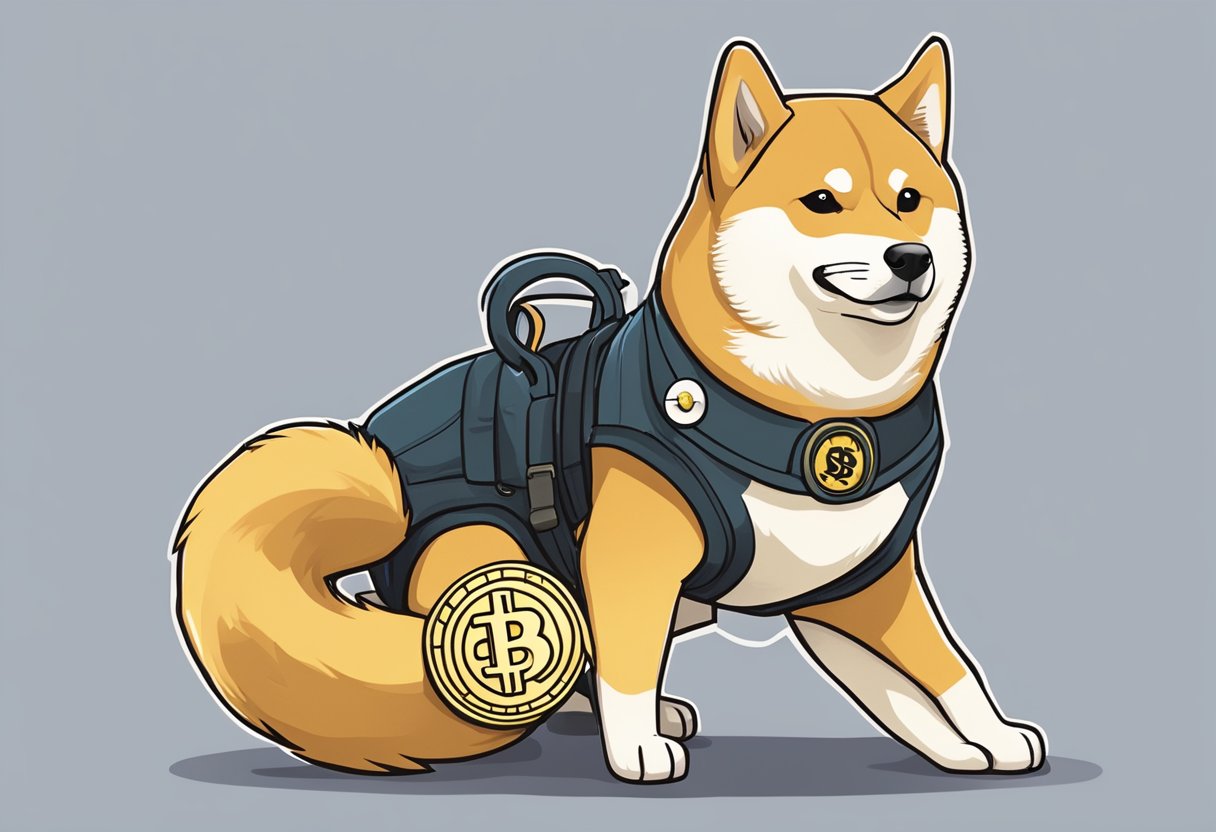
Dogecoin and Shiba Inu are among the most recognizable meme-based cryptocurrencies, yet they diverge sharply in blockchain architecture, token supply, ecosystem scope and intended purpose. Dogecoin (DOGE) runs on its own proof-of-work blockchain and functions primarily as a peer-to-peer digital currency. Shiba Inu (SHIB) is an Ethereum-based token tied to a wider ecosystem that spans decentralized applications and Shibarium, an Ethereum layer-2 network.
The two projects also arrived in different eras of the industry: Dogecoin launched in December 2013, nearly seven years before Shiba Inu's August 2020 debut, and both belong to a category of cryptocurrencies that grew out of internet culture, where community attention and social media visibility have played an outsized role in shaping demand.
Neither asset is automatically the superior investment. Dogecoin's established profile as a payment-oriented cryptocurrency may attract users focused on digital transactions, while Shiba Inu may appeal to those exploring Ethereum-compatible tokens and the applications built around them. Both remain speculative assets whose prices can fluctuate considerably.
This comparison examines how Dogecoin and Shiba Inu differ technically and economically, and outlines the risks to weigh before purchasing either asset.
What Are Dogecoin and Shiba Inu?
What Is Dogecoin (DOGE)?
Dogecoin launched on December 6, 2013, created by software engineers Jackson Palmer and Billy Markus. The project drew inspiration from the Doge internet meme, which pairs an image of a Shiba Inu dog with humorous text.
What began as a lighthearted commentary on the cryptocurrency boom evolved into an established digital asset supported by an active community. The network facilitates peer-to-peer transactions, and its relatively straightforward design has made it a common choice for online tipping, donations and payments.
Dogecoin operates on its own blockchain rather than as a token issued on Ethereum. Proof-of-work mining secures transactions, and new DOGE enters circulation through block rewards.
The coin's visibility has also been amplified by social media attention and high-profile remarks from public figures, including Elon Musk. Publicity, however, does not ensure sustained demand or long-term price appreciation.
What Is Shiba Inu (SHIB)?
Shiba Inu launched in August 2020 under an anonymous creator known as Ryoshi. It borrowed the same Shiba Inu meme theme as Dogecoin and became widely known as the "Dogecoin killer."
SHIB is an ERC-20 token on Ethereum, meaning it relies on Ethereum's infrastructure and token standards rather than functioning as a standalone native blockchain the way DOGE does.
The project has since expanded beyond its original meme-coin identity. Its associated ecosystem encompasses ShibaSwap, decentralized applications, digital collectibles and Shibarium, a layer-2 network built to support ecosystem activity.
The broader ecosystem creates additional potential use cases, but it does not guarantee that SHIB itself will appreciate in value. Whether an application is useful and whether its associated token gains market value are separate questions.
What Are the Main Differences Between DOGE and SHIB?
The most significant distinctions involve their underlying networks, token issuance, ecosystem design and the factors that may influence demand.
Blockchain and Technology
Dogecoin uses its own blockchain, while SHIB operates as a token on Ethereum.
Dogecoin employs proof-of-work mining and the Scrypt algorithm. Its target block interval is approximately one minute, and miners receive DOGE block rewards for helping secure the network.
SHIB follows the ERC-20 token standard on Ethereum. That standard enables compatible wallets, exchanges and smart contracts to interact with the token, and Ethereum's proof-of-stake consensus secures the underlying network.
The distinction matters because each design carries different technical characteristics:
- Dogecoin: an independent transaction network, mining-based security and a comparatively simple, currency-focused design.
- Shiba Inu: Ethereum token compatibility and access to applications that support ERC-20 assets.
- Shibarium: a separate layer-2 network associated with the Shiba Inu ecosystem; its fees and transactions should not be confused with transactions made directly on Ethereum.
Transaction costs and confirmation times depend on the network used, congestion, transaction type and service provider. It should not be assumed that every SHIB transaction uses Shibarium, or that every DOGE transaction will always be cheaper.
Token Supply and Tokenomics
Tokenomics describes how a cryptocurrency's supply is created, distributed, used and potentially removed from circulation. Dogecoin features ongoing issuance, whereas Shiba Inu began with an enormous supply and includes a token-burning mechanism.
Dogecoin has no fixed maximum supply under its current issuance model. New coins are issued through mining rewards, with approximately 5 billion DOGE created annually at the current block-reward schedule, steadily increasing the number of DOGE in circulation. This ongoing issuance is tied to Dogecoin's security model: because the network is proof-of-work, block rewards are what compensate miners for validating transactions and maintaining the chain.
SHIB launched with an initial supply of one quadrillion tokens. Some have since been burned—sent to addresses from which they cannot ordinarily be spent. A burn reduces the available supply but does not automatically lift the token's market price.
The two models carry different implications:
- DOGE's ongoing issuance produces continuous supply growth.
- SHIB's vast supply means its unit price can be extremely small without signaling that the token is undervalued.
- A token burn affects supply, but demand, liquidity and investor expectations also shape price.
Neither a large circulating supply nor a supply reduction, on its own, establishes whether a cryptocurrency is a sound investment.
Consider a hypothetical token with 500 trillion units in circulation priced at $0.00001 per token. Its implied market capitalization would be:
500,000,000,000,000 × $0.00001 = $5 billion.
This example is illustrative only and does not describe SHIB's current price or market capitalization. It demonstrates why the number of tokens a buyer can acquire is not a meaningful valuation measure on its own. Comparing DOGE and SHIB requires examining market capitalization, circulating supply, liquidity, demand and the purpose of each asset.
Utility and Ecosystem
Dogecoin and Shiba Inu take different approaches to practical use.
Dogecoin focuses primarily on being a transferable digital currency. It supports peer-to-peer transfers and may be accepted for payments, tipping or donations by participating services and merchants. Acceptance varies, so users should confirm that a particular business supports DOGE before attempting payment.
Shiba Inu sits within a broader token ecosystem whose related projects include:
- ShibaSwap: a decentralized exchange associated with the Shiba Inu ecosystem.
- Shibarium: an Ethereum layer-2 network designed to support applications and transactions.
- BONE: a token tied to Shibarium and governance functions within the ecosystem.
- LEASH: an additional token associated with the Shiba Inu ecosystem.
- Shiboshis: a collection of non-fungible tokens connected to the project.
These products do not all serve the same function, and participation in a related ecosystem does not mean SHIB automatically captures all the economic value its applications generate.
When evaluating utility, check whether a product is live, how frequently it is used, whether users pay fees, and whether that activity creates measurable demand for the token being assessed.
Adoption, Liquidity and Market Performance
Market capitalization and trading volume help describe a cryptocurrency's market position, but they measure different things:
- Market capitalization: current market price multiplied by circulating supply.
- Trading volume: the value or quantity traded during a specified period, often 24 hours.
- Liquidity: how easily an asset can be bought or sold without causing a substantial price change.
- Volatility: the extent to which its price fluctuates over time.
Dogecoin and Shiba Inu can swap places in market rankings as prices and circulating supplies shift. A ranking from early 2025 should not be used to describe the market in October 2026 without verification.
To compare current performance, check both assets on the same market-data platform at the same time, examining market capitalization, 24-hour volume, circulating supply and price history over matching periods.
Trading volume alone does not prove that one asset is safer or more widely adopted. Volume can vary between exchanges, and reported activity does not always reflect the depth of available buy and sell orders. For a cross-check, use CoinMarketCap and CoinGecko; for details on how a network works, consult the relevant project's official documentation.
Dogecoin vs. Shiba Inu: Which Has More Potential?
There is no reliable way to determine which cryptocurrency will deliver higher future returns simply by comparing their names, prices or market rankings. The more useful question is which asset's design, adoption and risk profile best matches an investor's assumptions and tolerance for loss.
Factors That Could Benefit Dogecoin
Dogecoin may benefit from factors such as:
- Greater acceptance by merchants and payment services.
- Continued demand from its established community.
- Improvements to network software, wallets and payment infrastructure.
- Increased use for transfers, tipping and other practical transactions.
- Favorable market conditions and sustained investor interest.
Potential challenges include competition from other payment networks, ongoing token issuance and price movements driven by speculative attention.
Factors That Could Benefit Shiba Inu
Shiba Inu may benefit from factors such as:
- Increased use of applications within its ecosystem.
- Growth in activity on Shibarium and other related services.
- Stronger demand for SHIB that is not based solely on speculation.
- Improvements to developer participation, user experience and security.
- Greater practical utility for the token within its ecosystem.
Potential challenges include competition among Ethereum-based tokens, reliance on ecosystem adoption, smart-contract risks and uncertainty over whether increased network activity translates into demand for SHIB.
Which Is Better for Different Priorities?
Any comparison of priorities serves as a research framework, not a recommendation to buy either asset. An investor's time horizon, financial circumstances and tolerance for losses matter more than a simple ranking of meme coins. As a practical research habit, publicly observable indicators—merchant acceptance of DOGE, activity within the Shiba Inu ecosystem and on Shibarium, and whether related applications attract fee-paying use—can be tracked over time to gauge how real-world adoption is developing, independent of unit price.
What Risks Should Investors Consider?
Dogecoin and Shiba Inu are speculative cryptocurrencies. Their prices can rise or fall sharply, and neither has a guaranteed future value. Important risks include:
- Market volatility: prices may move quickly in response to news, sentiment, broader crypto trends or large trades.
- Speculation: social media attention and celebrity commentary can influence demand without corresponding changes in underlying utility.
- Liquidity risk: selling a large position may affect the execution price, particularly in less liquid markets.
- Exchange risk: a trading platform can suffer outages, security incidents, insolvency or withdrawal restrictions.
- Custody risk: losing private keys or sending assets to an incorrect address can result in irreversible losses.
- Technology risk: software bugs, compromised wallets, smart-contract vulnerabilities and bridge failures can expose users to losses.
- Regulatory and tax risk: applicable rules differ across countries and may change over time.
A token burn does not guarantee price growth, and a well-known community does not eliminate investment risk. Investors should research an asset independently and avoid committing money they cannot afford to lose.
How to Buy Dogecoin or Shiba Inu
The general process for buying DOGE or SHIB is similar, although availability, payment methods and fees differ by country and platform.
- Choose a reputable exchange. Check its regulatory status in your jurisdiction, security practices, withdrawal policies and supported trading pairs.
- Verify the asset. Confirm the correct ticker—DOGE for Dogecoin and SHIB for Shiba Inu—and verify the asset and network before transferring funds.
- Review costs. Check trading fees, spreads, deposit charges, withdrawal fees and applicable network fees.
- Place an order. A market order prioritizes immediate execution at available prices; a limit order specifies the price at which you are willing to trade.
- Choose a custody method. If transferring assets to a personal wallet, make sure it supports the correct network and understand how to protect your recovery phrase.
- Keep records. Save transaction histories and consider the tax rules that apply where you live.
Do not assume that a token bearing the correct name on an unfamiliar network is genuine. Verify official contract information and be cautious of unsolicited investment offers, fake giveaways and impersonation websites.
This information is educational and does not constitute personalized financial advice.
Frequently Asked Questions
Is Dogecoin better than Shiba Inu?
Neither cryptocurrency is universally better. Dogecoin is a separate blockchain designed primarily as a digital currency, while SHIB is an Ethereum-based token associated with a broader ecosystem. The better fit depends on the use case, market conditions, technology and the risks a person is prepared to accept.
Is Shiba Inu the "Dogecoin killer"?
"Dogecoin killer" is a nickname used to position Shiba Inu as a competitor to Dogecoin. It is not an official technical designation and does not demonstrate that SHIB will replace DOGE. The two assets have different blockchain designs and ecosystem goals.
Can SHIB reach $0.01?
It is impossible to reliably predict whether SHIB will reach $0.01. At that price, a circulating supply of 500 trillion tokens would imply a market capitalization of $5 trillion, assuming the supply remained unchanged. That is a hypothetical calculation, not a price forecast. Any serious assessment must consider future supply, demand, liquidity and the broader cryptocurrency market.
Does Dogecoin have a maximum supply?
Dogecoin has no fixed maximum supply under its current rules. The network issues new DOGE through mining rewards, with approximately 5 billion new coins created annually at the current issuance schedule. This is ongoing, scheduled issuance rather than an unlimited amount being created instantly.
Why is SHIB's price lower than DOGE's?
SHIB has a much larger token supply than DOGE. Because market capitalization depends on both the unit price and the circulating supply, comparing the price of a single token can be misleading. A lower unit price does not automatically mean SHIB is undervalued or has more upside.
Are Dogecoin and Shiba Inu safe investments?
Both carry substantial risks, including volatility, speculative demand, exchange risk and possible losses. SHIB users may also encounter smart-contract and cross-network risks when interacting with ecosystem applications. No cryptocurrency investment is guaranteed to preserve its value.
Where can I check current DOGE and SHIB prices?
Use established market-data platforms such as CoinMarketCap or CoinGecko. Compare figures using the same timestamp and examine circulating supply, trading volume and market capitalization rather than relying on unit price alone.
Final Verdict: Dogecoin vs. Shiba Inu
Dogecoin and Shiba Inu share a meme-inspired history, but they have developed along different paths. DOGE operates on its own proof-of-work blockchain and is oriented toward peer-to-peer digital currency use, while SHIB is an Ethereum-based token connected to a wider ecosystem of applications and services.
The most meaningful comparison is not which coin has the lower price or the more memorable nickname, but whether either asset can sustain demand through adoption, useful functionality, sound development and continued market participation.
Before making a decision, verify current market data, understand each token's supply model and assess the possibility of losing your entire investment. Neither community popularity nor technical development guarantees future returns.
This article first appeared on Cryptsy and was written by Ethan Blackburn.

