What Is Dogecoin? From Satire Project to ETF Asset
Key Takeaways
- •Dogecoin was created on December 6, 2013 by Billy Markus and Jackson Palmer as a satirical response to the crypto boom.
- •The network uses the Scrypt proof-of-work algorithm and merged mining with Litecoin, with more than 70% of hashrate now coming from shared mining.
- •21Shares launched TDOG on January 22, 2026, making it the first Dogecoin ETF to receive explicit SEC approval.
- •Dogecoin has no maximum supply and adds about 5 billion new DOGE each year, which keeps the asset inflationary.
- •The ten largest wallets hold roughly 44% to 45% of the circulating supply, and the price remains about 90% below its May 2021 high.
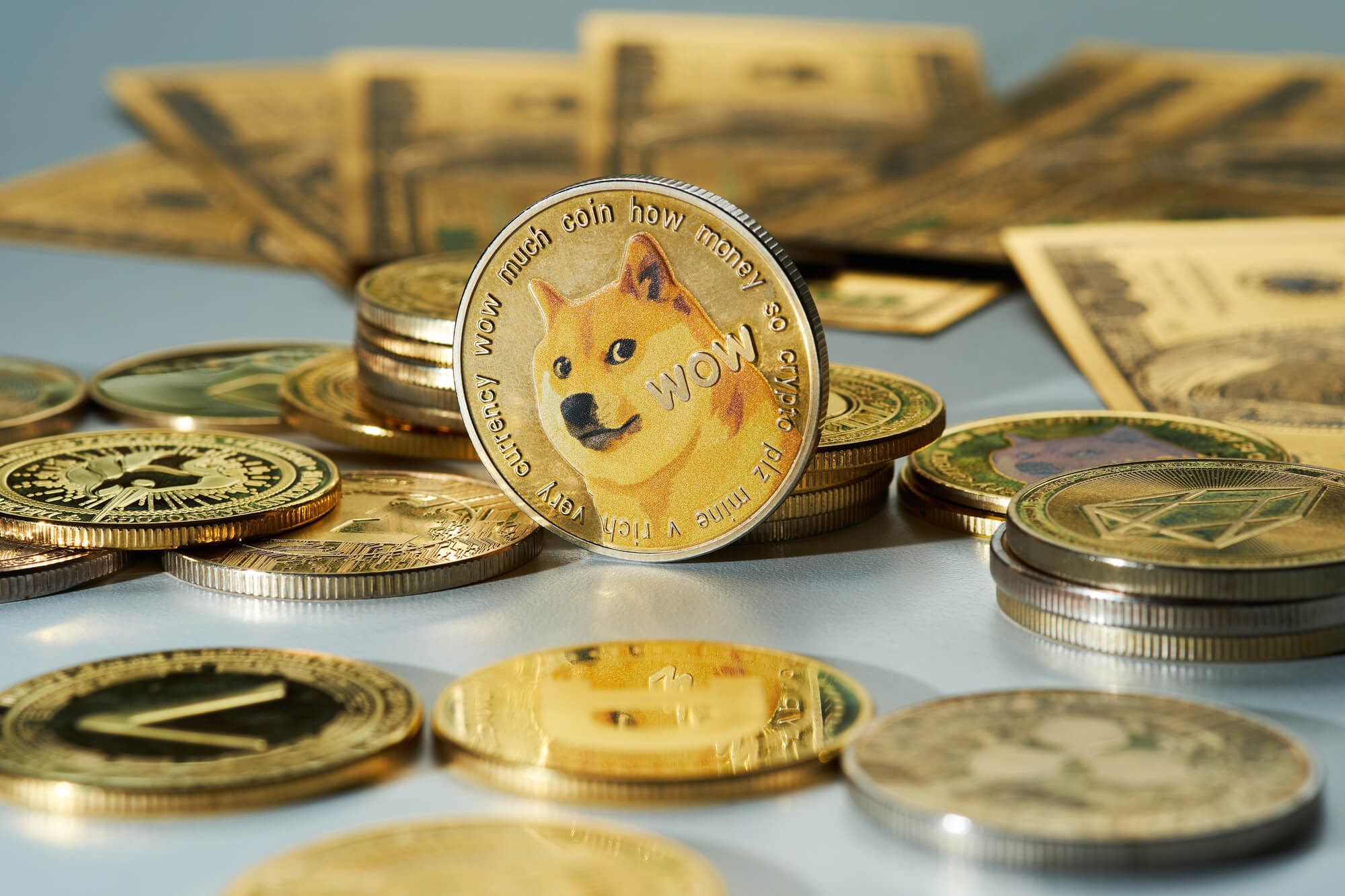
Dogecoin is a cryptocurrency launched in 2013 as a parody of the Bitcoin hype. It now ranks among the ten largest cryptocurrencies by market capitalization. Since November 2025, what has changed most is access through exchange-traded spot products in the US market.
Technically, Dogecoin operates its own blockchain and payment network. Its code originally came from Luckycoin, an offshoot of Litecoin. Dogecoin uses the Proof-of-Work algorithm Scrypt rather than Bitcoin’s SHA-256. The project was launched on December 6, 2013 by software engineer Billy Markus and marketing specialist Jackson Palmer. At the outset, it was intended as satire on the crypto euphoria of the time. Its name came from the “Doge” meme featuring the Shiba Inu dog Kabosu. In its first 72 hours, the price rose by almost 300%. Today, miners secure the chain together with Litecoin. Market capitalization stands at around USD 12 billion, spread across roughly 171 billion units in circulation. There is no supply cap. The price remains about 90% below its all-time high from May 2021, even as broader market infrastructure has made the token easier to access than in its early meme-coin days.
From Bitcoin parody to its own community
Markus worked as a software engineer at IBM in Portland at the time, while Palmer worked in marketing at Adobe in Sydney. Both viewed the project as a comment on the flood of new cryptocurrencies in 2013. The irony, however, gained traction faster than expected. Within three days, the price climbed from USD 0.00026 to USD 0.00095. Palmer later drew his own conclusions. He left the crypto industry entirely in 2015 and later described it as “fundamentally exploitative.”
Even so, Dogecoin is widely regarded as the first major meme coin and as the precursor to an entire market category.
The Dogecoin Foundation was formed in January 2014, one month after the launch. The community gained recognition largely through donation campaigns. That same month, it collected around 26.5 million DOGE, worth roughly USD 30,000. The funds were used to finance the Jamaican bobsleigh team’s participation in the Winter Olympics in Sochi.
Also in 2014, the “Doge4Water” campaign raised around USD 30,000. The money supported a well project run by Charity Water in Kenya’s Tana River basin. In addition, Dogecoin supporters backed NASCAR driver Josh Wise with roughly 67 million DOGE. Around USD 55,000 was raised within a week. Compared with today’s market size, those amounts were small, but they continue to shape the coin’s reputation.
What sets Dogecoin apart from Bitcoin technically
Unlike Bitcoin’s SHA-256, Dogecoin uses the Scrypt algorithm inherited from Litecoin. Proof of Work means computers verify new blocks through computational effort. Bitcoin mining hardware does not work here. Originally, Scrypt therefore required different equipment from Bitcoin mining.
The block reward was random at first. In March 2014, the network switched to a fixed reward of 10,000 DOGE at block 100,000.
Since September 2014, Dogecoin has also used merged mining with Litecoin. The process is known as Auxiliary Proof of Work, or AuxPoW. Miners solve one hash for both chains at the same time and earn rewards in LTC and DOGE without additional computing effort. The smaller chain gains security without needing to attract its own dedicated computing power. More than 70% of the hashrate now comes from this shared mining. As a result, Dogecoin’s security depends heavily on Litecoin’s miner base.
The issuance model also distinguishes Dogecoin from most major cryptocurrencies. There is no maximum supply. With a block time of about one minute, roughly 5 billion new DOGE are created every year. By contrast, Bitcoin caps its supply at 21 million units and bases its value proposition on that limit. Supporters argue that ongoing issuance encourages use as a payment method rather than hoarding. Evidence of broad payment use, however, remains limited, which helps explain why the network’s cultural relevance has outpaced day-to-day transactional adoption.
Elon Musk as a price driver
Few large cryptocurrencies depend as heavily on one public figure’s attention. Since 2021, posts by Elon Musk have repeatedly triggered sharp price moves in DOGE. The Tesla chief has at times called himself the “Dogefather.” Dogecoin’s all-time high in May 2021 also came during a period of particularly intense posting about the coin.
Tesla has accepted DOGE since 2022 for selected merchandise purchases. In December 2025, a well-known Dogecoin developer discovered newly added checkout code for DOGE on Tesla’s redesigned website. So far, however, the company has not confirmed any expansion of the payment function.
The X ecosystem has also fueled expectations. In March 2026, Musk announced the launch of “X Money” for April 2026. The service includes peer-to-peer transfers, banking integration and a debit card in partnership with Visa. The product relies entirely on fiat and does not include a crypto wallet. Dogecoin itself does not play a role in it so far.
Outside the Musk orbit, adoption remains limited, although AMC Theatres accepts DOGE. Relative to its market capitalization, the number of merchants taking it is comparatively small. Price moves therefore appear to follow attention on one person more than actual network usage.
The path to the first SEC-approved Dogecoin ETF
Bitwise made the first regulatory move, filing an S-1 registration for a Dogecoin ETF in January 2025. Several amendments followed during the year. An S-1 is the filing a provider uses to register a new security with the SEC.
In September 2025, REX Shares/Osprey brought the first US Dogecoin product to market. It is structured under the Investment Company Act of 1940 and is therefore not a classic spot ETF. Grayscale listed the first Dogecoin spot ETF on November 24, 2025, under the ticker GDOG on NYSE Arca. Two days later, Bitwise launched BWOW there.
On January 22, 2026, the 21Shares Dogecoin ETF followed under the ticker TDOG on Nasdaq. It was not first to market, but it is the first Dogecoin ETF to carry explicit SEC approval. An exchange-traded fund bundles an underlying asset into a share that trades like a stock. As a physically backed product, TDOG holds DOGE directly rather than tracking the price through futures contracts, so the share price follows the spot price of the cryptocurrency.
In February 2026, 21Shares President Duncan Moir rang the opening bell at the Nasdaq MarketSite. The product is also the only Dogecoin ETF officially supported by House of Doge and the Dogecoin Foundation. Institutional investors can therefore hold DOGE in a portfolio without using a crypto exchange or their own wallet. An asset that began as a joke about cryptocurrencies now sits in the same product wrapper as Bitcoin and Ether.
Concentration in a few wallets remains a risk factor
ETF access has not changed Dogecoin’s issuance model. Roughly every minute, 10,000 new DOGE are created, keeping the supply structurally inflationary. Relative to the circulating amount, that amounts to growth of around 3% per year. Holders therefore see their share diluted unless demand grows at the same pace. Even so, the new issuance is part of the design rather than a defect.
Distribution of holdings is another important factor. The ten largest wallets together hold around 44% to 45% of the circulating supply. The 100 largest hold roughly 66%, and the 1,000 largest about 83%. Such concentration increases the risk of abrupt price movements if large addresses sell.
A Robinhood cold storage address with around 27 billion DOGE is the largest known wallet. That amount equals about 16% of the circulating supply. Dogecoin’s all-time high of USD 0.7376 dates to May 8, 2021. The price currently stands at around USD 0.07, roughly 90% below that peak. Even so, Dogecoin remains among the ten largest cryptocurrencies by market capitalization.

