Disney Selects OpenAI Codex in Major Shift Away From GitHub Copilot and Other AI Coding Tools
Key Takeaways
- •Disney plans to begin adopting OpenAI's Codex platform in August while moving away from Microsoft's GitHub Copilot and several other AI coding tools.
- •The company intends to continue using Anthropic's Claude Enterprise and Cursor alongside Codex, reflecting a multi-platform approach to AI-assisted development.
- •GitHub Copilot was originally powered by OpenAI's Codex model, making Disney's shift to OpenAI's standalone Codex platform a notable competitive development given Microsoft's deep investment in OpenAI.
- •Enterprise security, data protection, and integration capabilities remain critical factors in how large organizations select AI coding tools.
- •The decision highlights growing competition among OpenAI, Microsoft, and Anthropic in the enterprise AI market, where companies are increasingly deploying multiple platforms rather than committing to a single provider.
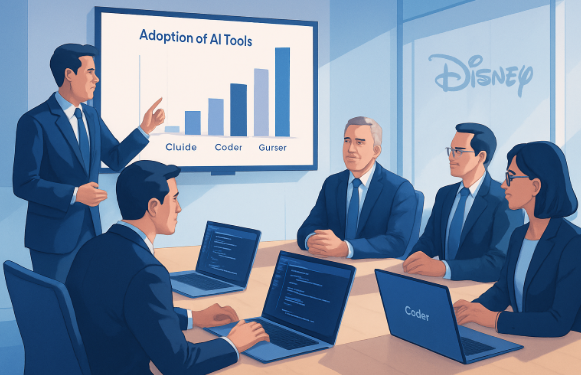
Disney Selects OpenAI Codex in Major Shift Away From GitHub Copilot and Other AI Coding Tools
Disney is preparing for a significant change in its software development strategy, moving away from Microsoft's GitHub Copilot and several other AI coding tools in favor of OpenAI's Codex, according to reports.
The entertainment giant reportedly plans to begin adopting OpenAI's AI-powered coding platform in August as part of an effort to streamline development workflows and expand its use of advanced artificial intelligence technologies.
The decision underscores the rapidly evolving landscape of AI-assisted software development, where major enterprises are increasingly evaluating competing platforms to determine which deliver the greatest productivity gains, security advantages, and integration capabilities.
While Disney is shifting toward OpenAI's Codex, the company is expected to retain access to other AI development platforms, including Anthropic's Claude Enterprise and Cursor. The decision reflects a broader trend among large organizations that are deploying multiple AI tools rather than committing to a single provider.
The development has attracted attention across the technology industry and was highlighted by the X account @coinbureau, adding to growing discussions about how major corporations are restructuring their AI strategies. The original post can be found at https://x.com/coinbureau/status/2082522794693099609.
AI Coding Tools Become Essential for Enterprise Software Teams
Artificial intelligence coding assistants have rapidly emerged as one of the most significant applications of generative AI technology. These tools are designed to help software developers write code, identify errors, improve existing applications, generate documentation, and accelerate development processes.
Companies across industries are increasingly deploying AI coding assistants to boost productivity and reduce the time required to build and maintain software. For large organizations such as Disney, which operates a vast ecosystem of digital platforms, streaming services, entertainment applications, and internal technology systems, software development efficiency is a major priority. AI coding tools can help engineering teams manage complex projects while allowing developers to concentrate on higher-level problem solving and innovation.
The growing adoption of these platforms demonstrates how artificial intelligence is becoming embedded in everyday business operations. According to industry surveys, a majority of professional developers now use AI coding assistants regularly, making enterprise tool selection an increasingly strategic decision with implications for cost, security, and engineering velocity.
OpenAI Codex Gains Momentum Among Enterprise Users
OpenAI's Codex has become one of the most closely watched AI coding solutions as companies explore alternatives to existing developer tools. Codex is designed to assist developers by generating code, understanding programming instructions, analyzing software projects, and helping automate portions of the development process.
The platform builds on advances in large language models, enabling developers to interact with AI systems using natural language commands. Instead of manually writing every line of code, developers can describe what they want to build and receive AI-generated suggestions or implementations. The current iteration of Codex reflects OpenAI's push beyond conversational AI into cloud-based software engineering agents capable of handling multi-step development tasks.
For enterprise users, the appeal lies in the potential to increase efficiency across large engineering teams. Companies are seeking AI tools that can integrate into existing workflows while meeting requirements related to security, reliability, and performance. Disney's reported decision to adopt Codex suggests that OpenAI continues strengthening its position in the competitive AI developer tools market.
Microsoft's GitHub Copilot Faces Increasing Competition
Microsoft's GitHub Copilot has been one of the leading AI coding assistants since its introduction. Built through a partnership involving Microsoft, GitHub, and OpenAI, Copilot became widely adopted among individual developers and enterprise teams. The tool helped popularize AI-assisted programming by providing code suggestions directly within development environments.
Notably, Copilot was originally powered by OpenAI's Codex model, making Disney's shift to OpenAI's own standalone Codex platform a particularly striking competitive development. The two companies, while deeply intertwined through Microsoft's multibillion-dollar investment in OpenAI, are increasingly offering overlapping products to the same enterprise customers.
However, the AI coding market has grown increasingly competitive. Companies now have more choices, including products from OpenAI, Anthropic, and specialized software development platforms. As AI models improve, businesses are evaluating tools based on factors such as accuracy, security, cost, customization options, and compatibility with internal systems.
Disney's reported move away from GitHub Copilot demonstrates that even established AI coding platforms must continue evolving to retain enterprise customers.
Disney Continues Expanding Its Artificial Intelligence Strategy
Disney has been exploring artificial intelligence applications across multiple areas of its business. The company operates one of the world's largest entertainment ecosystems, encompassing film production, streaming platforms, theme parks, consumer products, and digital services.
Artificial intelligence has the potential to enhance operations across these divisions, from software development to content management and customer experiences. For technology teams, AI coding assistants can help accelerate the creation of digital products and internal systems. For creative businesses, AI tools can support data analysis, personalization, and operational efficiency.
Disney's decision to adopt OpenAI Codex appears to be part of a broader effort to evaluate how AI can contribute to future growth.
Why Companies Are Using Multiple AI Platforms
Although Disney is reportedly moving toward OpenAI Codex, the company will continue using Anthropic's Claude Enterprise and Cursor. This approach reflects a growing trend among large companies: maintaining access to multiple AI systems instead of depending entirely on one provider.
Different AI platforms often have different strengths. Some may perform better in software development, while others may provide advantages in analysis, enterprise security, or specialized workflows. By using multiple tools, companies can select the most appropriate technology for specific tasks. This strategy also reduces dependency on a single AI provider and allows organizations to adapt as new technologies emerge.
As competition in artificial intelligence intensifies, businesses are expected to continue experimenting with different platforms.
Enterprise Security and Data Protection Remain Key Factors
For large companies adopting AI tools, security remains one of the most important considerations. Organizations must ensure that sensitive information, proprietary software, and internal data are protected when using artificial intelligence systems.
Enterprise versions of AI platforms typically include additional security features designed to address corporate requirements. These features may include enhanced data controls, administrative management, compliance support, and privacy protections.
Disney's continued use of enterprise-focused AI solutions suggests that security and reliability are likely important factors in its technology decisions. As AI adoption expands, companies will increasingly evaluate not only performance but also how safely these tools can be integrated into business operations.
The Growing AI Competition Between OpenAI, Microsoft, and Anthropic
Disney's reported technology shift highlights the broader competition among leading AI companies. OpenAI, Microsoft, and Anthropic have become major players in the enterprise artificial intelligence market, each developing tools designed to attract businesses seeking productivity improvements.
Microsoft has integrated AI throughout its software ecosystem, including GitHub, Microsoft 365, and cloud services. Microsoft is also OpenAI's largest investor, adding a layer of complexity to the competitive landscape as OpenAI increasingly offers its own enterprise tools that overlap with Microsoft-aligned products. OpenAI has expanded from consumer AI products into enterprise solutions and specialized tools for developers. Anthropic has focused heavily on enterprise applications through Claude models and business-focused AI services.
The competition is driving rapid innovation as companies improve their AI systems and introduce new features.
AI Coding Revolution Changes Software Development
The rise of AI coding assistants represents one of the most significant changes in software engineering in decades. Traditionally, developers spent considerable time writing code manually, debugging errors, and researching technical solutions. AI tools are transforming that process by acting as collaborative assistants that can help developers complete tasks faster.
While AI does not replace human developers, it can automate repetitive work and provide suggestions that improve productivity. Many companies believe AI-assisted development will become a standard part of modern software engineering. The adoption of these tools by major companies like Disney demonstrates how quickly AI is becoming embedded in professional workflows.
Potential Impact on the Technology Industry
Disney's reported decision could influence how other large companies evaluate AI coding platforms. When major enterprises adopt new technologies, other organizations often examine whether similar approaches could benefit their own operations.
The shift also shows that the AI market remains highly competitive and continues evolving rapidly. Companies that once dominated certain categories may face pressure as new competitors introduce more advanced solutions. For developers and technology teams, increased competition could result in better tools, improved features, and more choices.
Looking Ahead
Disney's reported transition from GitHub Copilot and other AI coding tools to OpenAI's Codex represents another major development in the enterprise artificial intelligence race. The company's plan to adopt Codex in August while maintaining access to Anthropic's Claude Enterprise and Cursor illustrates how large organizations are taking a flexible approach to AI technology.
Rather than relying on a single platform, companies are increasingly selecting tools based on specific needs, security requirements, and performance capabilities. The development highlights the growing importance of AI-assisted software development and the competition among technology leaders to deliver the best enterprise solutions.
The news has also received attention after being highlighted by the X account @coinbureau, contributing to broader discussions about the future of AI adoption among global companies.
As artificial intelligence continues transforming business operations, Disney's move may signal a broader shift in how enterprises approach software development and digital innovation.
Source: Hoka News

