Seven Nigerian Tech Professionals With Disabilities Building Careers and Expanding Access
Key Takeaways
- •Opeolu Akinola co-founded the AccessTech Innovation and Research Centre in Lagos, and nearly 5,000 students across Africa have reportedly passed through his classes.
- •Victor Ekwueme, an Odoo specialist and data scientist at Chams, found that disclosing his disability on his CV led to fewer interviews, while omitting it led to interviews but no job offers.
- •Toyosi Badejo-Okusanya's company Adaptive Atelier offers products that help companies identify and fix website accessibility problems while creating paid consulting work for disabled professionals.
- •Deaf-in-Tech, a programme begun in 2022 under Dr Arowolo Ayoola, has trained over 1,000 people, supported 10 deaf founders and placed at least 32 graduates in technical roles.
- •Divinegift Usman founded Zions Assistive Tech Solutions in Kaduna in 2021, and in late 2025 worked remotely for a UK-based company, beating a two-month target of 40 community members by more than 100%.
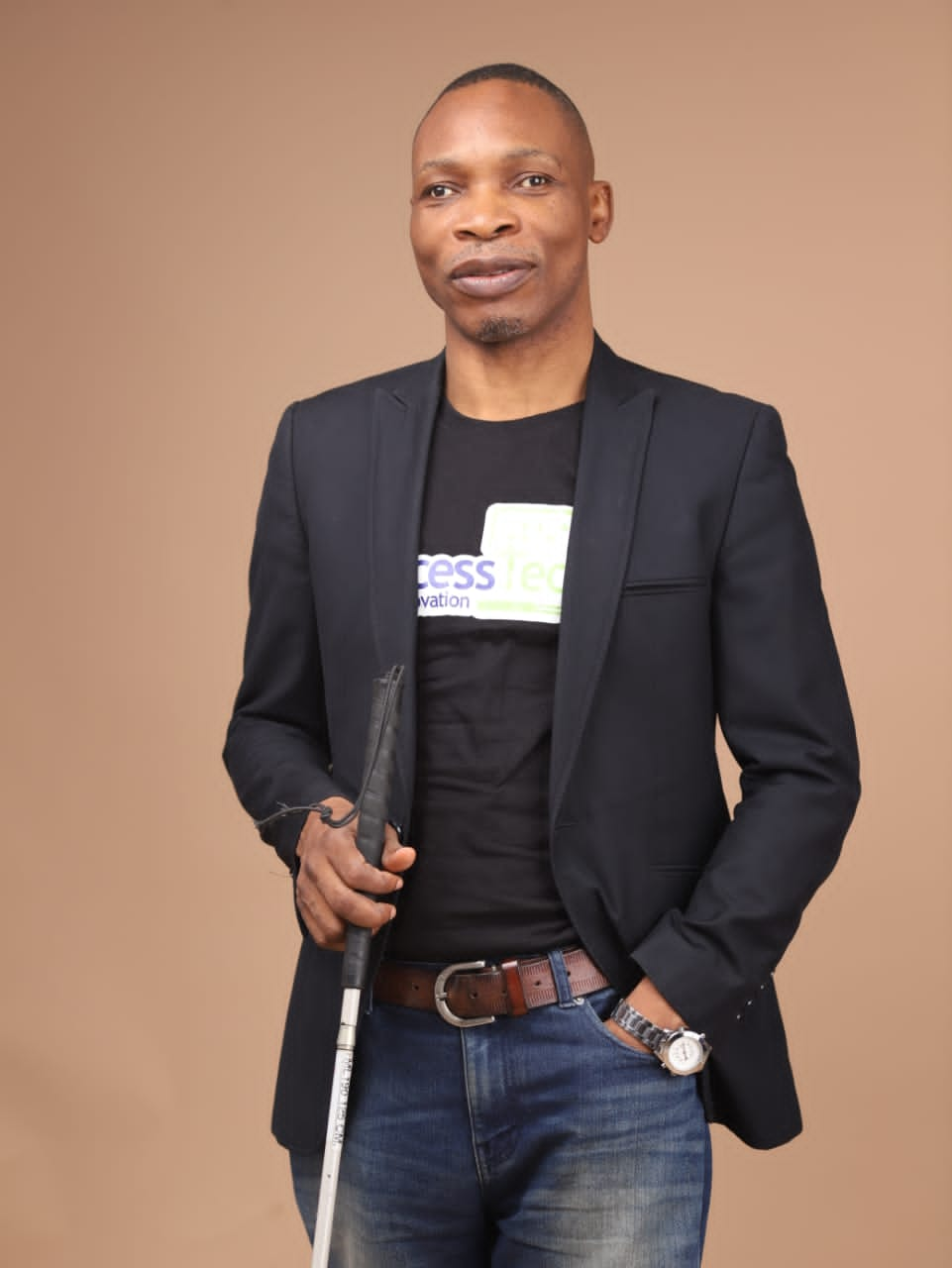
Technology is frequently called the great equaliser — a field where what a person can build matters more than how they look, walk, hear or see. For many Nigerian tech professionals with disabilities, however, the reality is more complicated. The work itself may be open to them, because code does not care who wrote it. Nearly everything surrounding that work — the tools, the hiring process, the lessons, the office — was designed with someone else in mind.
A poorly designed website can prevent a screen reader from interpreting its content. An inaccessible coding tool can turn even simple programming tasks into obstacles for someone who cannot see the interface. A video lesson without captions or sign language interpretation can shut out people who are deaf or hard of hearing. In tech, disability is rarely a limit on ability; more often it is a limit on access, and access is something other people decide. The industry does have a shared benchmark — the Web Content Accessibility Guidelines (WCAG), the World Wide Web Consortium's global standard for sites built to work with assistive technology — but, as the stories below show, it is applied unevenly in practice.
The challenges tend to be quiet rather than dramatic, but they repeat: an application that goes unanswered, an interview that ends early, a device that costs more than a month's pay, a well-meaning offer of charity when the person asked for a job. When people living with disabilities in tech describe what they want to hear, the answer is usually simple. They are not after applause but a fair chance. Many say they are tired of being described as inspiring for doing ordinary work, and of being asked to prove abilities their colleagues are assumed to have.
They also pass on what they have learned to the next person, because they know how much the first step costs. Taken together, their stories show that inclusion is a design choice — and that an industry built to solve problems has not yet solved this one. Here are seven Nigerians with disabilities, what they do and what their journeys have taught them.
Opeolu Akinola: three decades of teaching computing to blind students
Opeolu Akinola was diagnosed at age three with retinitis pigmentosa, a rare genetic disorder, and lost his sight completely within a few years. He went on to spend roughly three decades teaching himself computing. In 1994, he ran into a barrier many blind professionals still recognise: confidentiality rules stopped him from using an assistant, and he had no assistive technology to replace one.
He began by volunteering at a nonprofit in 1995. In 1999, he joined the Nigerwives Braille Book Production Centre as its first computer instructor, where he built a curriculum described as the first of its kind in West Africa and trained an estimated 20 to 30 people. He later co-founded the AccessTech Innovation and Research Centre in Lagos, which teaches keyboard skills, office software, text-to-speech, speech-to-text and AI tools to people with disabilities, mainly the visually impaired. The centre runs on a dual model: corporate clients pay for training, while people who cannot afford it are taught for free.
In 2022, the team behind AccessTech won $1,500 in seed funding in Nexford University's first Business Case competition. In January 2023, AccessTech received a Microsoft AI for Accessibility grant to train 200 people between May 2023 and May 2024, and 238 completed the programme. Nearly 5,000 students across Africa have reportedly passed through Akinola's classes.
Victor Ekwueme: Odoo specialist and data scientist at Chams
At about seven years old, Victor Ekwueme noticed that evenings were harder to see through than daytime. He did not know it then, but it was the first sign of retinitis pigmentosa, a condition that would later take most of his sight. Decades on, he works as an Odoo specialist and data scientist at Chams, and he tutors young blind people in data analytics.
His path forward began when he decided to rely on tools and people. He used a screen reader, wrote a program to pull data from web pages his screen reader could not handle, and took the MIT Python course on edX. In 2011, before his sight declined further, he won the Apps4Africa hackathon with a hospital management app.
Ekwueme found that listing his disability on his CV meant few interviews, while removing it led to interviews but no offers. That trade-off — disclose and lose interviews, omit and still lose offers — is the hiring bind many disabled applicants describe. Alongside his role at Chams, he tutors in AccessTech's data analytics pilot for young visually impaired people.
Toyosi Badejo-Okusanya: scaling accessibility through Adaptive Atelier
Toyosi Badejo-Okusanya was diagnosed with hearing loss at four. Growing up in Lagos, she saw very few young disabled people building careers, creating technology or shaping industries. Her career began in global marketing, accessibility consulting and brand strategy, where she worked on accessible digital campaigns, inclusive content strategy and visual merchandising.
The turning point came when she decided to move from storytelling and advocacy into building a business that tackles accessibility at scale. She had noticed that many websites and platforms across Africa and beyond are not built for disabled people, cutting them off from jobs, education, banking, shopping and essential information.
Her company, Adaptive Atelier, is built around three products. Adaptive API pairs AI with insights from disabled experts to help companies find and fix accessibility problems while creating paid work for disabled professionals. AdaptiveWiz lets businesses audit their websites, and Adaptive Test pays disabled people to work as consultants testing websites. In effect, her products turn the accessibility gap she noticed into paid work for the people it affects most.
Divinegift Usman: assistive technology training in Kaduna
Divinegift Usman woke one night at nine to find his sight gone, though he had never had an eye condition. He studied computer science at the Federal University of Technology, Minna, as the only visually impaired student in his set, relying on classmates to record handouts and read exam questions. He says he had never typed on a computer before training under Akinola in Lagos, where he learned screen readers and typing.
That training led to Zions Assistive Tech Solutions in Kaduna, founded in 2021, which teaches visually impaired people to use Android phones, computers, screen readers, email and the internet. In doing so he extended the chain that began with his own teacher, carrying assistive technology training from Lagos to northern Nigeria. In December 2020, he had founded the Divine Life and Light Foundation in Kaduna, where he built relationships with NGOs, government institutions, schools and disability groups. He once trained a client in Abuja, about 200 km away. His biggest obstacle is cost, because the gadgets his clients need are expensive. He keeps going because, in his words, "if he benefited this much, others should benefit too."
His skills now reach beyond Nigeria. In late 2025, he worked remotely as a community-building consultant for a UK-based company, beating a two-month target of 40 members by more than 100%. Remote contracts like this also widen the pool of clients a disabled Nigerian professional can reach well beyond the city where they live.
Afolabi: backend engineer who wrote his early code in Notepad
Afolabi's eyesight began failing in 2005 and worsened over the next few years. In 2013, he attended a rehabilitation centre where he learned screen readers, Braille and typing, though he found Braille hard and resisted it at first. Around 2014 and 2015, he taught himself to code with Codecademy, Coursera and W3Schools. Many editors were inaccessible, so he wrote much of his early code in Notepad. That workaround captures how inaccessible developer tools raise the cost of entry long before a blind programmer reaches the job market.
He later completed a two-and-a-half-year software engineering diploma at NIIT in Lagos, where he was the first visually impaired student, and has worked as a backend engineer at Cyclone Technology Limited, a Nigerian software consulting firm, since 2022. His toolkit includes NVDA on his computer, TalkBack on his phone and DeepSeek to learn concepts faster. He is also building a trivia app, and he argues that accessibility should be built in from the start, not added later. It is the principle the industry's accessibility standards are built on — and, as his Notepad years suggest, one that practice does not always follow.
Albert: from a Facebook ad to a data analyst role
After college, Albert was not sure what to do next. He saw a Facebook ad inviting deaf applicants to a tech programme and applied. At Deaf-in-Tech, he studied data analytics, coding and visualisation tools such as Power BI, and learned to build a portfolio and network online. Job hunting in Nigeria is already hard, and he faced steeper odds as a deaf person. He now works as a data analyst at Connected Development, a civil society organisation focused on transparency and good governance, and calls joining the programme a life-changing decision.
Victor: teaching coding in sign language in Abuja
The seventh professional, Victor, teaches coding in sign language in Abuja, often starting with the basics, such as switching on a computer and using a keyboard, and relying on live demonstrations and repetition. The programme he works for began in 2022 under Dr Arowolo Ayoola, who was moved by a deaf university roommate whom employers judged by offers of charity instead of by his qualifications.
Deaf-in-Tech has since trained over 1,000 people, supported 10 deaf founders and placed at least 32 graduates in technical roles. Victor says the main barrier for deaf students is communication. Once it is removed, he says, they can learn just as quickly as anyone else. What remains unresolved across all seven profiles, then, is not ability but access — the design choices, from coding tools to classroom materials to hiring, that still decide who gets to participate.

