Diesel Futures Plunge Amid Strait of Hormuz Reopening Hopes, Yet Benchmark Retail Price Rises for Fourth Straight Week
Key Takeaways
- •The DOE/EIA benchmark retail diesel price rose to $5.348 per gallon, up 3.5 cents, representing the fourth consecutive weekly increase with a cumulative gain of 77 cents over that period.
- •ULSD futures on the CME fell 3.68%, 2.09%, and 5.93% over three consecutive trading days ending Monday, driven by market optimism about a potential agreement to reopen the Strait of Hormuz.
- •President Trump publicly urged oil companies to lower retail prices following second-quarter earnings reports that revealed surging profitability across the sector.
- •The divergence between falling futures and rising retail prices reflects a well-documented lag of days to weeks as higher-cost supply purchased earlier moves through the distribution system.
- •Industry supply chain structures—including the branded and unbranded fuel system and independent refiners' dependence on market-priced inputs—limit the practical impact of political pressure on diesel pricing.
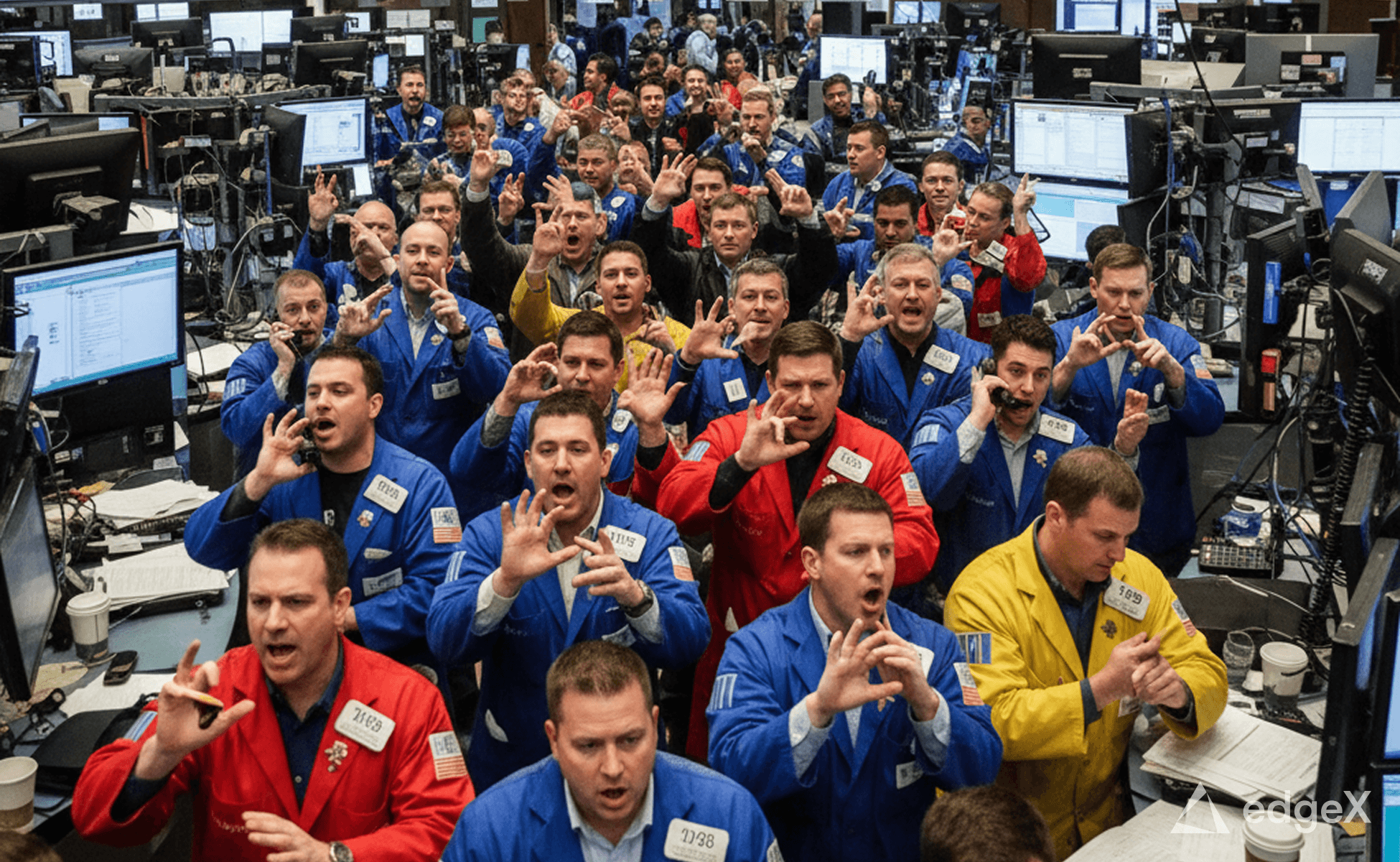
Diesel buyers navigating the pump may feel whiplashed by conflicting signals, as futures prices have tumbled sharply over the past several sessions while the benchmark retail price continues its steady climb — a divergence rooted in the well-documented lag between futures markets and retail prices, which typically adjust over a period of days to weeks as existing supply purchased at higher costs works its way through the distribution system.
The Department of Energy/Energy Information Administration weekly average retail diesel price — the figure underpinning most fuel surcharges across the trucking and freight industries — was published Tuesday at $5.348 per gallon, up 3.5 cents. This marks the fourth consecutive weekly increase, representing a cumulative rise of 77 cents over that period. For carriers and shippers, each tick upward flows directly into surcharge calculations that affect transportation costs across the supply chain.
That retail increase arrived even as futures prices fell rapidly on news that a deal to reopen the Strait of Hormuz was imminent. The Strait, through which roughly one-fifth of global oil consumption normally transits, has been a flashpoint since its closure sent shockwaves through energy markets. The decline followed a steep three-day slide driven by the same optimism, with the market seizing on any sign that the strait's closure might be coming to an end.
Price swings in the ultra-low sulfur diesel (ULSD) contract on the CME commodity exchange during those three days — and continuing into Tuesday — rank among the most volatile since the United States and Israel launched attacks on Iran at the beginning of March.
With traders latching onto any talk of a settlement to reopen the Strait of Hormuz, ULSD on CME fell 3.68%, 2.09%, and 5.93% respectively across the three trading days ending Monday. The session before that streak, the contract had risen 5.28%.
The Monday settlement of $3.8772 per gallon was the lowest since July 13 and represented a notable drop from the July 23 settlement of $4.3416 per gallon. At approximately 9:40 a.m. Tuesday, ULSD on CME was down another 4.34%, or 16.81 cents, to $3.7091 per gallon. Had it settled at that level, it would have marked the lowest settlement since July 10.
Trump Calls on Oil Companies to Cut Retail Prices
While futures markets plunged, the retail side faces a separate layer of uncertainty: the potential reaction to President Trump's call for oil companies to lower prices at the pump. That appeal was prompted by a series of second-quarter earnings reports showing that profitability across the sector soared.
The dynamics, however, are far from straightforward.
Understanding the Supply Chain
ExxonMobil and Chevron are fully integrated oil companies — they produce crude and other hydrocarbons and refine them into finished products such as gasoline and diesel. These companies sell wholesale products through a distribution system known as "the rack," adjusting prices daily based on market conditions and, during volatile periods, updating them multiple times per day.
They do not, however, set prices at the pump. Retail pump prices are determined by individual station owners, who may operate anywhere from a single location to a hundred.
Independent refiners such as Valero and Marathon operate differently. They are not integrated and purchase all of their inputs — primarily crude — on the open market or through supply contracts. They then convert those inputs into finished products, an activity currently generating substantial profits as refining spreads have widened dramatically during the Iran conflict. These refiners also distribute through rack systems.
Limits of Political Pressure
No single entity can reduce the price of crude at will. Even if major oil companies sought to comply with the President's call and slow wholesale price increases, there is no mechanism to unilaterally lower the cost of the various blendstocks used in manufacturing gasoline or diesel — products such as ethanol, reformate, or raffinate.
For a company under pressure from the White House, the dilemma is clear: while it can attempt to limit wholesale price increases or accelerate decreases, those actions are independent of input costs, which remain outside its control.
How Wholesale Supply Works
Supplying a wholesale system involves more than refinery output alone. A company like Valero continuously sells gasoline and diesel into the spot and wholesale markets, but that supply may originate from open-market purchases of finished products rather than solely from its own refineries. These systems are constantly buying and selling inputs and outputs to balance operational needs and capture market opportunities.
Independent refiners pay free-market prices for those supplies. If political pressure forced wholesale prices below levels justified by the cost of products purchased to supply those systems, these companies would be squeezed. Such a scenario could lead to tightening supplies — the precise opposite of the intended goal of lowering prices.
Branded vs. Unbranded Fuel
Additional complications arise from the branded and unbranded fuel structure. Chevron, for example, sells "branded" product at the rack to retailers operating under the Chevron name, alongside "unbranded" product available to any retailer — including large chains such as Wawa or Racetrac.
Even if Chevron complied with a presidential call for lower prices, it would likely do so on branded output, leaving unbranded customers at a disadvantage. And even if reductions were applied to both categories, an independent retailer typically does not source all of its supply from a single major company. Such retailers would still need to rely on lesser-known suppliers with no public profile and therefore no political pressure to cut prices.
The result is renewed margin pressure on sizable retailers who purchase unbranded fuel at the rack — a squeeze that, ultimately, cannot persist indefinitely.
Source: FreightWaves

