DEXE Falls to $1.90 Before Rebounding Above $5 in Same Session
Key Takeaways
- •DEXE recovered more than 100% from an intraday low near $1.90 but remained far below its July high of $48.89.
- •Two project-linked Gnosis Safe wallets sent a combined 624,999 DEXE to Binance in the hours before the July 22 crash.
- •Technical readings showed a possible short-term breakout, but the next major resistance area was identified far higher at $32 to $40.
- •Santiment flagged elevated selloff risk one day before the crash due to large token flows moving onto exchanges.
- •No hack, exploit, or smart contract problem had been identified at the time of reporting, and DeXe’s team had not addressed the transfers.
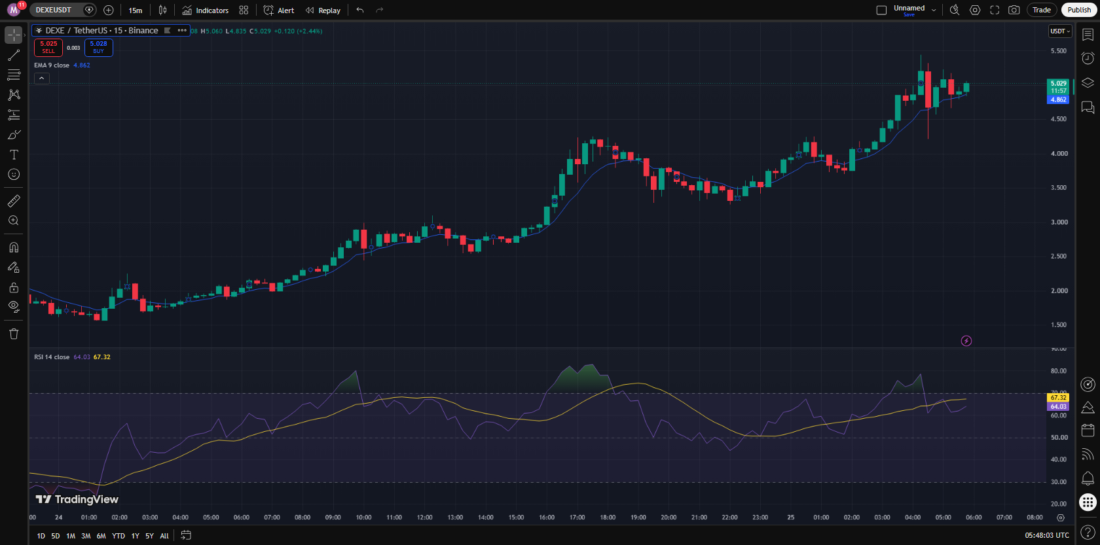
DEXE fell to roughly $1.90 over the past day before rebounding above $5 in the same session, recovering more than 100% from the intraday low while remaining far below levels seen earlier in July.
The token had traded near $40 two weeks earlier and reached a peak of $48.89 on July 13. It then lost most of that value after two project-linked wallets moved millions of dollars’ worth of DEXE to Binance ahead of the July 22 crash.
By the latest cited price, DEXE was above $5 after a sharp reversal from the fresh low. The move followed a steep selloff, a fast rebound, and a sequence of higher short-term levels that had not yet broken down at the time of reporting.
DEXE/USDT 15-minute chart, the reversal off today’s low. Source: TradingView / Binance.
Classical Signals Point to a Possible Base
Chart watchers had already identified a falling wedge on DEXE heading into the week. A falling wedge is a technical pattern in which price moves lower between two converging trendlines and is often watched for a potential upside break when the lower-pressure structure gives way.
The latest rebound resembled that type of breakout. On lower timeframes, the EMA-9 moved back above the candles during the advance. Subsequent pullbacks bounced from that moving average rather than closing below it, a short-term technical shift that traders often read as a change in near-term trend conditions.
The RSI on the 1-hour chart climbed from deeply oversold territory below 20 to 73 during the strongest part of the rally. It briefly reached overbought territory before easing into the mid-60s. In technical analysis, oversold and overbought readings are momentum signals rather than guarantees of reversal, which makes follow-through and failed retests important to watch after a move of this size.
The next major technical test identified in the source sits in the $32 to $40 range, where DEXE spent a full week consolidating before the July 22 crash. Former support levels can act as resistance during a recovery, and that zone remained far above the latest quoted price.
DEXE/USDT 4-hour chart, base through breakdown through today’s base-building. Source: TradingView / Binance.
DEXE/USDT 1-hour chart, EMA-9 and RSI recovery from oversold. Source: TradingView / Binance.
Wave Count Remains Unclear
The move from the February low was described as resembling a textbook impulse through wave three, with the third wave carrying much of the advance. In that reading, wave four developed as a week of sideways trading between roughly $32 and $40 from July 14 through July 21.
Under a cleaner Elliott Wave interpretation, the next phase would have been a fifth wave toward a marginal new high before a larger correction. That sequence did not occur. Instead, DEXE broke down from the range on July 22 and continued falling until it reached the new low near $1.90.
That price action leaves the structure open to interpretation. It could suggest that the fourth wave never fully ended, or that the full move topped earlier than expected. The rebound from the low still carried the shape of a B-wave inside a broader correction rather than confirmation of a new uptrend, based on the source’s technical reading. If that count remains valid, a C-wave lower could still occur before the structure resolves, despite the strength of the rebound.
DEXE/USDT daily chart, the full base-to-ATH-to-crash structure. Source: TradingView / Binance.
DEXE/USDT 30-minute chart, the wave three extension and wave four range. Source: TradingView / Binance.
Two Gnosis Safe Wallets Moved Tokens Before the Crash
The broader context centers on two Gnosis Safe multisig wallets that sent a combined 624,999 DEXE to Binance in the hours before the July 22 crash. Such multisig wallet structures are commonly used by project teams and treasuries rather than individual traders.
One Gnosis Safe moved 371,309 tokens, worth close to $3.9 million at the time. The tokens were first sent to an intermediate wallet roughly fourteen hours before the price drop, and that wallet then forwarded most of the amount to a Binance deposit address.
First Gnosis Safe wallet, tagged DEXE Whale. Source: Arkham.
A second Gnosis Safe sent 253,690 DEXE, worth around $2.66 million, through a similar path. Its balance history showed the wallet falling to zero on the crash date.
Second Gnosis Safe wallet, balance falling to $0 on July 22. Source: Arkham.
Together, the two transfers represented more than $6 million in project-linked tokens arriving on an exchange within hours of each other. Exchange deposits do not prove a sale by themselves, but they are closely watched because tokens are usually easier to sell once they reach a centralized venue.
The same on-chain activity that later drew scrutiny had appeared positive two weeks earlier. Wallet creation rose sharply around the ChangeNOW listing, in what the source described as one of the largest single-day counts of the year. Transactions above $100,000 reached their fourth-highest daily total in 2026, according to the cited record. Such activity can indicate participation from larger buyers, although on-chain data does not provide full certainty about the identity or intent of participants.
Santiment Flagged Selloff Risk Before the Drop
Santiment’s on-chain desk flagged elevated selloff risk for DEXE one day before the crash. The warning cited large token volumes moving onto exchanges, a type of flow that can leave a rally vulnerable until the market absorbs the supply.
No hack, exploit, or smart contract issue had surfaced as an explanation for the move at the time of reporting. DeXe’s team had not issued a statement addressing the transfers.
The source noted that whether the episode is characterized as a rug pull or as insiders selling into a blow-off top depends on interpretation. For buyers near the high, the financial result was materially similar regardless of the label.
DEXE remains a thinly tracked governance token with unresolved questions about its emission schedule. For tokens with concentrated or unclear circulating supply, wallet-level movements and exchange inflows can become especially important because relatively small changes in available supply may affect market depth. The sharp rebound from the latest low does not remove those open questions.

