DEX/CEX Spot Volume Ratio Nears 25% as Decentralized Exchanges Gain Ground, but Rising UNI Reserves Complicate the Picture
Key Takeaways
- •The DEX/CEX spot trading volume ratio reached roughly 25% in September 2026, according to XWIN Japan's analysis published on CryptoQuant.
- •XWIN Japan attributed growing DEX interest to improved liquidity and user experience, the rise of perpetual DEXs such as Hyperliquid, and rising demand for self-custodial services.
- •The analyst cautioned that a rising DEX/CEX ratio can reflect declining centralized exchange volume and that incentive-driven trading can inflate reported activity.
- •A claim that DEX market share surged more than 1,100% in five years should not be treated as confirmed, as it depends heavily on the starting point and methodology.
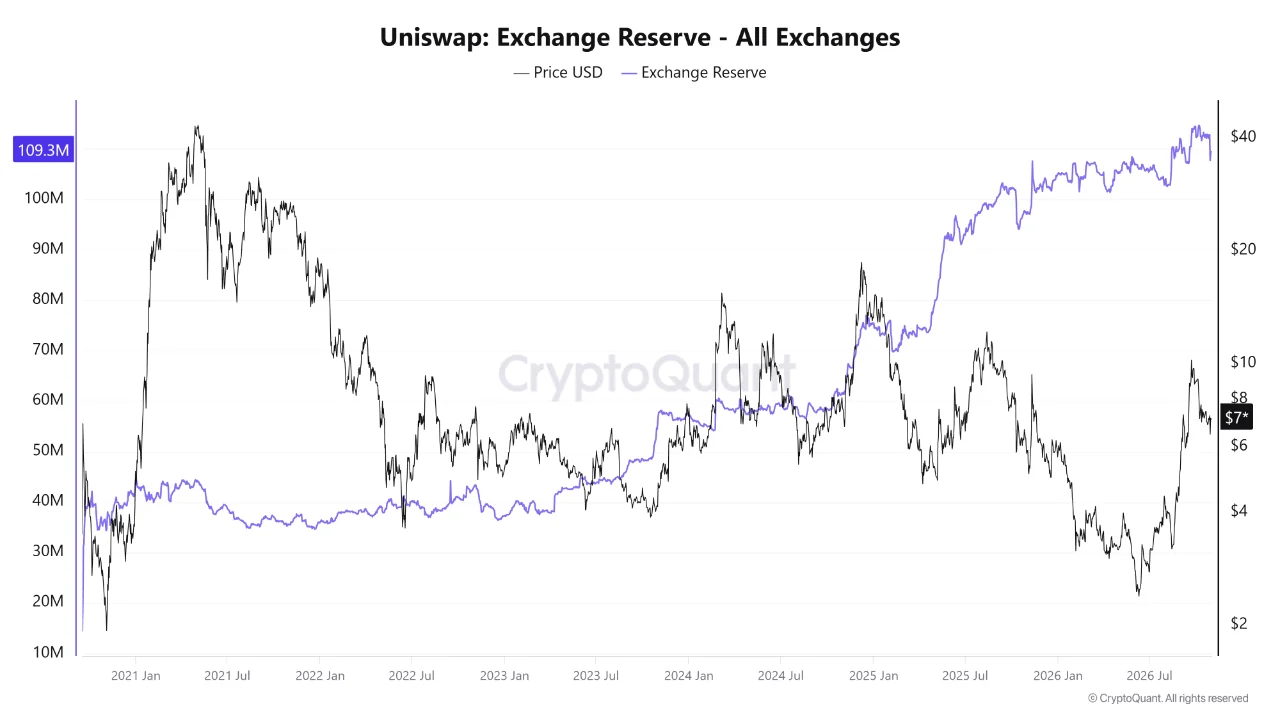
- •UNI exchange reserves climbed to roughly 109.3 million tokens from about 55-60 million in 2024, a level that may suggest potential selling pressure but does not prove holders intend to sell.
Decentralized Exchange Momentum Builds
The era of decentralized exchanges (DEXs) may be gaining momentum, with data showing decentralized platforms steadily taking a larger share of crypto spot trading. In September 2026, the DEX/CEX spot volume ratio reached roughly 25%, according to an analysis published by XWIN Japan on CryptoQuant. The figure suggests decentralized venues are closing ground on their centralized counterparts. The two venue types differ structurally: DEXs settle trades through on-chain smart contracts while traders retain custody of their own funds, whereas CEXs hold user deposits in custodial wallets and match orders on internal systems.
At the same time, Uniswap's UNI token shows sharply rising exchange reserves, a development that complicates the picture. The data points to growing adoption, yet it leaves open questions about token performance and the durability of the trend.
What Is Driving Interest in the Era of DEXs?
XWIN Japan raised the question on CryptoQuant, asking, “Is the Era of DEXs Finally Arriving?” The analyst wrote that “a structural shift is taking place in crypto trading.”
According to the post, the DEX/CEX ratio reached roughly 25% in September 2026. The ratio compares spot trading volume on decentralized platforms with volume on centralized ones.
The post lists three trends worth watching: better liquidity, execution, and user experience on DEXs; the rise of perpetual DEXs such as Hyperliquid; and growing demand for self-custodial financial services. Each trend relates to how traders decide where to place their orders. Perpetual futures, the contract type behind venues like Hyperliquid, are derivatives with no expiry date. The self-custody trend touches on a long-standing point of separation between the two models, since assets held on an intermediary remain exposed if the operator fails, while trading from a user's own wallet removes that particular dependency.
Some observers claim DEX market share has surged by more than 1,100% in five years. However, the analyst stated that the figure “depends heavily on the starting point and methodology.” Different starting dates and calculation methods can change the result considerably. For that reason, it “should not be treated as confirmed.”
The analyst also cautioned that a rising ratio “can reflect declining CEX volume, not just stronger DEX demand.” In addition, incentive-driven trading can inflate reported activity. Both factors can change how the ratio should be read.
UNI Exchange Reserves Complicate the Picture
CryptoQuant's UNI exchange-reserve chart shows roughly 109.3 million UNI held across exchanges, up sharply from around 55–60 million in 2024. The chart tracks token balances held on trading platforms. UNI is the governance token of Uniswap, one of the decentralized venues whose volume counts toward the DEX side of the ratio. At the chart's endpoint, UNI trades near $7.
Rising exchange reserves can indicate that more tokens are available for trading. A larger balance means more supply can be traded at short notice. The post adds that reserves may point to potential selling pressure. However, the analyst clarified that they “do not prove that holders are about to sell.”
The post further notes that “UNI token flows are not the same thing as Uniswap's trading activity.” Reserves show where tokens sit, while protocol activity reflects actual trades. Therefore, the chart alone cannot confirm or dispute DEX growth.
XWIN Japan said DeFi “is becoming a more important part of financial infrastructure,” adding that “we should distinguish platform adoption from token performance.”
The metrics to watch next are absolute DEX volume, active users, protocol revenue, and exchange reserves. These figures show whether activity continues without rewards. The post states that “a sustainable bull case needs real users and fee generation, even after incentives fade.” The analyst closed by saying DeFi's success “still has to be measured, not assumed.”
This article originally appeared on Blockonomi.

