DENR launches children’s e-book series on the West Philippine Sea
Key Takeaways
- •The DENR launched a three-book e-book series focused on the West Philippine Sea and aimed at young Filipinos.
- •The first title features a green sea turtle named Pawi and introduces mangroves, seagrass meadows, coral reefs, and coastal communities.
- •The books discuss environmental threats including pollution, overfishing, and habitat loss, and promote actions such as reducing plastic waste and joining cleanup drives.
- •The second book is scheduled for August, while the final book will be released in September on International Coastal Cleanup Day.
- •The series comes amid continuing tensions in the South China Sea and highlights the Philippines’ 2016 arbitral ruling on China’s nine-dash line claims.
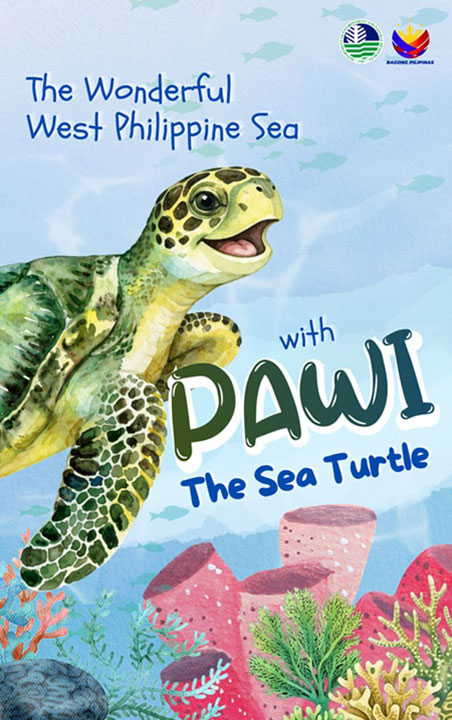
The Department of Environment and Natural Resources (DENR) on Tuesday launched its e-book series on the West Philippine Sea (WPS), aiming to teach young Filipinos how to help protect the country’s marine biodiversity amid disputes over the waterway.
“Stories make big ideas small enough for children to hold,” DENR Secretary Juan Miguel Cuna said in a statement.
Wonderful West Philippine Sea with Pawi the Sea Turtle, the first of the three-part children’s books, features a green sea turtle named Pawi as it explores mangroves, seagrass meadows, coral reefs, and coastal communities.
The book includes age-appropriate discussions on how pollution, overfishing, and habitat loss threaten marine ecosystems and coastal livelihoods. It also encourages simple environmental actions, such as reducing single-use plastics, properly disposing of waste, conserving water, and joining community cleanup drives.
“By meeting Pawi, children learn that protecting the West Philippine Sea also means protecting our food security, livelihoods, biodiversity, and shared heritage,” Mr. Cuna said.
The second book, scheduled for unveiling in August, follows Maria and her grandfather as they share stories about the West Philippine Sea and its importance to the country’s natural heritage. The final book will be launched in September, coinciding with International Coastal Cleanup Day.
The series arrives as Manila continues to frame the WPS not only as a sovereignty issue but also as a matter tied to marine ecosystems and coastal communities that depend on healthy waters. By introducing those ideas through children’s books, the DENR is adding an educational layer to a dispute that has often been discussed in legal and diplomatic terms.
“We hope to inspire children to appreciate this sea that has long sustained Filipino families,” the DENR chief said. “Recognize it as an important part of our natural heritage, and understand our shared responsibility to protect its rich marine biodiversity for present and future generations.”
“We also want them to understand, in simple terms, why the 2016 Arbitral Award matters for our nation and our seas,” he added.
Tensions over maritime entitlements continue to rise between Manila and Beijing as both nations compete for claims in the South China Sea (SCS).
The Philippines won a landmark ruling in 2016 at the Permanent Court of Arbitration in The Hague, which declared China’s claims over its so-called nine-dash line have no legal basis under the United Nations Convention on the Law of the Sea, or UNCLOS.
Despite the ruling, China continues to assert its presence in Philippine waters. Over the past week, the China Coast Guard (CCG) has reportedly harassed Filipinos in the WPS, including an incident involving a water cannon and dangerous maneuvers. — Almira Louise S. Martinez

