Democrats See Opening to Flip Red States as GOP Fears a 'Prairie Fire' Could Burn Its Senate Majority
Key Takeaways
- •Democrats could take Senate control by flipping Republican-held seats in Ohio and Iowa while retaining Michigan, netting the four seats needed to control the chamber for Trump's final two years in office.
- •Senator Kevin Cramer of North Dakota said Trump is in serious trouble in farm country, driven by tariff-driven price increases, costlier diesel and fertilizer linked to the Iran war, and foreign beef imports harming domestic ranchers.
- •Democrats running in red states, including Rev. Adam Hamilton against Senator Roger Marshall in Kansas and state lawmaker Josh Turek for an open Iowa Senate seat, are capitalizing on Republican vulnerabilities.
- •Polls reportedly show voters do not believe Trump cares about them or their priorities, while Republican officials describe a split between a well-deployed cabinet and an unhelpful president.
- •Common Cause's Dan Vicuña argued that some administration efforts to nationalize elections, including an executive order involving the Postal Service in election administration, are illegal and being challenged in court.
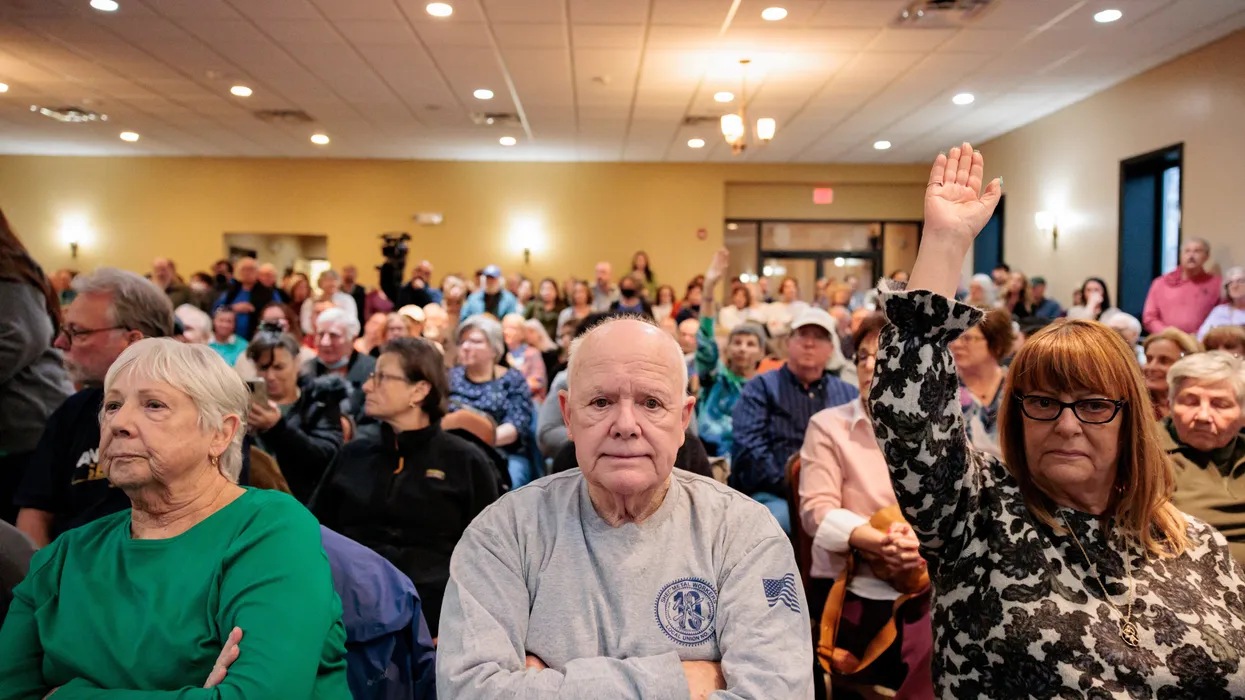
President Donald Trump appears to be losing ground across much of his base, ranging from three-time Trump voters to citizens who had hoped he would fix the ailing economy. A new report reveals that Democrats have drawn up a game plan for flipping traditionally red states such as Iowa and Kansas away from the Republican Party — chiefly by tying the GOP brand inextricably to both Trump himself and his economic record. The stakes are considerable: with Republicans holding a narrow Senate majority, midterm losses in even a handful of normally safe seats could hand Democrats control of the chamber for the final two years of Trump's term, shaping confirmations and any legislative agenda through 2028.
"If Democrats flip Republican-held seats in Ohio and Iowa while retaining Michigan, they will almost certainly net the four seats total needed to take control of the Senate for President Donald Trump's final two years," Politico's Jonathan Martin reported on Sunday. "As the traditional start of the campaign season draws near, though, Republicans are increasingly worried they may be consumed by a worsening prairie fire."
Quoting Sen. Kevin Cramer (R-ND), Martin wrote that the senator said of Trump: "he's in serious trouble in farm country. He being Trump — and Trump is us. I'm not very optimistic." Martin added that Trump's policies have harmed farm-state Republicans by raising their prices through tariffs, making diesel and fertilizer more expensive as a result of the Iran war, and importing foreign beef at the expense of domestic cattle ranchers. That dynamic puts incumbent Republicans in farm states in the position of answering for costs voters feel directly, even as those same states have backed Trump in each of his three campaigns.
Democrats running for Senate in red states are seizing on these GOP political problems, including Rev. Adam Hamilton, the Democratic nominee against Sen. Roger Marshall (R-Kan.), and Democratic state lawmaker Josh Turek, who is challenging Rep. Ashley Hinson (R-Iowa) for an open Senate seat.
"Should Iowa turn back to Democrats after supporting Trump in all three of his elections, and not electing a Democratic senator since 2008, it would be an unmistakable tell about the sort of voters who also backed Barack Obama twice," Martin wrote.
He later added: "The fundamental problem is that polls show voters don't think Trump cares about them or their priorities, and there's little Republican lawmakers or White House aides can do to make him act differently. In fact, a recurring theme in conversations with Republicans is that the cabinet has been well deployed — they were ubiquitous at the Iowa State Fair and in other battleground states this summer — while Trump has been unhelpful. It's as if there are two administrations: the staff and appointees who chief of staff Susie Wiles can control in a conventional fashion, and the president himself who does and says what he wants."
Voting-rights advocates have raised separate concerns about the administration's approach to the midterms. "What they all add up to is a desire to avoid any accountability to the voters in the midterm elections — to ensure, to preordain the outcome of a midterm that he thinks is going to go badly for him," Dan Vicuña, Senior Policy Director for Voting and Fair Representation at Common Cause, told AlterNet in June.
"We know, from the Big Lie of the 2020 election to spurring on a violent revolt to overthrow a free and fair election, that he has no respect for democratic norms, for the voice of the people," Vicuña continued. "This is entirely about his own power and his own ego. He will even invest in protecting that ego and protecting that power at the expense of the needs of the public. People are suffering with high gas prices and affordability issues, and he does not care. All that matters is protecting his power, and he has no interest in whether he does that through democratic means."
He added, "I think this all adds up to a desire to ensure that his party stays in power and his ability to do what he wants — to attack vulnerable communities — remains intact."
Vicuña also argued that some of Trump's election-related efforts may be illegal.
"I think some of these attempts to federalize, to nationalize elections are clearly illegal," Vicuña explained. "You've seen some of that overreach already struck down — attempts to order independent agencies to force a strict voter ID requirement on people. That has been rejected. Common Cause is in court challenging the latest executive order to turn the United States Postal Service into some election administration agency and to create a further bureaucratic layer to make it more difficult to vote by mail. In terms of the president's authority to order around USPS, it's illegal. In terms of USPS's authority to become some sort of national election administration agency, it far exceeds the legal authority that Congress gave to the postal service. The statute describing what kind of work the postal service would do is about postal service work — processing mail and selling stamps. It has nothing to do with election administration."
