"Such a Thumping": Why Trump's Elaborate 2026 Election Plot Failed on Every Level
Key Takeaways
- •Trump's pre-election tactics to shape the 2026 midterms, including curbing mail-in voting, stationing law enforcement at polling places, urging voter roll purges, and threatening lawsuits, failed to alter the outcome.
- •Trump conceded the Democrats' takeover of both the Senate and House without alleging fraud or declaring an emergency, unlike his response to his 2020 defeat.
- •Kyle Kondik of Sabato's Crystal Ball characterized the Democratic wave as one of the biggest in American history, comparing it to the 1974 Watergate midterms and calling it clearly bigger than 2006.
- •Kondik identified young people and Hispanic voters as the groups showing the largest shifts back toward Democrats.
- •Kondik suggested the wave makes the 2028 Democratic presidential nomination especially valuable, since Trump's weakened standing could drag down the Republican nominee.
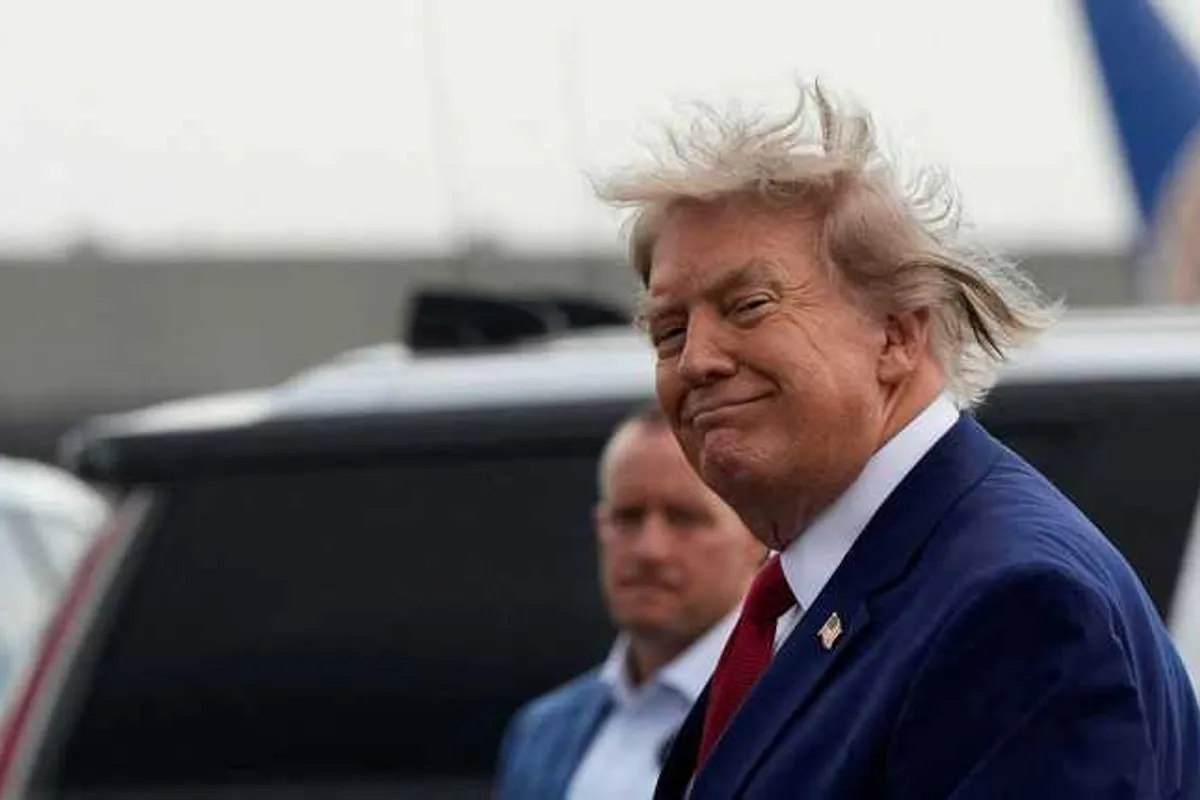
President Donald Trump mounted a wide-ranging effort to tilt the 2026 midterm elections before Election Day, deploying an array of tactics that included restricting mail-in voting, sending law enforcement to polling places, pressing states to purge voters from registration rolls, and threatening a barrage of frivolous lawsuits. Mail-in voting, which tens of millions of Americans adopted after its pandemic-era expansion in 2020, has been the subject of recurring legislative and legal battles in recent years, and voter roll purges have repeatedly drawn litigation over whether eligible voters are caught in the sweep — context that made each of these pre-election moves consequential in its own right.
In the end, the plot failed on every level. Speaking exclusively with AlterNet on Thursday, one of America's top election and polling experts explained why the 2026 midterms did not end in another coup attempt.
After the votes were counted, Trump accepted the Democrats' sweeping takeover of the Senate and House of Representatives — a result that hands Democrats committee chairmanships and control of each chamber's legislative agenda when the new Congress organizes. He did not declare a national emergency to seize ballots or halt the voting, and there was no "Big Lie" baselessly claiming the election was stolen, as there was after his loss in the 2020 presidential election. Instead, he did what all candidates in a democracy are expected to do: graciously accept the results, at least in public.
So what happened?
"This was such a thumping that even he couldn't deny it with a straight face," Kyle Kondik, managing editor of Sabato's Crystal Ball, a leading election prediction and analysis group based at the University of Virginia, told AlterNet. Kondik also noted that Trump failed to stop Joe Biden from winning the 2020 election despite pursuing illegitimate lawsuits and, ultimately, the Jan. 6 insurrection.
"This is one of the biggest waves in American history," Kondik added, drawing a parallel between voter dissatisfaction with Republican corruption and inflation in two past sets of midterm elections and the verdict voters delivered on the current Republican administration's corruption and inflation.
"The Watergate wave of 1974 might be the only comparable election in modern history," Kondik told AlterNet. "This was kind of like 2006, but clearly bigger."
The 1974 midterms took place under President Gerald Ford, who had controversially pardoned his predecessor, Richard Nixon, after Nixon resigned in disgrace over the cover-up of a politically motivated burglary — the Watergate scandal. The 2006 midterms unfolded under President George W. Bush, who was battling scandal over misleading the public about the reasons America invaded Iraq. Both administrations also contended with weak economies marked by high inflation.
Following the 1974 and 2006 midterms, Democrats capitalized on broad discontent over the economy and scandals, going on to win the next presidential elections with Jimmy Carter in 1976 and Barack Obama in 2008. Kondik suggested the victorious party could repeat that feat in 2028.
"When there's such a huge swing all sorts of voters move, but the biggest shifts back toward Democrats seemed to be among young people and Hispanics," Kondik told AlterNet.
He continued, "The giant wave only makes the 2028 Democratic presidential nomination more worth having, because Trump is weak and may never truly bounce back in approval. So Trump may drag down whoever the Republican nominee is. I think the fight for the Democratic nomination is wide open."

