Democrats Projected to Take Back the U.S. Senate After GOP Losses in Four States
Key Takeaways
- •Democrats appeared to retake the Senate majority on Tuesday evening following Republican losses in South Carolina, Texas, Kansas, and Iowa.
- •Because a 50-50 Senate would place the tie-breaking vote with Republican Vice President JD Vance, Democrats needed a net gain of four Republican-held seats to govern.
- •The majority party controls the Senate's calendar and committees, and Cabinet and judicial nominees are confirmed by simple majority.
- •Democratic gains were fueled by voter anger over the economy, immigration enforcement, and President Trump's second-term agenda in competitive states like Ohio, Kansas, Iowa, and Nebraska.
- •Final results in some states might not be announced until Wednesday afternoon or later, with the new balance of power taking effect in January when the new Congress is sworn in.
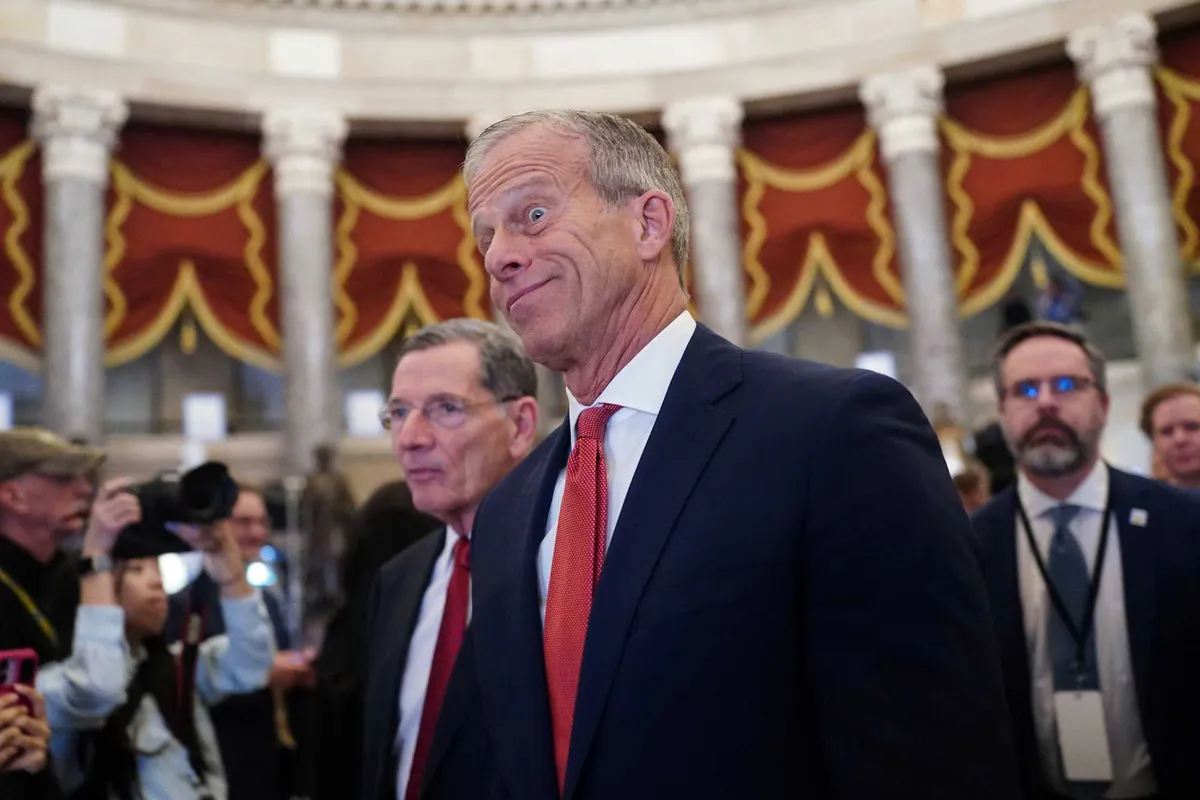
Democrats appeared to have taken back the U.S. Senate as of Tuesday evening, after Republicans lost in South Carolina, Texas, Kansas and Iowa — delivering the "blue tsunami" that Democrats had hoped to see on Election Night.
The Senate map was far less settled heading into Election Day than the House map, but Democrats came in with a credible path to control. At a minimum, there was a high likelihood of substantial gains, even in red states. Because a 50-50 chamber would leave the tie-breaking vote in the hands of Republican Vice President JD Vance, Democrats needed a net gain of four Republican-held seats. That threshold carried weight beyond the headline number: the majority party controls the chamber's calendar and its committees, and Cabinet and judicial nominees are confirmed by simple majority.
By that arithmetic, the most likely outcome was a narrowing of the Republican margin — not a clean Democratic sweep, nor a straightforward Republican hold.
The top states to watch were Alaska, Iowa, Kansas, Maine, Michigan, Ohio and Texas, with South Carolina a long shot. There, Darline Graham — sister of the late Sen. Lindsey Graham (D-S.C.) and handpicked by President Donald Trump — saw her campaign missteps leave her dead even with Democrat Dr. Annie Andrews in the final days of the race.
The Cook Political Report rated seven of those contests as toss-ups and viewed Democrats as slight favorites overall, while other forecasters put the odds of Democratic control in the low-to-mid 60s — numbers that likely looked good for the party. Democrats appeared solid in Alaska, Kansas, Michigan, Maine and Ohio, while Iowa, Texas and South Carolina remained distant possibilities. Unless an outright Democratic blowout materialized, the final balance of power might not be announced until Wednesday afternoon — or later, if Alaska's count was close. Whenever the counting ended, the outcome would take practical effect in January, when the new Congress convenes and the winners are sworn in.
Democrats' best opportunities came in states where Republican incumbents or nominees were poor candidates, ran terrible campaigns, or were weighed down by President Donald Trump's drag on the GOP ticket. Going into Election Day, Sherrod Brown was leading in Ohio, Adam Hamilton was competitive and running even in Kansas, Josh Turek was within the margin of error in Iowa, and Dan Osborn had kept Nebraska closer than Republicans expected. In each case, Democrats were benefiting from voter anger over the economy, immigration enforcement and President Trump's second-term agenda.
Still, Democrats had run their races largely on defense, forced to hold Michigan, Georgia, New Hampshire and Minnesota, where retirements and competitive contests created openings for Republicans. Michigan carried particular weight: if Abdul El-Sayed could hold his narrow lead over Mike Rogers, Democrats would keep a critical seat — but a loss there would make the path to 51 seats dramatically harder. Georgia and Minnesota appeared to be solid.
Final polls in New Hampshire released Oct. 28 showed Democratic U.S. Rep. Chris Pappas slightly ahead of Republican former U.S. Sen. John E. Sununu, 48 percent to 41 percent, with 4 percent of respondents backing Constitution Party candidate Edmond LaPlante and 7 percent undecided.
Elsewhere, Rep. Mary Peltola (D-Alaska), Rep. James Talarico (D-Texas) and Josh Turek (D-Iowa) were slightly ahead but within the margin of error, leaving those races to be settled by Election Day turnout. If Democrats showed up, they could win — and make history.

