Democratic Sweep of Congress Forces Crypto Lobby to Rethink Strategy
Key Takeaways
- •Democrats captured both chambers of Congress in the November 2026 midterms, significantly lowering the likelihood that the crypto industry's Clarity Act market structure bill advances.
- •In Ohio, crypto critic Sherrod Brown defeated Republican Jon Husted in a special election despite crypto-friendly PACs spending more than USD 60 million against him.
- •TD Cowen considers progress on the Clarity Act unlikely over the next two years, and any renewed attempt must restart the legislative process when the new Congress convenes in January 2027.
- •Crypto PACs spent a combined USD 170 million during the midterms, and the results have sparked internal industry debate over whether PAC spending or traditional lobbying delivers better returns.
- •Political attention is expected to shift from legislation toward investigations, including scrutiny of President Trump's crypto ties, while taxes, security concerns, and the roughly USD 6.3 billion Binance hack attributed to North Korea's TraderTraitor group shape the incoming agenda.
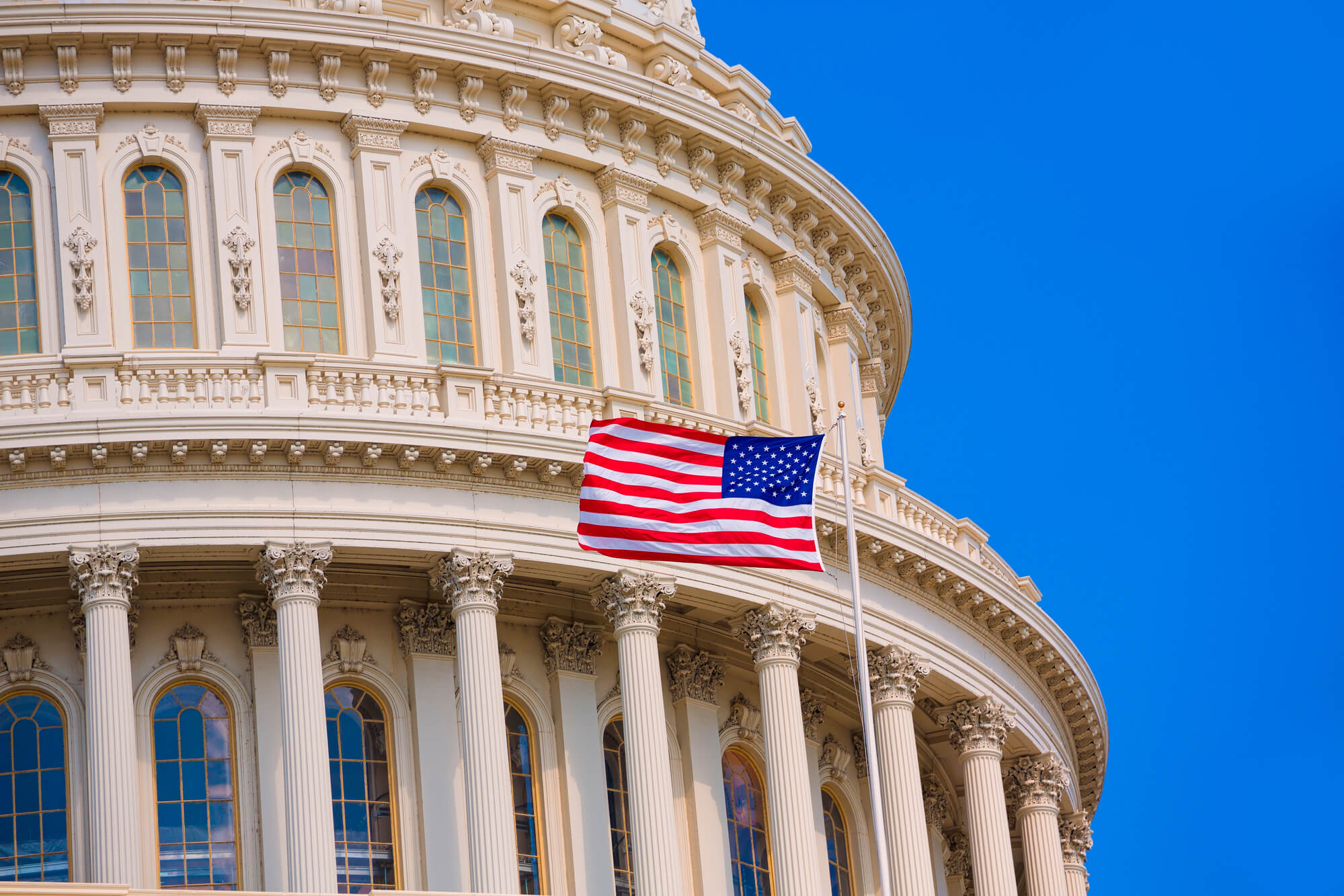
Democrats will control both chambers of Congress following the US midterm elections in November 2026, sharply reducing the crypto industry's chances of securing its long-planned market structure bill.
Midterm elections fall halfway through a presidential term, when US voters elect the entire House of Representatives and about one-third of the Senate. The new majorities decide who writes laws and who oversees individual industries. The crypto industry exerts influence over this process chiefly through super PACs, campaign committees that include Fairshake, backed primarily by Coinbase, Ripple and Andreessen Horowitz. Under US campaign finance rules, super PACs may raise and spend unlimited sums to support or oppose candidates, provided they do not coordinate with the campaigns they back. For the past two years, the industry found a friendly climate in Washington. During that period, the GENIUS Act for stablecoins became law. The Clarity Act, a comprehensive market structure bill, however, failed in the Senate in September 2026. Crypto PACs spent a total of USD 170 million during the campaign. According to the lobby group Stand With Crypto, voters elected 19 crypto-friendly senators and 226 representatives, who face — by the group's own tally — 8 crypto-critical senators and 106 representatives.
Sherrod Brown Returns Despite USD 60 Million in Opposition
In Ohio, Democrat Sherrod Brown defeated Republican Jon Husted in a special election for the remainder of the term of JD Vance, who had moved into the office of vice president. The win remains unofficial until certification, and Brown could return to the Senate as early as mid-December 2026. Stand With Crypto had backed Husted, rating him a candidate who "strongly supports" crypto; Husted had also endorsed the GENIUS Act.
For the industry, the result is a costly defeat. Fairshake committed USD 30 million against Brown in September, shortly after the Clarity Act failed in the Senate. In total, crypto-friendly PACs spent more than USD 60 million against him in Ohio. Back in 2024, Fairshake had spent USD 12 million on Republican Bernie Moreno, who beat Brown at the time. The industry thus invested against the same politician twice — without success in 2026.
Brown previously chaired the Senate Banking Committee, which has jurisdiction over digital assets in the Senate, and has a reputation as a crypto critic. With his return, the Democrat could take a leading role in overseeing and regulating the industry — meaning the very senator the industry twice tried to keep out of the Senate would help shape its future rules. Ultimately, the strategy of targeting crypto-critical candidates with PAC money reaches its limit in Ohio.
Majority for the Clarity Act Fades in Congress
The Clarity Act aimed to comprehensively regulate the market structure for digital assets in the US. Market structure legislation of this kind determines which federal agencies oversee digital asset trading and under what rules. The House of Representatives passed the bill back in 2025, but it made no progress in the Senate, failing there in mid-September 2026 on a procedural vote. Senate Democrats cited President Donald Trump as their reason for opposing it, saying they could not back a bill that allows him personal gains from the crypto industry.
TD Cowen's Washington Research Group now considers progress on the bill unlikely over the next two years. In a post-election note, Managing Director Jaret Seiberg attributed this view to Brown's win in Ohio. Even before the election, the firm had put the chances for 2026 at only 25 to 33 percent, depending on the note. Galaxy Research still estimated 50 percent in June and later cut its estimate to 10 percent. The election result deepens this skepticism. Because unfinished bills do not carry over from one Congress to the next, a renewed attempt would have to start the legislative process from the beginning when the next Congress convenes in January 2027.
According to TD Cowen, pressure on the industry is consequently shifting from legislation to investigations. Seiberg expects Democrats to examine Trump's entanglements with the crypto industry, including his ties to World Liberty Financial. This ends a phase in which Washington tended to advance the industry's concerns rather than slow them. For now, the GENIUS Act, which regulates the stablecoin market, remains the tangible result.
The Industry Disputes the Return on Its USD 170 Million
Fairshake and its two sister PACs spent a combined USD 154.5 million across the primaries and the general election, while the USD 170 million figure covers all crypto PACs that took part in the midterms. The organization Americans for Financial Reform puts Fairshake's receipts at USD 106.2 million, although for a different period.
As in Ohio, the network was active in other contested races across the country. In Nebraska, for example, it deployed more than USD 13 million against independent candidate Dan Osborn, who challenged Republican Pete Ricketts.
At the same time, a new rift over this strategy is emerging within the industry. An industry source who wished to remain anonymous questioned the spending against Brown in particular, asking what the industry ultimately gained from it. Instead of PAC millions, the source favors traditional lobbying on the ground — direct work with lawmakers — and argues that a fraction of the money could have enlisted all of Washington for the Clarity Act. The objection gains weight because Brown now returns to the Senate as an election winner against the industry. Nevertheless, Fairshake is holding to its course.
"Fairshake played a meaningful role in winning competitive races across the country in 2026 and we will do it again in 2028." — Geoff Vetter, Fairshake spokesperson
Vetter added that 2028 is "a new map," with Senate seats and the presidency up for election again alongside the House. Until then, however, the industry must work with a majority, some of whose candidates it campaigned against.
Taxes, Hacks and Investigations Set the New Agenda
The election came in the days after the largest crypto hack of all time. In late October 2026, attackers stole about USD 6.3 billion from the crypto exchange Binance. A few days later, the exchange reopened withdrawals for 15 networks. The FBI attributes the attack to the North Korean group TraderTraitor. In Congress, the case gives the incoming majority additional material for the debate on oversight and security.
The crypto bank Anchorage Digital counts taxes as well as security and hacks among the topics now moving onto the agenda. TD Cowen additionally expects investigations into Trump's crypto businesses. As a result, little room remains for the legislation the industry itself is seeking.
Publicly, the industry still projects confidence. Kara Calvert, Vice President U.S. Policy at Coinbase, expects headwinds for any bipartisan legislation next year. Yet nobody is burying their head in the sand, she wrote on X, and crypto is "100% bipartisan." Coinbase, Anchorage and Fairshake are also counting on younger lawmakers from both parties, whom they consider more open to technology.

