Senate Democrats Demand Answers From Hegseth Over Targeted Pentagon Promotions Purge
Key Takeaways
- •Sen. Mark Kelly and seven Democratic Senate colleagues sent a letter Thursday demanding Defense Secretary Pete Hegseth explain whether political considerations influenced the delay or blocking of senior military promotions.
- •A senior Pentagon official said staffers searched the internet to determine whether officers had supported Gen. Mark Milley, Covid-19 vaccines, the Afghanistan withdrawal, or diversity events.
- •New criteria introduced by Hegseth have blocked 17 officers selected by two separate merit-based promotion boards from becoming admirals and generals.
- •The purge reportedly blocked all but one of the women and people of color who had been picked for top military ranks.
- •The senators gave the Pentagon 30 days to provide documentation on the promotion decisions, and the department had not commented as of publication.
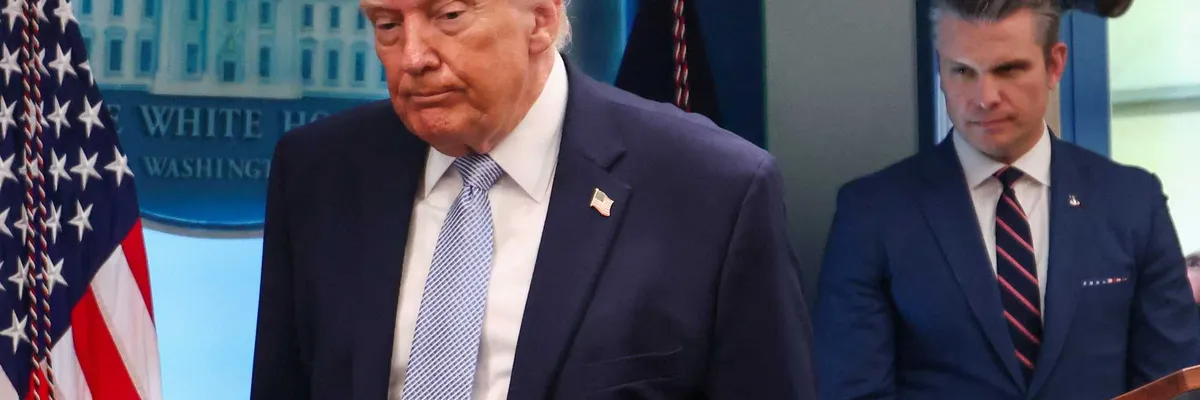
Senate Democrats are pressing Trump's Pentagon chief, Defense Secretary Pete Hegseth, for answers over a promotions purge that blocked all but one of the women and people of color picked for top military ranks, according to a senior Pentagon official who spoke to MS NOW.
Staffers searched the internet to determine whether officers had backed Trump critic Gen. Mark Milley, supported Covid-19 vaccines or the Afghanistan withdrawal, or had attended diversity events, the official said.
Sen. Mark Kelly is demanding answers from Hegseth about what role he played in blocking military promotions. Citing exclusive MS NOW reporting, Kelly is asking the defense secretary for a full explanation as to why he delayed or blocked the promotions of officers to the very top of the military, and whether political considerations that may have breached Pentagon rules were at play.
“Removing qualified officers from promotion consideration for political reasons risks depriving the military of that experience and undermining trust and respect between military leadership and servicemembers,” Kelly said in a letter to Hegseth, which he sent Thursday and which MS NOW first shared. Kelly is a retired U.S. Navy captain who is in line to chair a key Armed Services subcommittee.
The Pentagon had not commented on the letter at the time of MS NOW's publication.
Hegseth has announced his intention to reduce the number of senior military officers by 10-20 percent over the coming years in order to eliminate redundancies and “streamline leadership by reducing excess general and flag officer positions.”
But the senior Pentagon official told MS NOW that Hegseth has introduced new criteria that effectively rule out certain people after they have already been selected for promotion. Those internet searches, combined with the new criteria, have effectively blocked 17 officers who had been selected by two separate merit-based promotion boards from becoming admirals and generals. At stake in the dispute is a question that reaches beyond the 17 affected selections: whether officers already chosen by merit-based boards can be set aside on political grounds after the fact.
“It is particularly troubling that officers may be penalized for faithfully implementing lawful policies and directives issued by previous administrations,” Kelly and the other signatories wrote in the letter.
By Thursday evening, the letter had been signed by Sens. Richard Blumenthal, Mazie Hirono, Tim Kaine, Tammy Duckworth, Elizabeth Warren, Gary Peters and Elissa Slotkin.
Kelly and his colleagues asked Hegseth to provide Congress with documentation showing the basis for the decisions to slow or block the promotions, giving the Pentagon 30 days to provide the responses and documentation. With the department so far silent, its response to the document request and the fate of the 17 blocked selections are the immediate developments to watch as that 30-day window runs.
“The most critical positions in our military must be filled by the best-qualified individuals who can most effectively lead our troops and safeguard our nation,” Kelly wrote, adding: “Decisions about who advances to these positions must be based on merit, not political loyalty.”

