Republicans Must 'Pitch a Perfect Game' to Defend House Majority as Midterms Near
Key Takeaways
- •Republicans hold a slim 218-212 majority in the House, so Democrats need to net only a few seats to win control on Nov. 3.
- •A Reuters/Ipsos poll released Aug. 24 found just 33% of Americans approve of Trump's handling of the presidency, tied for his lowest recorded rating.
- •Only 31% of poll respondents approved of U.S. military strikes against Iran, which have contributed to higher gas prices alongside tariff-driven inflation.
- •The Cook Political Report rates 21 House races as toss-ups, with Republicans defending 16 of them.
- •The NRCC held a $13.7 million cash-on-hand advantage over the DCCC as of mid-July, while GOP redistricting in states like Texas and Florida keeps Republicans' path to keeping the majority alive.
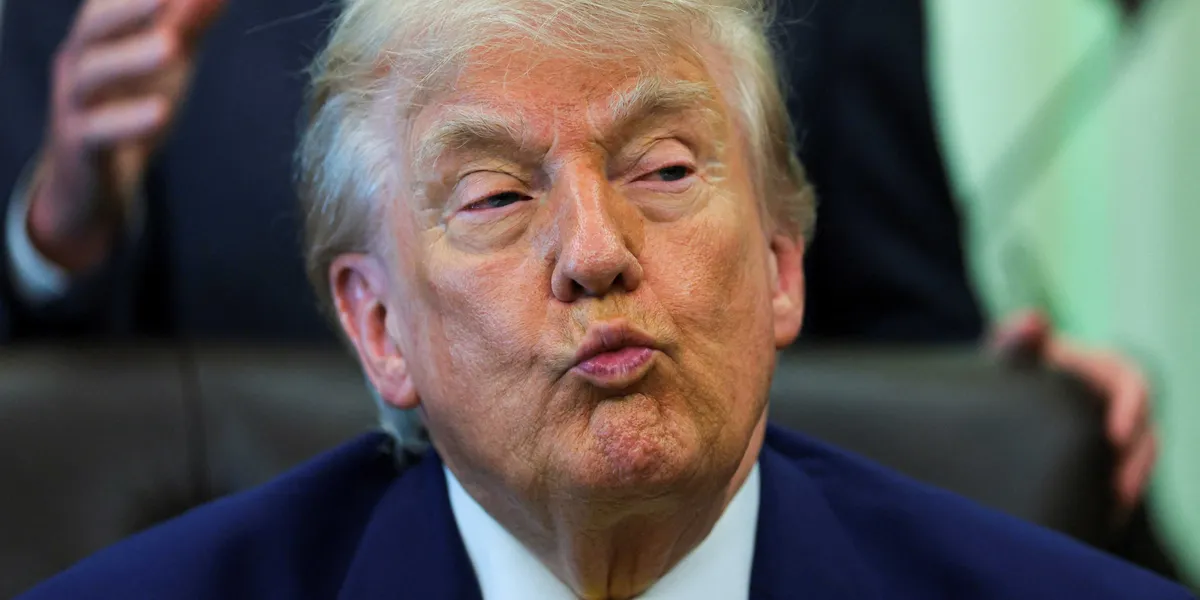
WASHINGTON — With fewer than 70 days remaining until the midterm elections, Democrats remain favored to reclaim the majority in the U.S. House, where all 435 seats are on the ballot on Nov. 3.
President Donald Trump's anemic approval ratings amid the war in Iran, worries over the economy, and a shift in the party's electoral coalition rank among the biggest headwinds confronting Republicans heading into November, according to election analysts and political scientists interviewed by States Newsroom. History adds to the challenge: the president's party has lost House seats in most midterm cycles over the past century, making the coming vote a test of whether Republicans can buck a long-standing pattern.
Although the GOP's mid-decade redistricting push could help shore up several seats and the number of genuinely competitive districts is relatively small, Democrats still hold an edge in the fight for the House, said Erin Covey, an editor specializing in U.S. House races for the Cook Political Report with Amy Walter.
"I would say that Republicans have a path to holding the House, but they kind of have to pitch a perfect game at this point in the cycle," Covey said.
Republicans currently control a slim 218-212 majority in the House (party breakdown), meaning Democrats need to net only a handful of seats to flip control. The Cook Political Report lists 21 House races as toss-ups, with Republicans defending 16 of them (House race ratings).
Robert Speel, an associate professor of political science at Penn State Behrend in Erie, cited Trump's dismal approval ratings and the effect of the Iran war on gas prices as major drags on the GOP ahead of Election Day on Nov. 3.
"Trump's popularity is down below 40% in pretty much every poll now, and even in the low 30s or high 20s in some polls, and the Iran war is not even popular with Republicans, which has led to higher gas prices and his tariffs have led to inflation," Speel said.
"It seems, from some numbers, possibly job losses in the last year and a half, so the economy is not doing particularly well, and I … expect it to drag down the Republicans in November," he added.
Only 33% of Americans approve of Trump's handling of the presidency, according to a Reuters/Ipsos poll released Aug. 24 (topline). That result tied for the lowest approval rating the pollster has recorded since Trump took office in 2017.
Just 31% of respondents expressed approval of U.S. military strikes against Iran, including 69% of Republicans (Ipsos findings).
Among registered voters, 36% said Democrats had a better plan or policy on the cost of living, versus 28% who chose Republicans.
Reed Adamson, a Democratic campaign strategist, argued that when the GOP captured a trifecta of the White House, Senate and House in 2024, voters gave the party a clear assignment — lower prices, and do it quickly — and Republicans failed it.
"Prices have gone up, and so, you're going to see them try and wiggle out of that every time, but it comes up in so many different ways, whether it is anecdotes about cost of groceries or gas or just overall cost of living or even just consumer sentiment about the economy," Adamson said.
"It is going to be really hard for them to wiggle out of it, and I think Democrats, for the most part, have been just sort of really disciplined in hammering that home," he added.
The Democratic Party's House campaign arm struck a confident tone about its prospects.
"Democrats are going to flip the House majority in November because we have the better message, better candidates, and strong momentum on our side," Nebeyatt Betre, a Democratic Congressional Campaign Committee spokesperson, said in a statement shared with States Newsroom.
"All Republicans have to offer are higher prices families hate, unpopular rigged maps voters hate, and devastating health care cuts everybody hates," Betre said. "Democratic candidates are winning over voters because they're talking about their plans to lower costs, strengthen access to health care, and make Congress work for working people."
The GOP's House campaign arm, for its part, points to several factors working in its favor, including progressive candidates winning Democratic primaries in some competitive races.
"House Republicans are running on a more favorable map with historic fundraising, stronger candidates, and a commonsense agenda, while Democrats are saddled with a deeply unpopular agenda and radical socialist nominees hijacking the must-win districts they need to take the majority," Mike Marinella, a spokesman for the National Republican Congressional Committee, said in a statement shared with States Newsroom.
Twenty-three Democrats are running in districts Trump won in 2024 — including 21 where he garnered more than 50% of the vote — according to a June NRCC battleground memo.
The NRCC also holds a $13.7 million cash-on-hand advantage over the Democratic Congressional Campaign Committee as of mid-July, the committee announced, a financial edge that matters in the final stretch when advertising in competitive districts is heaviest.
And despite Republicans' low poll numbers, their opponents have yet to sell voters on a clear alternative, said Daniel Scarpinato, a Republican campaign strategist.
"Republicans face some headwinds, but Democrats actually have to say, 'Here's what we're going to do differently,' and they haven't really been able to articulate that," Scarpinato said. "It's really just been a pretty anti-Trump message, but they haven't told people, 'Here's what we're going to do.'"
He noted that in focus groups, swing voters are not "ecstatic about the Democratic Party."
Republicans also face a turnout challenge. Their coalition now includes fewer college-educated and older voters — the groups that historically turn out most heavily in midterms, when turnout typically drops far below presidential-year levels — according to Ryan Owens, a political science professor and director of the Institute for Governance and Civics at Florida State University.
Trump has reoriented the party toward blue-collar voters and away from the more affluent, educated voters whose high turnout rates once buoyed the party in midterm cycles.
Without Trump on the ballot, the party will likely struggle to activate the coalition that twice sent him to the White House, Owens said.
"You used to see Republicans do really well in midterm elections," he said. "But now that they don't rely so much on that college-educated, white vote, their coalition doesn't turn out as much as it used to in midterms.
"Without having Trump on the ballot, without having a presidential election that generates that kind of enthusiasm to turn out, Republicans have been doing worse and worse during midterms," he added.
Covey, of the Cook Political Report, said Republicans' redistricting blitz — and the pickup opportunities they drew for themselves across Texas, Florida, Missouri, North Carolina and other Southern states — is the main reason they retain any path to keeping their majority.
However, "there's a lot of variance in that because the seats that were redistricted, many of them are still quite competitive, and so, there's a world in which Democrats hold on to them this cycle, for sure," she said.
