Robert Reich: What Should Be the Democrats' Top Priority in Congress?
Key Takeaways
- •Democrats won races in Texas, Kansas, North Carolina, and South Carolina, and led in Mississippi, leaving the party positioned to control both chambers of Congress starting in January.
- •Legislating will remain difficult because Trump retains presidential veto power, and overriding a veto requires two-thirds votes in both the House and the Senate.
- •One proposed priority is impeaching and convicting Trump, which supporters frame as essential accountability for violations of law and the Constitution.
- •Alternative priorities include campaign finance reform through public matching funds or a constitutional amendment, a national wealth tax on billionaires, and a single-payer Medicare for All system.
- •Reich suggests that vetoed proposals such as a wealth tax or Medicare for All could serve as Democratic issues in the 2028 election, and he invites readers to pick the top priority.
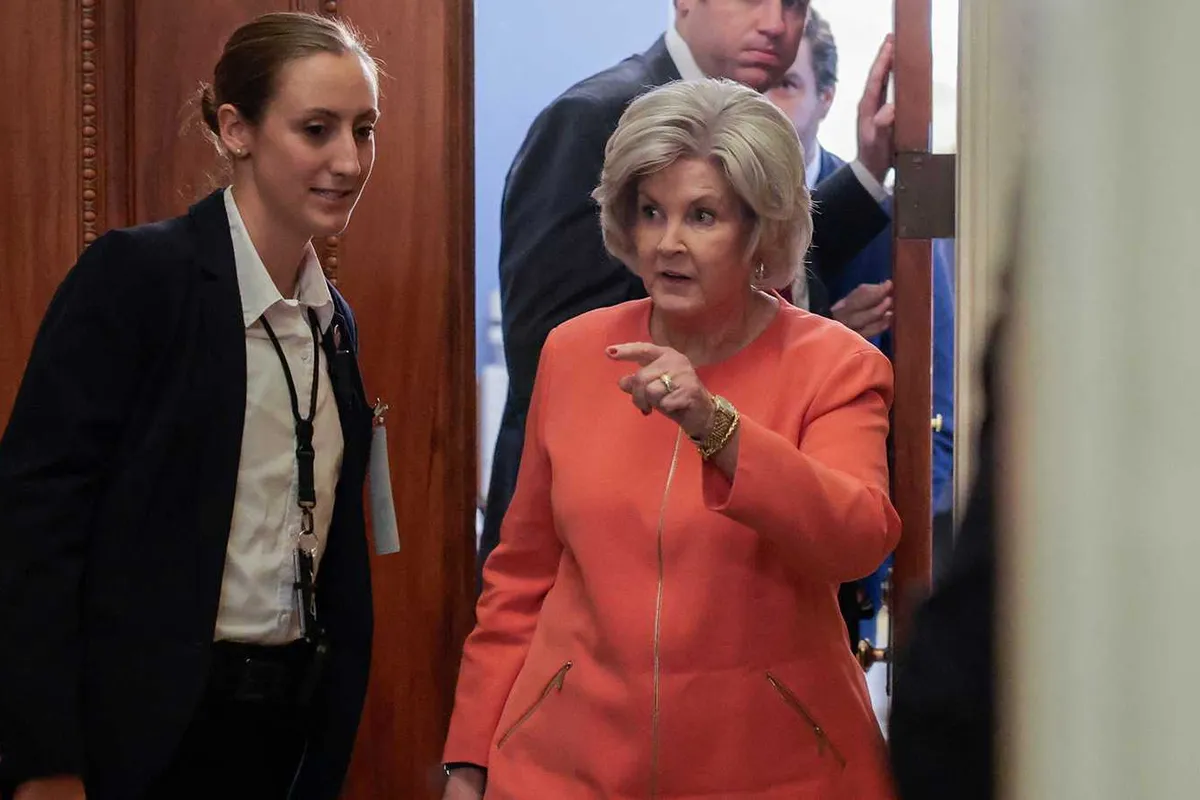
The excitement is palpable. Democrats claimed victories in Texas, Kansas, North Carolina, and South Carolina — and, as the column was being written, Democrat Scott Colom was leading Republican Cindy Hyde-Smith in Mississippi.
With Democrats set to control both chambers of Congress by a comfortable margin next year, the practical question becomes unavoidable: what is the most important thing the party should seek to achieve?
Even with full control of Congress, governing will not be easy. Trump will remain in the White House. He is likely to veto whatever Democrats try to do and ignore whatever they say. Overriding a veto requires a two-thirds vote in both the House and the Senate, meaning the new majority would need overwhelming bipartisan support to enact any bill into law over his objection. He and his Cabinet officers are unlikely to willingly testify before congressional committees investigating the administration's actions, pleading executive privilege instead.
Column author Robert Reich, a professor of public policy at Berkeley and former secretary of labor, writes that he has asked political advisors, Trump watchers, congressional staff, and Democratic insiders what they believe should be the Democrats' #1 priority next year. Their responses fall into four broad camps.
1. Impeach and convict Trump of high crimes and misdemeanors
Congress tried this twice to no avail. But starting in January, Democrats will hold a majority in the House and enough votes in the Senate to come within striking distance of being able to convict Trump of high crimes and misdemeanors — a Senate conviction requires a two-thirds vote. Those who back this as the top priority say it is all about accountability: Trump has violated the law and the Constitution with such impunity that, to preserve the integrity of the system, he must be held responsible.
2. Reform the broken system of campaign finance
Others argue the top priority should be campaign finance reform — putting an end to what they call the legalized bribery of billions of dollars in campaign contributions. One approach would be to provide public matching funds for small-dollar donations to candidates for the House, Senate, and presidency. Another would be a constitutional amendment making clear, contrary to the Supreme Court's rulings, that money is not speech and corporations are not people. Amending the Constitution is a steep bar in itself: it requires two-thirds votes in both chambers and ratification by three-fourths of the states.
3. Enact a wealth tax on billionaires
A third camp believes the priority should be a tax on billionaire wealth. The failure of billionaires to pay their fair share, the argument goes, makes a mockery of the tax system. Most billionaires borrow against their fortunes to pay their lavish living expenses, leaving them with no earned income to declare. California's billionaire tax failed over concerns that the state's billionaires would exit California — a reason proponents say a national wealth tax is necessary and logical. If Trump vetoes such a measure, Democrats would have the issue for the 2028 election.
4. Enact Medicare for All
A final view holds that the Democrats' top priority should be Medicare for All — a single-payer system open to everyone. Trump and the Republicans have ended Obamacare subsidies and cut Medicaid, leaving even more Americans uninsured. Americans now pay more — 20 percent of GDP — for a healthcare system that delivers shorter lifespans than in most other rich countries. Many of the Democrats elected this week advocated Medicare for All and want to see it enacted. Again, if Trump vetoes it, it would be a natural issue for the 2028 election.
Reich closed the column by asking readers which of these options — or something else entirely — ought to be the Democrats' top priority when the party takes control of Congress in January.
Robert Reich is a professor of public policy at Berkeley and former secretary of labor. His writings can be found at

