Multibillion-Dollar Obstacles Stand Between the New Congress and Americans' Wallets
Key Takeaways
- •Democratic leaders plan bills targeting housing, groceries, energy, and health care costs, including restoring cut health supports, raising the $7.25-an-hour federal minimum wage, adding tax credits, and backing away from tariffs.
- •Most legislation must first clear the Senate's 60-vote filibuster threshold, and overriding a presidential veto would require 75 percent of each chamber, a high bar during the lame-duck session.
- •Researchers estimate gas prices alone cost U.S. households an average of $1,100 per year, with tariffs on consumer goods adding another $2,000 annually.
- •Affordable Care Act marketplace coverage has risen an average of 13 percent per month, and inflation figures are outpacing wage adjustments.
- •The new Democratic majority is split between legislating and investigating the Trump administration, and any new spending requires either a tax code vote or reallocating funds from other priorities.
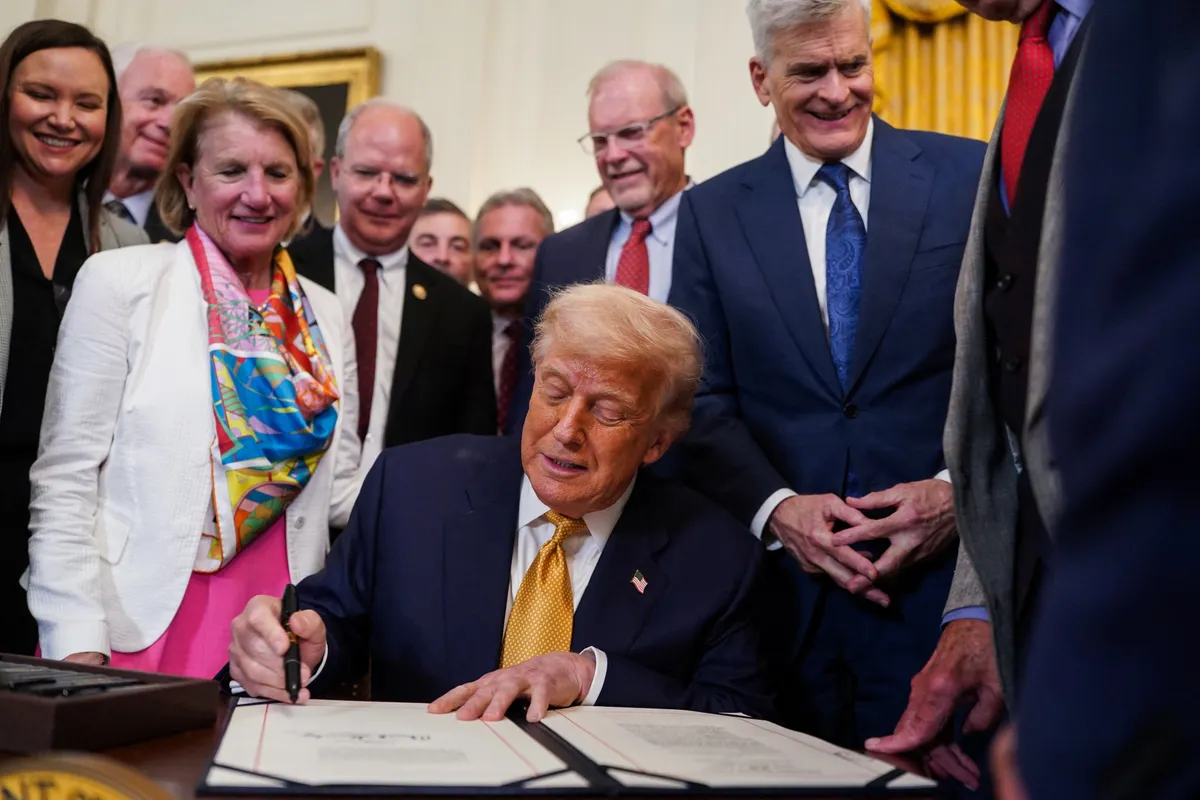
With Democrats assuming control of both the Senate and the House, attention is shifting quickly to what the new majority can actually do about the central issue of high prices — all while a lame-duck Donald Trump and his veto pen remain in the White House.
Beyond investigations and hearings aimed at “accountability,” opposition demands for “change” will require affirmative legislative acts to become reality.
Democratic leaders and candidates promised a “relentless” focus on lowering household expenses, targeting key areas such as housing, groceries, energy, and health care. A wave of bills is expected, some of them quickly: measures to restore public health care supports cut by Republicans, discussion of raising the federal minimum wage — which has stood at $7.25 an hour since 2009 — tax credits for a variety of social services, and legislative demands to back away from Trump's global tariffs or to end or defund the war with Iran.
Whether any of these can pass both the House and the Senate with veto-proof margins is questionable during the lame-duck, end-of-year congressional session — the post-election window in which departing members still hold their seats — or even in January. Before any veto fight could even begin, most legislation must first clear the Senate's 60-vote filibuster threshold, a procedural hurdle that narrows what even a unified majority can bring to the floor. A heavy dose of campaign-style rhetoric on the effort is expected regardless, though chastened Republicans in both chambers may now see political survival in supporting votes to overturn a veto.
Trump, meanwhile, is sending mixed signals. He has said he will work with Democrats while also planning to double down on all of his policies, including the conflict with Iran and the resulting high fuel prices, without so much as a nod to the voters or the newly elected legislators.
Whether there will be measurable, practical changes in high prices anytime soon remains an open question. Among the uncertainties: whether even the most well-meaning and unified Democratic majority in the House can affect gas prices, mortgage rates, or the inflationary trends the column attributes to the Trump administration. One consequence of the Senate flip is clear: a stop to Trump appointments across agencies, the military, and judgeships.
The numbers already on the table are stark. Researchers estimate that gas prices alone are costing U.S. households an average of $1,100 a year, with tariffs on consumer goods adding another $2,000 annually. The cost of Obamacare/Affordable Care Act health coverage — plans sold through the marketplaces created by the 2010 law — has just surfaced with an average 13 percent increase per month. Home heating oil is up substantially, and increases in supermarket and airfare prices look relatively permanent. On paper, inflation figures are outpacing wage adjustments. Some of the delayed financial impacts of Trump's Big Beautiful Bill and its tax cuts for the wealthy and corporations are just beginning to hit home.
The Biggest Obstacles
The largest barrier to new spending — whether on government services, health care supports, SNAP food benefits (the federal program that helps low-income households buy groceries), student loan forgiveness, or childcare tax credits — is that the money must come from somewhere else. Through DOGE, the Department of Government Efficiency initiative, and budget and administrative cuts, the Trump administration has taken money from social services and shifted it to Homeland Security or the military, or reduced the amount of tax revenue coming in from corporations and billionaires.
That means any new legislative effort to add a service or restore fired federal workers will require either another vote on the tax code or a reassignment of funds — say, from ICE, which is now receiving more money than the Pentagon to deport migrants with tactics that have angered a majority of voters.
All of it will be contentious, likely involving political ugliness and name-calling, and all of it will involve presidential vetoes. In the author's assessment, the chances that Trump will reconsider his policies in light of election results about Trust in Government are zero.
When the economy delivers bad news, Trump still blames his predecessor, two years and another election into his presidency. Even price skeptics note that supply lines and transportation, trade gaps turned almost war-like, and Trump's intransigence will make short-term declines in fuel, food, and shelter prices hard to come by.
U.S. News has suggested that many upcoming actions will prove more “symbolic” or politically helpful than practical. Public support runs high for health care for the 20 million people losing access — and for the many millions more facing steep price increases — and it will be a focus for the incoming Congress, but Trump is likely to veto any such legislation. The column states that overcoming a veto requires 75 percent of each house. Any effort to kill tariffs must also overcome opposition from domestic industries that benefit from more expensive foreign competition, as well as from some labor unions. And even a vote to end armed conflict offers no guarantee of what happens to world oil prices or access through the Strait of Hormuz — the narrow Persian Gulf passage that carries a sizable share of the world's oil shipments.
The Full Agenda
Just as clear, the new Congress will contend with competing strains inside the new majority. What held the big tent together was opposition to Trump's personal conduct on corruption and self-glorification, as well as his anti-populist policies.
The political makeup of the incoming Democratic majority spans a wide range of proposed solutions to each contentious Trump policy. From the start, the group is split between legislating and efforts to hold Trump accountable for his administration's various acts — from the firing of generals to the building of Trump memorials to the excesses of mass deportation and going to war. The prospect that investigations and public hearings will consume an enormous amount of time that would otherwise go to practical legislating is real.
There is also the open question of just how fierce an uncontrolled, cornered, and angry Trump will become toward the institutions of democracy and American traditions. His refusal to bow to court orders, his efforts to neutralize the power of Congress, and his insistence on bending government agencies to promote himself look, at this moment, to be getting worse rather than better.
The early markers to watch are concrete: whether the lame-duck session produces any veto-challenge votes with Republican support, and whether January changes the chamber arithmetic that determines what can reach the president's desk. The column closes with a call to hold the new management to its promises to work for “affordability” — with the full understanding that, for a variety of circumstances, that may not prove an easy task to fulfill.
Terry H. Schwadron retired as a senior editor at The New York Times, served as Deputy Managing Editor at The Los Angeles Times, and held leadership positions at The Providence (RI) Journal-Bulletin. He was part of a Pulitzer Gold Medal team in Los Angeles, and his teams were part of several Pulitzers in New York.

