Defense Metals Intersects 6.1% Rare Earths in Drilling at Wicheeda Project in British Columbia
Key Takeaways
- •All eleven holes from the 5,345-metre drill program intersected significant rare earth mineralization within the pit confines of the 2025 preliminary feasibility study, supporting a potential resource classification upgrade.
- •The strongest result came from hole WI26-96, which returned 65 metres at approximately 3% TREO from 61 metres depth, including 20.3 metres at 6.1% TREO.
- •The February 2025 preliminary feasibility study outlined an after-tax NPV of $1 billion, a 19% post-tax IRR, $1.4 billion in initial capital, and annual production of 31,900 tonnes of TREO concentrate over a 15-year mine life.
- •Defense Metals raised $16.7 million in private placements, received conditional approval for up to $1.8 million from a federal critical minerals fund, and holds a non-binding expression of interest for a $346.6 million Export Development Canada loan.
- •Shares of Defense Metals dropped about 3% to 15¢ on the Toronto market, valuing the company at roughly C$61.2 million.
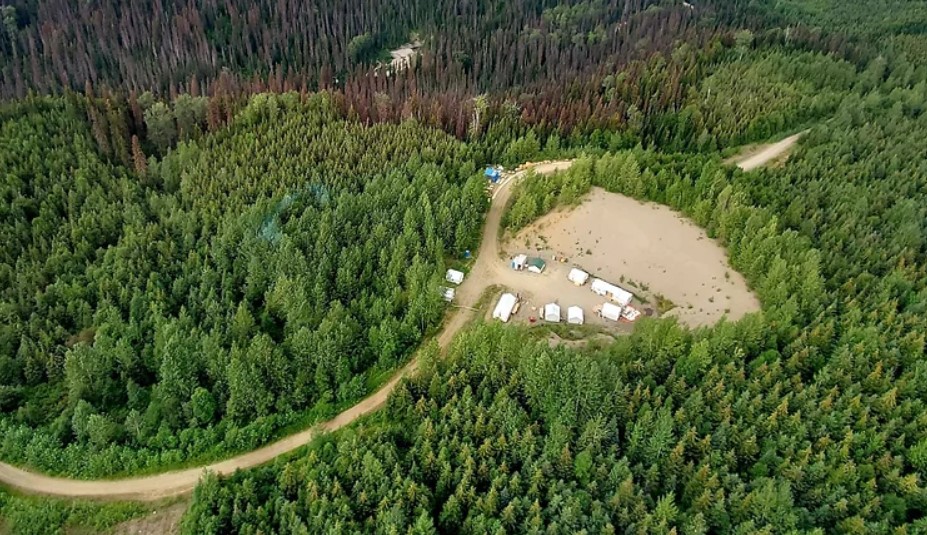
Resource-conversion drilling at Defense Metals' (TSXV: DEFN) Wicheeda rare earths project in British Columbia has returned intervals as strong as 65 metres grading about 3% total rare earth oxides (TREO), the company reported Monday.
The best interval, in hole WI26-96 from 61 metres depth, included 20.3 metres at 6.1% TREO. A second highlight, hole WI26-93, which cut across the southern margin of the Wicheeda deposit, returned 184 metres grading 1.7% TREO from 91.6 metres depth, including 57 metres at 2.5% TREO.
"We're exceptionally pleased that all eleven drill holes reported in today's news release intersected significant widths of high to moderate grade rare earth element mineralization within the pit confines defined by the 2025 preliminary feasibility study and are expected to contribute positively to a resource classification uplift," said Robin Jones, Vice-President of Projects at Defense Metals.
A resource classification upgrade, if achieved, would move additional mineralization from the inferred to the higher-confidence measured and indicated categories — a step typically required before banks and lenders finalize financing decisions on mine construction.
Advanced project
The results reinforce Wicheeda's position as one of Canada's more advanced and accessible rare earths projects. Rare earths are essential inputs for permanent magnets, defence applications and clean energy technologies, and Western governments have been pushing to build non-Chinese supply chains: China currently dominates both rare earth mining and, more critically, the processing and separation capacity that turns ore into magnet-ready materials. Canada has listed rare earths among its 31 critical minerals, a designation that opens access to federal funding streams and expedited permitting reviews. Unlike several of the country's largest rare earth deposits, which lie in remote northern regions, Wicheeda is road-accessible and located near power, rail and gas infrastructure, roughly 80 km northeast of Prince George, B.C.
According to a preliminary feasibility study released in February 2025, Wicheeda carries an after-tax net present value of $1 billion (discounted at 8%) and a post-tax internal rate of return of 19%, with initial capital costs of $1.4 billion. The study envisages annual production of 31,900 tonnes of TREO concentrates over a 15-year mine life, based on proven and probable reserves of 25.4 million tonnes grading 2.43% TREO, containing approximately 617,000 tonnes of TREO.
Further notable results from the 5,345-metre drill program included hole WI26-100, which cut about 149 metres grading 1.55% TREO from near surface, including 85 metres at 2.4% TREO, and hole WI26-102, which returned 73.4 metres grading 2.6% TREO from about 6 metres depth, including 34.3 metres at 3.2% TREO.
$16M in backing
Defense Metals secured $16.7 million through private placements in October and November of last year, which it plans to allocate to metallurgical work and the start of a feasibility study. In March, the company received conditional approval for up to $1.8 million from Natural Resources Canada's Critical Minerals Infrastructure Fund. A proposed $346.6 million Export Development Canada loan, announced last year, remains at the non-binding expression-of-interest stage. The mix of federal grants and potential export-credit financing reflects broader government efforts to accelerate domestic critical minerals development.
Shares of Defense Metals fell about 3% to 15¢ apiece Monday morning in Toronto, giving the company a market capitalization of about C$61.2 million. The stock has traded in a 12-month range of 11¢ to 43¢. Beyond the drill results, the next company milestones to watch are the planned feasibility study, an updated resource estimate incorporating this drilling, and any movement of the Export Development Canada loan from a non-binding expression of interest toward a definitive agreement.

