A Decade of Trump: One Journalist's Reckoning with What America Became
Key Takeaways
- •D. Earl Stephens concluded a 30-year journalism career as Managing Editor of Stars and Stripes and is the author of a book collecting Donald Trump's correspondence.
- •The author states he has not voted for any Republican since the 2003 Iraq War, citing the party's dishonesty about that conflict as his rationale.
- •The article references the January 6, 2021 attack on the U.S. Capitol, when a violent mob breached the building in an attempt to halt the certification of Joe Biden's electoral victory.
- •Stephens reports losing numerous friendships over political divisions, concluding that Trump's supporters were ultimately motivated by shared hatred of the same groups Trump targeted.
- •The author asserts that the current political movement holds the Executive Branch, the House of Representatives, the Senate, and the Supreme Court simultaneously.
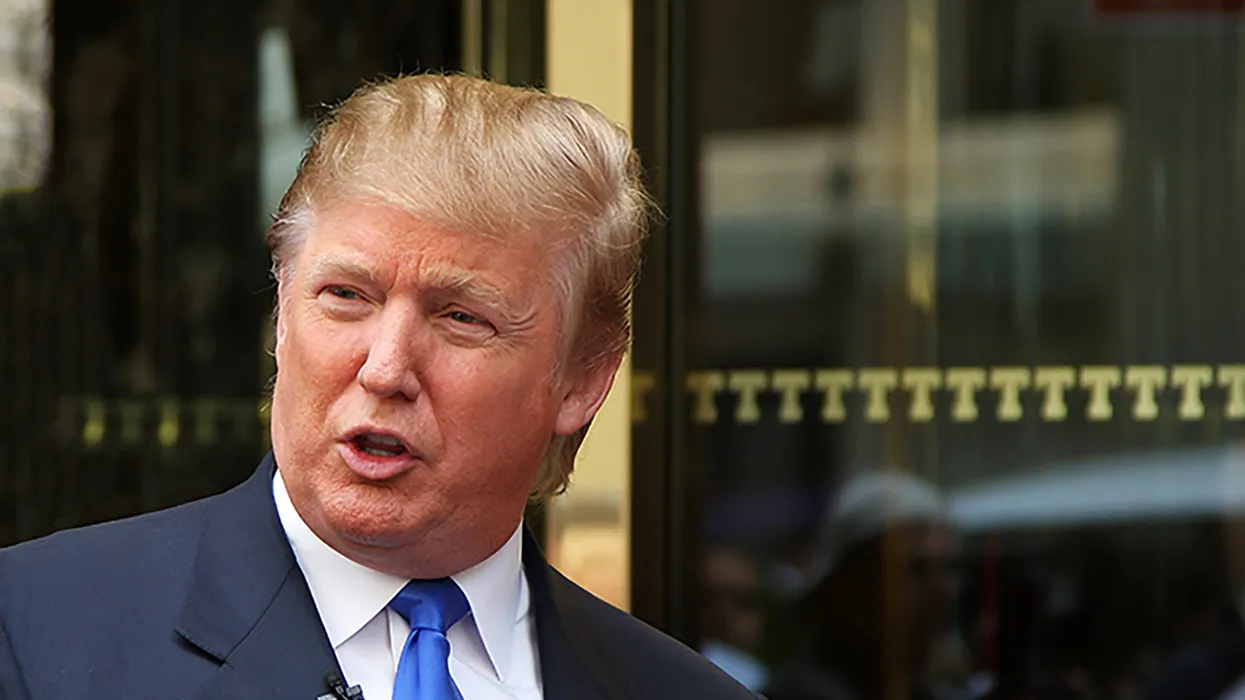
On a recent Tuesday afternoon, a Facebook memory notification reminded me of something I had written almost exactly ten years ago — around the time Donald Trump first began occupying space in my life. At that point, I still was not taking him seriously, either as a person or as a presidential candidate. I inhabited what I now recognize was a complacent, even arrogant belief that America was simply above electing someone so unqualified and repellent to its highest office. Back then, he was nothing more than the punchline to my jokes.
In that particular Facebook post, I was pushing back against people who compared the Republican Party's creation of Trump to Dr. Frankenstein's creation of his monster, writing: "Hey, at least one of them had a heart…"
By that point in 2016, Trump was already routinely insulting women, NATO, the disabled, war veterans, Black Americans, Mexico, the working press, and basic decency itself. He was openly appealing to Russia for assistance, boasting about assaulting women because he believed he could act with impunity, and had populated his campaign staff with political opportunists, social outcasts, and known racists. The Ku Klux Klan had gone on the record expressing enthusiastic support for him.
Republican figures like Jeb Bush, who had been ridiculed off the 2016 debate stage, had grown conspicuously silent — content to let voters carry out the messy work Bush had helped create but would no longer touch with his own privileged hands. Meanwhile, figures like the late Senator Lindsey Graham offered what amounted to his last genuine act of political courage when he posted on X (then Twitter) on May 3, 2016: "If we nominate Trump, we will get destroyed……and we will deserve it." By the end of that year, after Trump won the presidency, he labeled Graham "a little boy," "nasty," and "a dumb mouthpiece" — and Graham promptly transformed himself into one of Trump's most dutiful loyalists.
The summer of 2016 — the months before the November earthquake that would shake America to its foundations — was the last time I felt certain about anything. I have not been the same person since. I take no satisfaction in admitting that, but when Trump won that election, the country I had served with my life looked fundamentally different to me. It felt darker, and I no longer trusted it to do the right thing.
Not a single day passes without my thinking about all of this. It occupies the empty spaces where I once found peace of mind, or where I could contemplate things of no great consequence — like why my New York Giants cannot seem to win more games.
Ten years ago, my concern was never really about the Republican Party — at least not initially. Had John McCain or Mitt Romney defeated Barack Obama, I would not have been pleased, but it would not have rattled me or plunged me into despair. I had occasionally voted for Republicans in the past, depending on the individual and the issues. As a journalist, I was never a strict party loyalist. But I have not cast a ballot for a single Republican since the 2003 Iraq War, because I reasoned that if a party was capable of lying so spectacularly about something so consequential, what else might it be capable of? In November 2016, the country received its answer.
Before then — before developments like the Citizens United ruling, the landmark 2010 Supreme Court decision that removed key restrictions on independent political spending by corporations and unions, and the rise of the internet as a political battlefield — politics did not dominate my existence. I had naively assumed that when one party pushed too far, as George W. Bush and the GOP did by 2008, the electorate would self-correct. Politics functioned, for the most part, like a pendulum: swing too far one direction, then swing back.
I never imagined that any president in my lifetime would attack our democratic process with such ferocity, and then violently assault our nation itself. And I can promise that in even my wildest dreams, I never envisioned the country reelecting the same figure who had launched that initial assault. Trump fractured something fundamental in many of us, and summoned something malignant in others.
I consider myself fortunate that my own family recognized Trump for exactly what he was from the moment he stepped onto the political stage and began his barrage of cruel and sickening insults. To this day, it astounds me that someone of his character got anywhere near the White House, or that even ten percent of the population supported him. I feel foolish writing those words now, after everything that has transpired, but it remains the truth as I see it.
While I did not lose any family members over this man, I lost a great number of friends — a few of whom I had considered as close as family. How had I failed to see what was inside them? How, even after he attacked the country, could they still have supported him? I used to exhaust myself asking what they saw in Trump, until I finally stopped asking altogether. The answer, it turned out, was simple: he hated the same people they did. The man is a bigot, and I do not tolerate bigots or those who ally themselves with bigotry.
I doubt those former friends will ever return to my life, but despite everything, the door remains open. I would welcome nothing more than a substantive conversation about the past decade — about why they eventually saw the truth, and about how we move forward through the darkness together. I have stopped holding my breath that such conversations will ever take place, and that reality saddens me profoundly. There can be no compromise in the middle on bigotry, misogyny, environmental destruction, and pure hatred.
And perhaps the most staggering aspect of it all is this: they are winning. These are, in my assessment, heartless individuals — but the authoritarian movement now entrenched in the White House is prevailing politically, both in this country and in many parts of the world. They hold the Executive Branch, the House of Representatives, the Senate, and the Supreme Court, and they are inflicting severe damage on those who oppose them. Clean air and water, women's rights, voting rights, affordable healthcare, animal welfare, and access to food, clothing, and education for the nation's most vulnerable are all under sustained assault. The situation grows worse by the day. Trump himself, remarkably, continues to find new lows, dragging millions of people down with him.
But I am still here, and I have come to understand that I was placed on this earth for this fight. I am one cantankerous older man, and hundreds of millions of people across history have endured far worse. Still, these things need to be said because the pain behind them is genuine. The heartache is real. The sorrow is real. The sense of helplessness is real. And when supporters of the MAGA movement read this — and many will — their contempt will be equally real. Over the past decade, I have learned that they derive satisfaction from the suffering of others; no matter how dire circumstances become in their own lives, the anguish of people like me sustains them.
These realities need to be discussed far more openly than they are. People of conscience cannot be trivialized or forgotten. We possess the courage to make our convictions visible, to absorb a blow, and to rise again. That is what genuine patriotism looks like. It is what those who have fought for civil rights throughout American history have always done.
It would be easy to surrender and walk away from all of it. But the history that our Republican friends and family members would so readily erase instructs us to press forward — to take that beach at any cost, or simply to claim that seat on the bus. We have been battered, but not one among us has contemplated capitulation, because surrender is simply not in our nature.
The 2020 election and the subsequent January 6, 2021 attack on the U.S. Capitol — when a violent mob breached the building in an attempt to halt the certification of Joe Biden's electoral victory — should have marked the beginning of the end of this crisis. Incredibly, they marked only the beginning. And yet, even with all of that, somewhere deep within our wounded hearts we retain the conviction that better days lie ahead — but only if we continue pressing forward, lifting people up rather than holding them down. We can see the high ground through all the pain, but there are times we need to rest, gather ourselves, tend to our wounds, and reflect on the arduous road behind us before marching resolutely onward.
It has been an extraordinarily difficult decade, and it is acceptable to acknowledge that pain and anguish. We do not do so often enough. Sometimes, it simply helps to know that you are not alone.
(D. Earl Stephens is the author of "Toxic Tales: A Caustic Collection of Donald J. Trump's Very Important Letters" and concluded a 30-year journalism career as the Managing Editor of Stars and Stripes, the editorially independent newspaper serving the U.S. military community. You can find his work at and follow him on Bluesky at )

