Dave Ramsey outlines 3 major retirement mistakes Americans over 55 should avoid
Key Takeaways
- •Debt burdens have risen sharply among older households, with average debt for ages 65 to 74 reaching $45,000 and debt for those 75 and older rising to $36,000.
- •Ramsey said retiring too early can create higher medical costs and increase the risk of outliving savings, especially without a strong financial plan.
- •The 2026 Social Security Trustees Report projects the OASI Trust Fund will be depleted in the fourth quarter of 2032, after which payroll income would cover 78% of scheduled benefits if no changes are made.
- •The article says Social Security replaces about 40% of an average wage earner’s pre-retirement income, so savings and other income sources remain important.
- •It highlights additional retirement tools such as cash reserves, diversified portfolios, and income-producing real estate investments as ways to supplement retirement income.
By the time retirement is within sight, many people have spent decades building their savings. But a few financial decisions in the final working years can determine how far that money will actually go.
Preparing to retire involves more than reaching a target balance in a 401(k) or IRA. It also requires deciding when you can afford to leave the workforce, how expenses may change once paychecks stop, and how savings will last through what could be decades of retirement.
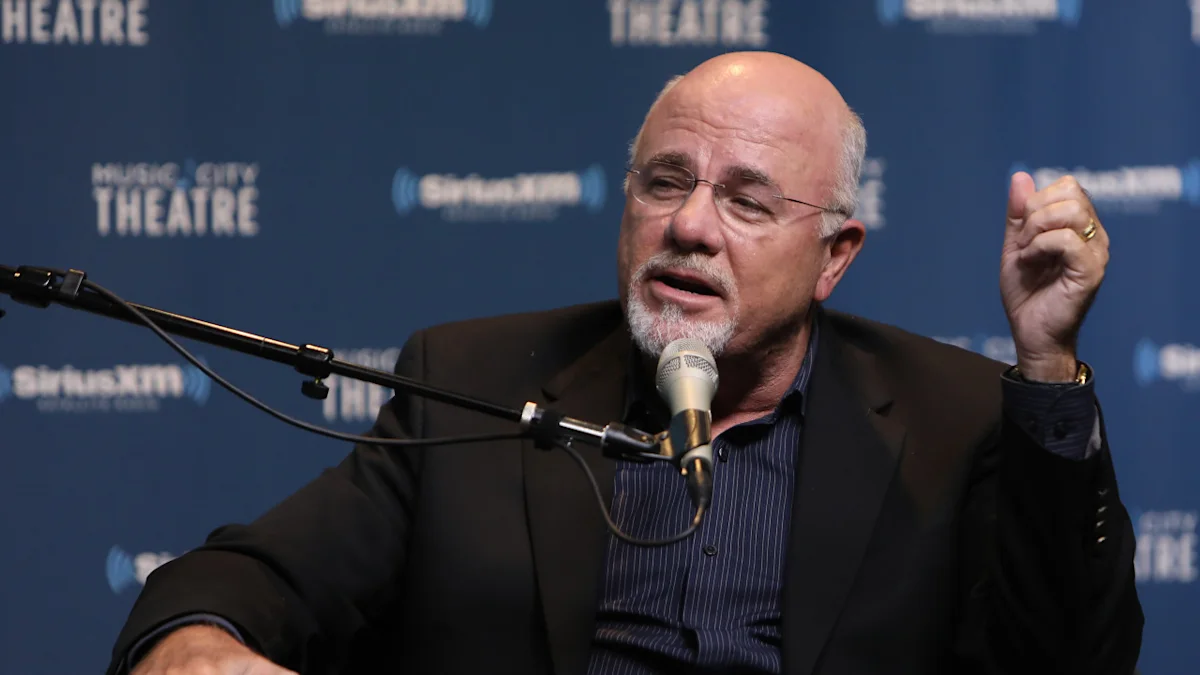
Personal finance guru Dave Ramsey says he repeatedly sees several mistakes people over age 55 make during this critical period. In an interview with Kiplinger (1), the author and podcaster identified three major pitfalls.
Here is what he says to avoid.
Mistake 1: Carrying too much debt
Ramsey says he has seen a steady rise in debt among older Americans, and he considers it a serious concern.
Between 1992 and 2022, the average debt burden for households headed by people aged 65 to 74 quadrupled, according to an AARP report (2) citing the Federal Reserve’s most recent Survey of Consumer Finances (SCF). That cohort now carries $45,000 in debt on average.
For households headed by people age 75 and older, the debt burden has increased sevenfold over the same period, from under $5,000 to $36,000.
"They hang onto debt. Especially mortgages and car payments. Then they assume they'll just 'manage it' in retirement," Ramsey told Kiplinger. "The fix is simple. Attack that debt with intensity now, before you step into your golden years."
Two common debt-repayment strategies are the avalanche method and the snowball method.
Under the avalanche method, borrowers make minimum payments on all debts while directing extra money toward the balance with the highest interest rate. Once that debt is paid off, they move to the next-highest rate. Because it targets the most expensive debt first, this approach can reduce total interest costs.
The snowball method takes a different approach. Borrowers start with the smallest balance and work upward, regardless of interest rate. That can provide a psychological boost as debts disappear, although it may result in higher total interest costs.
If neither approach feels manageable because several high-interest debts are involved, consolidation is another option. Consolidating multiple debts into a personal loan through Credible can replace several monthly bills with one payment and may lower the total interest paid, depending on the rate obtained.
Through Credible’s online marketplace, borrowers can comparison-shop for lower interest rates with a few clicks. In less than three minutes, they can see the lenders willing to help pay off credit cards or other debts with a single personal loan.
Read More: Millionaires under 43 hold only 25% of their wealth in stocks. Here's where their money is actually going
Mistake 2: Retiring too early without preparation
Despite the challenges, many Americans still hope to leave the workforce early. Roughly 18% of people surveyed by YouGov in 2024 (3) said they plan to retire at or before age 55.
Ramsey says leaving the workforce a decade or more early carries real risks. Without Medicare coverage, early retirees may need to pay for medical insurance, which can raise expenses. A longer retirement also increases the risk of outliving savings.
Those challenges can be addressed with planning. A clear and robust financial plan can help cover the major bases before retirement begins. It can also be wise to create a backup plan for part-time or gig work to cover unexpected gaps during early retirement.
For those who keep working past 50, the final stretch also comes with higher savings ceilings. Federal rules allow catch-up contributions to 401(k)s and IRAs starting at age 50, and under the SECURE 2.0 Act, savers aged 60 to 63 qualify for an even larger 401(k) catch-up amount.
The takeaway, Ramsey told Kiplinger, is: "Don't retire until you're truly ready."
Being ready also means thinking about where near-term expenses will come from once regular paychecks stop. Holding some savings in cash can provide money for planned costs or unexpected expenses without forcing the sale of investments.
Tax rules shape that picture as well. Withdrawals from traditional 401(k)s and IRAs are generally taxed as ordinary income, and required minimum distributions from those accounts generally begin at age 73, rising to age 75 for people born in 1960 or later under the SECURE 2.0 Act.
A high-yield account such as a Wealthfront Cash Account can be one place to keep uninvested cash while still earning interest and maintaining easy access to the money when needed.
According to the article, a Wealthfront Cash Account offers a base APY of 3.30% through program banks, and new clients can receive an additional 0.75% boost during their first three months on up to $150,000, for a total variable APY of 4.05%. The article says that is 10 times the national deposit savings rate, according to the FDIC’s July report.
It also says new clients who enable direct deposit of at least $1,000 per month into their Cash Account and open and fund a new investment account can receive an additional 0.25% APY increase with no expiration date or balance limit, bringing the APY to as high as 4.30%.
The account has no minimum balances or account fees, offers 24/7 withdrawals and free domestic wire transfers, and provides access to up to $8 million in FDIC insurance eligibility through program banks.
Cash reserves are only one part of retirement preparation. Longer-term savings also need to support what could be decades without a paycheck, so the way a retirement portfolio is invested matters as well.
Diversifying across different types of assets can help reduce the risk that too much of a retirement portfolio is tied to the performance of a single investment or asset class.
The article says a gold IRA is one option for building a retirement fund with an inflation-hedging asset. It adds that opening a gold IRA with the help of Goldco allows investors to hold gold and other precious metals in physical form while also providing the tax advantages of an IRA.
With a minimum purchase of $10,000, Goldco offers free shipping and access to a library of retirement resources, and the company will match up to 10% of qualified purchases in free silver. The article says readers can download a free gold and silver information guide.
Mistake 3: Over-relying on Social Security
Ramsey is not a supporter of Social Security as a retirement foundation. In a previous interview on The Iced Coffee Hour (4) with Graham Stephan, he said the underlying funds were earning a "negative return" and that the system was never designed to be anyone’s retirement plan.
There are also long-term questions about the program’s finances. According to the 2026 Social Security Trustees Report (5), the Old-Age and Survivors Insurance (OASI) Trust Fund, which pays retirement and survivor benefits, is projected to deplete its reserves in the fourth quarter of 2032. If Congress makes no changes before then, ongoing income would be enough to pay 78% of scheduled benefits.
That does not mean Social Security will disappear. But it does underline the risk of building a retirement plan that depends too heavily on a monthly benefit check.
Claiming age also changes the size of that check. Full retirement age is 67 for workers born in 1960 or later, and filing as early as 62 permanently reduces monthly benefits, while delaying a claim until age 70 increases them. The Social Security Administration says benefits are designed to replace about 40% of an average wage earner's pre-retirement income, a level that leaves a substantial portion of living costs to be covered from savings and other income.
One way to supplement Social Security and retirement savings is to create additional income streams. For investors interested in real estate, that does not necessarily mean buying a rental home and becoming a landlord.
The article points to Arrived as one way to invest in shares of vacation homes or rental properties. Backed by investors including Jeff Bezos, Arrived allows people to invest in shares of vacation and rental properties and potentially earn passive income without the work of managing a property.
Investors can browse vetted properties selected for their potential appreciation and income generation. According to the article, they can start with as little as $100 and may earn monthly dividends.
Once invested, users gain access to Arrived’s newly launched secondary market, where investors can buy and sell shares of individual rental and vacation rental properties directly on the platform. That can allow buyers to invest in properties they missed at the initial offering or sell shares before a property reaches the end of its hold period.
The article says Arrived offers access to more than 400 properties in 60 cities, giving investors additional flexibility as their interest in real estate investing grows.
Article sources
We rely only on vetted sources and credible third-party reporting. For details, see our ethics and guidelines.
Kiplinger (1); AARP (2); YouGov (3); The Iced Coffee Hour / YouTube (4); Social Security Administration (5)
This article provides information only and should not be construed as advice. It is provided without warranty of any kind.

