Dataiku Executive Outlines How Enterprises Can Keep Up With the Rapid Pace of AI Advances
Key Takeaways
- •Dougherty said the strongest agentic AI results still come in enterprise settings where humans remain in the loop.
- •He argued that companies should identify their core business processes before deciding where AI agents can be applied.
- •He said enterprises need a centralized orchestration layer so they can mix, match and replace models or tools as needed.
- •He warned that AI usage can become expensive quickly and said organizations should break work into smaller steps to manage costs.
- •He said third-party and open source models, including Chinese options, can be attractive because they may deliver lower costs if they meet capability needs.
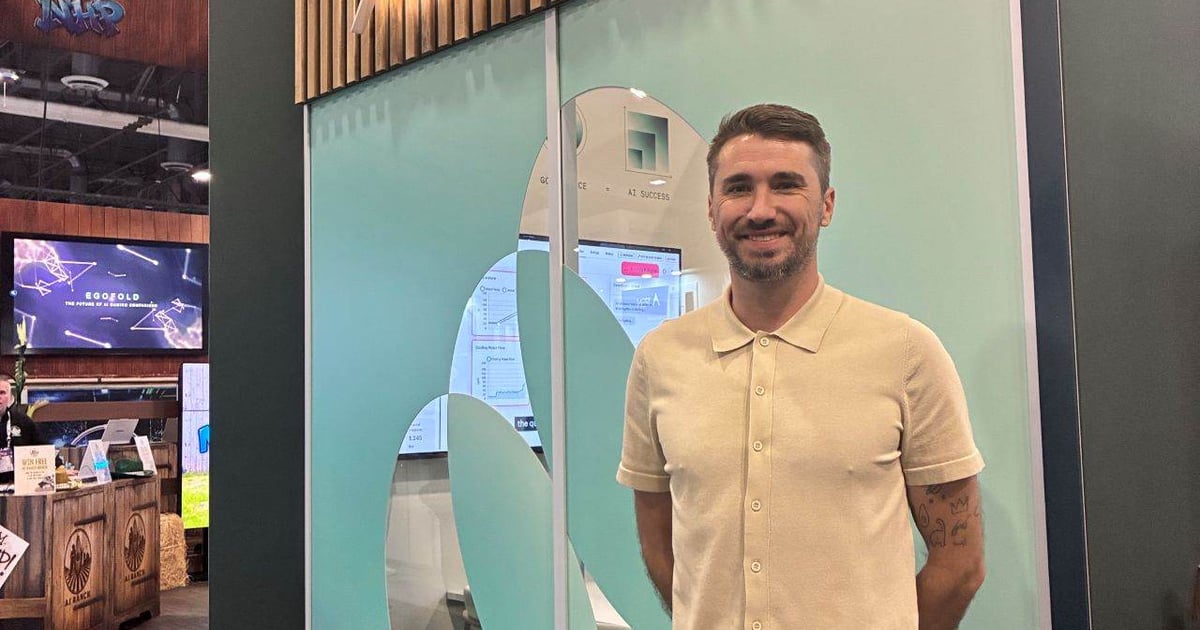
Enterprises hoping to keep up with the rapid pace of AI development need a deep understanding of their own business processes — and flexibility in the models and agents they deploy, according to a senior executive at Dataiku.
Generative and agentic AI have been widely used across enterprises for the past several years. Yet, much as at the start of the AI boom that followed OpenAI's release of ChatGPT in 2022, the speed of technology development appears not to have been matched by adoption. With attention now fixed on the cost of using AI, enterprises are being forced to take a hard look at how they are applying generative AI and to make sure they are gaining value from it.
A shift has begun recently, however, as enterprises have toned down their skepticism about how generative and agentic AI technology could help them. Businesses have felt a pressing need to implement the technology in light of the OpenClaw open source personal agent phenomenon, Anthropic's release of the domain-adaptable Claude Cowork and powerful Mythos models, and Nvidia CEO Jensen Huang's call for enterprises to embrace an "OpenClaw strategy."
In an interview at the Ai4 2026 conference in Las Vegas earlier this month, Jed Dougherty, senior vice president of AI and platform at enterprise AI and machine learning platform vendor Dataiku, discussed the obstacles enterprises face with agentic autonomy and with choosing the right models or agents. In his view, no matter which brand of AI an enterprise chooses, it must manage the technology so that it works for the organization. Dataiku, founded in 2013 and valued at $3.7 billion in its 2022 funding round, sells a centralized platform for building, deploying and governing enterprise AI — a positioning that aligns with his argument for a centralized, agnostic orchestration layer.
Should enterprises now fully accept the autonomy of AI agents, given the success of OpenClaw, or is there still a need for more human-in-the-loop?
Dougherty: There's still a need for human guidance. The biggest gains and successes that people see while using agents are still at enterprises that still have humans in the loop. Every company needs a strategy for identifying what can be fully transitioned to fully autonomous systems. Identifying which policies and processes within your organization can be autonomized, or which subsets could be, is important.
His caution is echoed by industry research: Gartner has forecast that more than 40% of agentic AI projects will be canceled by the end of 2027 after proofs of concept fail to deliver, citing escalating costs, unclear business value and inadequate risk controls.
What role do FDEs, or forward-deployed engineers, play in getting enterprises to adopt AI technology?
Dougherty: We've invested a lot of time and money in hiring and putting together a strong forward-deployed engineering team that we help our clients with. It's very important. For example, I was helping a client. We were trying to build out some relatively simple websites. I did not anticipate the number of small technical hurdles I take totally for granted because I do them every day that stop people in their tracks, or that just drastically slow down the first point at which you could deploy a website. Having a forward-deployed engineer who understands how to do the simple infrastructure stuff is still valuable.
The forward-deployed engineering model was popularized by Palantir and has since spread across the AI vendor landscape as vendors work to translate lab capabilities into working enterprise deployments.
How much need is there for experts to make agentic AI work? And would you say vendors were wrong in their messaging at the start of wide use of generative AI by trying to make it look like a tool that doesn't require experts?
Dougherty: I don't think so. AI is a brand-new technology. Four years ago, people were pretty good at self-service with machine learning because they'd been doing it for 10 years. Now, with new agent capabilities spreading everywhere, vendors need to spend a little time getting people over this initial hump. In a year or two, as more people have touched the technology and gotten used to it, I don't think you'll need quite the same level of hands-on assistance. But right now, when I'm trying to describe to somebody who's never touched an agent before or built an agent before, it's just helpful to have an expert in between. The business transformational capabilities of having structured agents that replicate large portions of your business pipelines is relatively complicated.
What is the best use case for agentic AI that will transform enterprises?
Dougherty: A business needs to know itself before it can identify the best use case. The best use case for agentic AI in any business is its core process. Let's take insurance, for example. An insurance claim comes in, and some processing is done on that claim. Some investigation must be done into that claim. A decision is made on whether to pay out that insurance claim. There's probably some auditing. Maybe they will tell the legal team. So, the core part of the insurance business is deciding how and whether to pay insurance claims, and whether to do business with that customer again. The better an insurance company can describe, right now, how they do that without generative AI, the better they'll be able to understand which subsets of that insurance claim payoff process can then be replicated or augmented by agentic AI.
Enterprises sometimes know their business value but face a wealth of options. How can they choose which vendor to partner with?
Dougherty: Optimal work with data in machine learning and now in AI means choosing the right sub-tool for the right task and being able to swap or tweak easily. Sometimes Snowflake is the best database, and sometimes it's not. Sometimes OpenAI is the best option, and sometimes an on-prem model is the best option for very sensitive data or to watch costs. Having an orchestration layer, a platform that allows you to mix and match these underlying individual tools in a safe, controlled, governed way — that's the foundation. You want a centralized, agnostic orchestration layer that lets you easily choose the right tool for the right job.
How can enterprises deal with the rising cost of using AI?
Dougherty: I liken it to the cloud sticker shock people felt at the beginning of the cloud age, when they swapped everything over to AWS and then got a massive bill the next year. That's going to happen come 2027 as more people start using generative AI. It's not difficult for me to burn $1,000 in tokens a day when I'm working hard on something, and that's not cheap. I do think there's going to be some pushback to that, but it's also incredibly valuable. If in the right person's hands, the things you can build, I can build in a day or two months. There's no substitute for that. That's why it's very important not to have a single agent performing all the tasks. You want it broken down into as many small steps as possible. The other thing to keep track of in cost management is being open to shifts in the market. Keeping on top of the market as far as what the best foundation models are and what the price points are really does make a drastic difference, potentially in managing your pricing. Being able to switch between them is critical.
The dynamic he describes has precedent on the cloud side, where FinOps — now a formal discipline with its own professional foundation — took shape after enterprises hit by early cloud bills built dedicated processes for tracking and governing spend.
What about the open models from Alibaba, DeepSeek and other Chinese providers? How should enterprises respond to that trend?
Dougherty: They're great. We're seeing a lot of third-party vendors providing these third-party Chinese models or the other open source models, serving them up for people at a very competitive price point. You absolutely can slide in third-party open source models and save yourself a lot of money. Plus, they're essentially dependent upon capability.
As agents proliferate across an organization, managing them will become much more critical, Dougherty said. "Conversational AI and using AI to develop applications are here to stay. Everybody's going to be building this stuff. We need to figure out what works and what doesn't."
Editor's note: This interview has been edited for clarity and conciseness.
Source: AI Business

