Darius Dale: Dramatic Fed Easing Should Make 2027 a “Great Year for Bitcoin”
Key Takeaways
- •In a BMTV appearance published Nov. 19, 2026, 42 Macro founder and CEO Darius Dale argued the Federal Reserve's current stance does not amount to a policy mistake, even with markets pricing in a December rate hike.
- •According to 42 Macro's models, the United States remains nowhere near a recession, and Dale described growth as strong with inflation merely trailing an expansion running hotter than the Fed wants.
- •Dale predicted that surprising and dramatic Fed easing in 2027 and beyond is highly likely, and he agreed that 2027 should be a great year for Bitcoin.
- •While bullish on 2027, Dale expects choppier conditions over the next few months, with the Fed's December policy meeting as the next checkpoint for the priced-in hike.
- •Dale connects Bitcoin to Fed policy by viewing the asset as an early indicator of liquidity conditions, and his interview's dozen chapters also covered AI productivity, a proposed Fed-Treasury accord, Bank of Japan policy, and Anthropic's IPO.
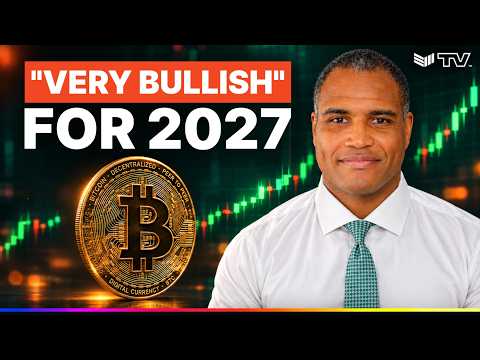
Darius Dale, founder and CEO of 42 Macro, says the Federal Reserve is not making a policy mistake, even with a December rate hike priced into markets. Looking further out, he argued that surprising and dramatic easing in 2027 is highly likely — and he agreed that 2027 should be a “great year for Bitcoin.”
Dale laid out that view in an appearance on BMTV, Bitcoin Magazine’s video program, published on Nov. 19, 2026. The full interview, which runs more than 23 minutes, is available on YouTube, with the accompanying post written by Patrick Green (original article).
Asked directly whether the Fed is making a policy mistake with a December rate hike priced in, Dale said it is not. In his framing, a policy mistake would mean over-tightening the economy into a significant slowdown — and by 42 Macro’s models, the United States is nowhere near a recession.
Instead, Dale described an economy that is booming. In his view, inflation is acting as a lagging indicator of growth that is still running hotter than the Fed wants. That combination, he argued, means the central bank’s current posture does not amount to over-tightening.
The more consequential shift, according to Dale, lies ahead: surprising and dramatic easing in 2027 and beyond is “still on the table and highly likely to occur.” He agreed that 2027 should be a great year for Bitcoin, while the episode’s chapter list pairs that longer-horizon outlook with a choppier immediate term, under the heading “Bullish on 2027, Sloppy Next Few Months.” The Fed’s December policy meeting is the next scheduled checkpoint for the hike markets have priced in, and that liquidity framing is what connects the two horizons for Dale: in his telling, Bitcoin behaves as an early indicator of liquidity conditions, which is how he links the Fed’s easing path to the asset’s 2027 outlook.
The wide-ranging conversation was organized into a dozen chapters, touching on artificial intelligence and the productivity boom; the case for a Fed-Treasury accord, a term that echoes the 1951 agreement that freed the Fed from pegging Treasury yields and formalized its separation from government financing needs; Bitcoin’s role as “the canary in the liquidity coal mine”; energy, inflation and global liquidity; Japan, the yen and the Bank of Japan, whose policy decisions are widely watched by analysts of global liquidity; Anthropic’s IPO and the AI trade; China’s open-source models and AI chips; and what happens to Bitcoin when there is “no boogeyman to blame.”
According to the disclaimer accompanying the segment, the views and opinions expressed are those of the participants and do not necessarily reflect the official policy or position of BTC Inc., Bitcoin Magazine, or any affiliated entities. The content is provided for informational and educational purposes only and does not constitute investment, legal, tax, or accounting advice.

