Bitcoin Quiet August Hides Defensive Signals, VanEck Says
Key Takeaways
- •CZ warned against concentrated Bitcoin bets and said monthly dollar-cost averaging of 1% to 10% of income into top assets was the approach described by Binance’s official AMA account.
- •VanEck said Bitcoin closed at $63,549 on August 11, nearly unchanged from a month earlier, while 30-day realized volatility fell well below its long-run average.
- •The asset traded between $62,265 and $66,509 over the previous 30 days, and spot volume in that period fell 27% month over month to the 10th percentile of its historical range.
- •VanEck said 8 of 12 capitulation signals were firing as of August 12, which it interpreted as Bitcoin approaching or possibly already entering an accumulation phase.
- •Coins held for more than one year declined by about 356,000 BTC in 30 days, pushing the long-term holder share of supply to 59.1% for the first time in months.
Binance founder Changpeng Zhao, or CZ, cautioned against concentrated Bitcoin bets during a Binance Clubhouse AMA in Bali. His remarks came as Bitcoin was trading about 49% below its all-time high, according to VanEck’s mid-August 2026 ChainCheck report.
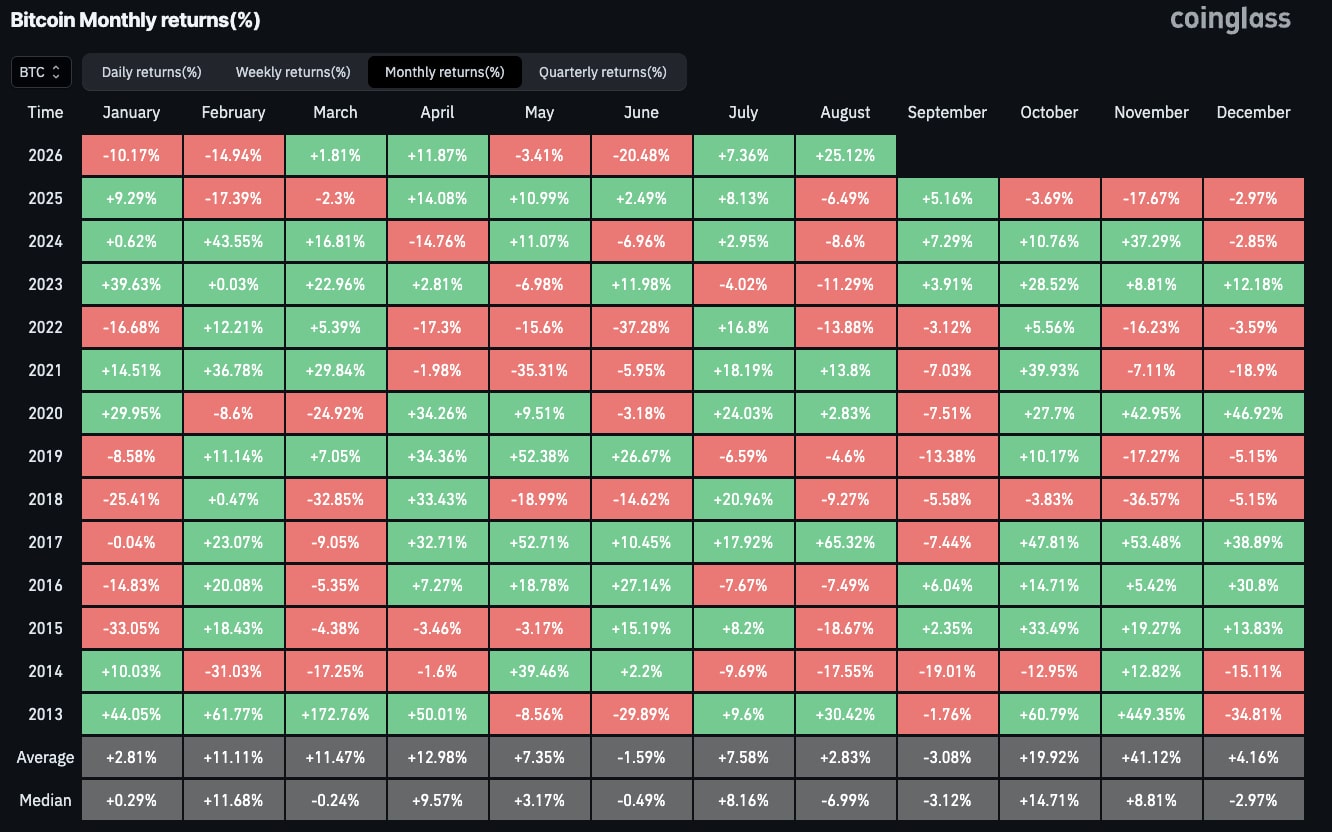
VanEck said Bitcoin closed at $63,549 on August 11, essentially unchanged month over month, while 30-day realized volatility eased to 27.2% annualized, well below the long-run average of about 80%. That combination of flat price and lower volatility suggests a quieter tape than earlier in the cycle, even as the report still placed the asset well below prior highs. CZ has also said the market’s traditional four-year cycle remains intact, placing his warning on concentration alongside a continued focus on the longer-term cycle framework.
According to the supplied official Binance account of the AMA, CZ warned against concentrated bets. The account described monthly dollar-cost averaging of 1% to 10% of income into top assets, while not providing a detailed personalized allocation plan.
VanEck reported that Bitcoin traded in a relatively narrow $62,265 to $66,509 range over the previous 30 days, after stabilizing from its June summer low. The firm also said spot trading volume during that period was down 27% month over month and ranked in the 10th percentile of its history, a backdrop that can make price discovery less pronounced even when on-chain and cycle signals remain active.
The Bitcoin Four-Year Cycle, Backed by VanEck’s Numbers
On the four-year cycle, CZ said the pattern still holds strongly. He compared the current market with conditions four years earlier, while acknowledging that identifying the next major catalyst is difficult.
VanEck’s cycle data provides historical context for that view. The firm counts four previous Bitcoin cycles since 2011 and said it is currently assessing the fifth. Excluding the thinly traded 2011 decline, peak-to-trough bear phases in the three later cycles averaged 12.7 months. VanEck said Bitcoin was entering the 10th month of its drawdown from the October 2025 peak.
Using the full-sample average, VanEck said the next accumulation phase would begin in September. Using the average excluding 2011 places that point in October or November. The firm said it preferred to present the range rather than select an earlier date, and it cautioned that past performance does not guarantee future results.
VanEck’s capitulation dashboard showed 8 of 12 tracked signals firing as of August 12. The firm characterized the readings as evidence that Bitcoin was approaching, or may already be in, an accumulation phase.
However, it also described the historical forward-return record as mixed: readings with 8 to 12 indicators firing beat Bitcoin’s baseline only at the one-year horizon, and the underlying sample was small and heavily overlapping.
Long-Term Holders Are Moving Coins
VanEck’s on-chain data showed that coins held for longer than a year fell by about 356,000 BTC over 30 days, a 2.9% decline to 11.84 million BTC. The long-term holder share of circulating supply slipped to 59.1%, below 60% for the first time in months.
The movement was broad across the six long-term holding bands, though it was concentrated in younger and middle-aged coin cohorts. Holdings in the one-to-two-year band fell by about 156,000 BTC, while the two-to-three-year band declined by roughly 76,000 BTC. By contrast, coins held for more than 10 years fell by about 4,000 BTC.
VanEck said the long-term base was churning more than collapsing because younger coins crossing the one-year threshold replaced a nearly equal amount of coins that moved. Still, the report described the net decline as the first meaningful monthly drawdown in the long-term cohort in months and said long-term holders were distributing into the recovery.
