Changpeng Zhao Says He Misjudged Stablecoins as Market Tops $311 Billion
Key Takeaways
- •Changpeng Zhao acknowledged that he dismissed stablecoins as a short-term technological patch while leading Binance, failing to anticipate their significant growth.
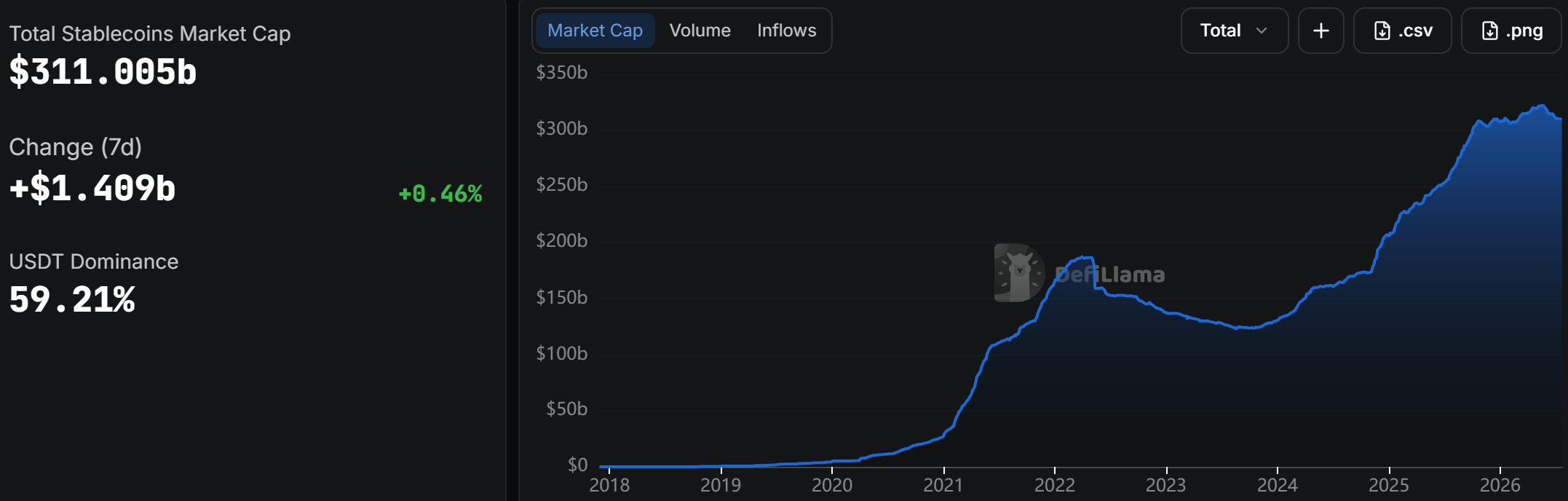
- •The stablecoin market has expanded to more than $311 billion, with Tether (USDT) holding approximately $184 billion and ranking as the third-largest cryptocurrency by market value.
- •Traditional financial institutions have entered the stablecoin space, including PayPal launching PYUSD and JPMorgan exploring tokenized deposit products.
- •The United States passed the GENIUS Act in July 2025, establishing the first national regulatory framework requiring reserve backing and disclosure for stablecoin issuers.
- •Circle, the issuer of USDC, listed on the New York Stock Exchange and saw its shares surge more than 160% on the first day of trading.
Changpeng Zhao, the Binance founder widely known as CZ, says he underestimated one of the crypto industry's largest markets: stablecoins.
Speaking on the Talking Tokens podcast, Zhao said he had written off stablecoins for years while running Binance. The market has since grown to more than $311 billion, led by dollar-pegged tokens used by traders and crypto platforms to move value quickly around the clock.
CZ Says He Missed the Stablecoin Boom
Zhao reflected on past judgments he believes he got wrong, saying that stepping away from Binance gave him more time to look across the broader crypto market. Zhao stepped down as Binance CEO in November 2023 as part of a $4.3 billion settlement with US authorities over anti-money laundering and sanctions violations, and later served a four-month prison sentence in 2024.
Stablecoins are crypto tokens typically designed to track the value of the US dollar, with each token aiming to remain worth about $1. They are widely used to transfer funds between platforms and to trade without moving in and out of traditional banking rails.
Zhao said his view of the sector was too narrow when he was leading Binance.
“when I was running Binance, I actually kind of missed stablecoins. I didn’t think stablecoins will get that big, but they actually have.”
From Temporary Workaround to Major Crypto Sector
Zhao said he originally saw stablecoins as a short-term technical workaround, mainly useful for moving funds between crypto exchanges.
“I thought that was a temporary patch job technology just to bridge some transactions between crypto exchanges, but then got big…”
Stablecoins were still a small segment of the market when Binance launched in 2017. Today, the sector exceeds $311 billion. Tether (USDT) leads the category with about $184 billion, representing nearly 60% of the stablecoin market.
That size makes Tether the third-largest cryptocurrency by market value, behind only Bitcoin (BTC) and Ethereum (ETH). Circle's USDC is the second-largest stablecoin, with about $77 billion. Traditional finance companies have also entered the space, with PayPal launching its own dollar-pegged token PYUSD and major banks such as JPMorgan exploring tokenized deposit products.
The sector Zhao once doubted has also moved deeper into the regulatory and public-market spotlight. In July 2025, the United States passed the GENIUS Act, establishing the country's first national rules for stablecoins, including reserve backing and disclosure requirements for issuers. Weeks earlier, Circle listed on the New York Stock Exchange, and its shares rose more than 160% on the first day of trading.
Why Zhao Says He Is Watching More Closely Now
Zhao said leaving the CEO role at Binance gave him more room to study parts of the industry he had previously overlooked.
“when I’m forced to step back, I kind of look at the industry more as a whole.”
He attributed part of the missed opportunity to the demands of running Binance.
“as the CEO of Binance, when I was running it, I was so busy that I couldn’t even learn new things in crypto that well.”
Zhao said the stablecoin market has become an example of how early doubts about a crypto sector can prove costly as adoption and infrastructure develop.