Cyclic Materials Picks Germany for First European Rare Earth Magnet Recovery Plant
Key Takeaways
- •Cyclic Materials signed a land reservation agreement for a magnet recovery plant at the Dow ValuePark in Schkopau, near Leipzig, representing the Canadian company's first expansion outside North America.
- •The Schkopau site is the first of five recovery plants planned for Europe and is expected to start operating in 2028, processing 25,000 tonnes of magnet-bearing scrap per year using Cyclic's proprietary MagCycle technology.
- •Cyclic estimates its planned European recovery and processing network could eventually meet as much as 15% of the European Union's annual rare earth demand, with European magnet demand projected to more than double over the next decade.
- •The facility is expected to produce 750 tonnes of magnet-rich material annually alongside 14,000 tonnes of steel, 4,600 tonnes of aluminum and 3,000 tonnes of copper, with non-rare earth metals contributing 40% to 50% of revenue and allowing the company to compete without government price guarantees.
- •Backed by investors including Microsoft, Amazon and BMW i Ventures, Cyclic completed a $75-million financing in August that lifted total equity funding to $237 million, and it is also considering expansion into Asian markets outside China.
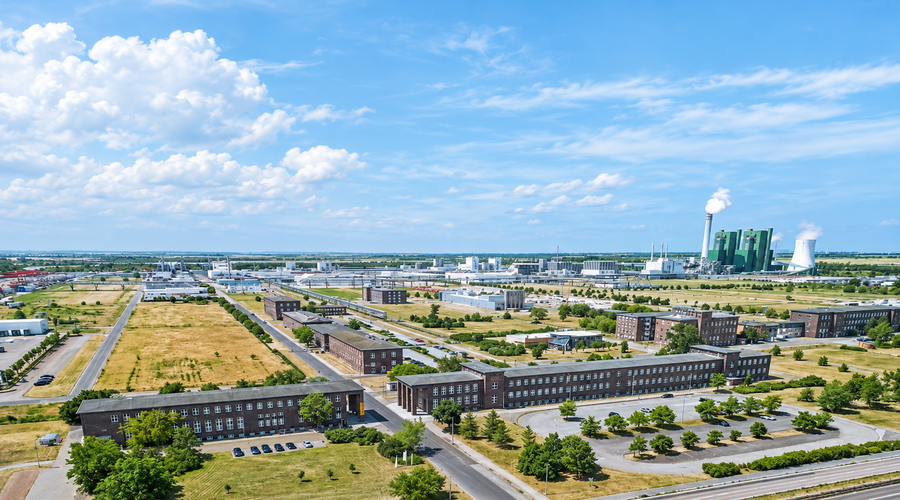
Canadian rare earth recycler Cyclic Materials has chosen a site in Germany for its first European magnet recovery facility, marking the privately held company's first expansion beyond North America.
The company said Thursday it signed a land reservation agreement for a plant at the Dow ValuePark in Schkopau, near Leipzig. According to Cyclic, its planned European recovery and processing network could ultimately supply as much as 15% of the European Union's annual rare earth demand. The announcement lands as the bloc works to expand domestic critical mineral capacity under its Critical Raw Materials Act, which sets 2030 benchmarks for EU recycling and processing and caps reliance on any single country for strategic raw materials.
"Europe knows the economic resilience that can be delivered through a domestic, circular rare earth and critical mineral economy," CEO and co-founder Ahmad Ghahreman said in a statement announcing the site selection.
The move comes as European demand for rare earth magnets is projected to more than double over the next decade, according to Cyclic. The magnets are core components in electric vehicle motors, wind turbines and consumer electronics, making them a strategic input for European industry. China currently accounts for roughly 90% of global processed rare earth output, Reuters reported.
Backed by investors including Microsoft (Nasdaq: MSFT), Amazon (Nasdaq: AMZN) and BMW i Ventures, Cyclic plans to process 25,000 tonnes of magnet-bearing scrap annually at the German plant. Recovered magnet material would feed a planned central chemical processing hub dedicated to rare earth oxide recovery.
The Schkopau facility is the first of five recovery plants Cyclic plans for Europe and is targeted to begin operations in 2028, Ghahreman told Reuters. The company is also weighing expansion into Asian markets outside China.
Cyclic opened its first commercial-scale magnet recovery facility in Mesa, Arizona, in September after 17 months of development. It is also building an integrated recycling campus in McBee, South Carolina, where operations are expected to start in 2028.
Cost advantage
The Schkopau plant will use Cyclic's proprietary MagCycle technology to mechanically separate permanent magnets from discarded electric motors, hard drives, drones and industrial equipment.
Annual output could reach 750 tonnes of magnet-rich material, along with 14,000 tonnes of steel, 4,600 tonnes of aluminum and 3,000 tonnes of copper, according to Cyclic.
Recovering these additional metals strengthens Cyclic's cost competitiveness, Ghahreman told Reuters, noting that non-rare earth metals account for 40% to 50% of the company's revenue. He said Cyclic does not need government price guarantees to operate competitively.
By comparison, MP Materials (NYSE: MP) secured a United States government price floor of $110 (C$156) per kilogram for neodymium-praseodymium products under a 2025 agreement.
Cyclic has partnered with electronics recycler ERI to source feedstock through ERI's U.S. collection and processing network. Separately, the company agreed in 2024 to supply recycled mixed rare earth oxide to Solvay for further separation and purification in France.
Cyclic completed a $75-million financing in August, lifting total equity funding to $237 million to support its U.S. expansion. Asked about a possible initial public offering, Ghahreman told Reuters the company has several options for raising additional capital.

