Cuomo Urges Congress to Pass CLARITY Act Ahead of Senate Vote
Key Takeaways
- •The CLARITY Act would define whether digital assets are regulated as securities or commodities and split oversight between the SEC and CFTC.
- •Cuomo said U.S. crypto firms need federal rules and warned that the country is lagging behind the European Union’s MiCA regime.
- •The Senate is scheduled to hold a procedural vote on the bill on September 15, while negotiations continue over ethics, enforcement, and stablecoin-related issues.
- •Supporters argue that congressional legislation would be more durable than agency rules because future administrations could reverse regulatory changes.
- •Cuomo said the bill would not solve all crypto market problems, and the industry must still address trust issues tied to scandals and criminal activity.
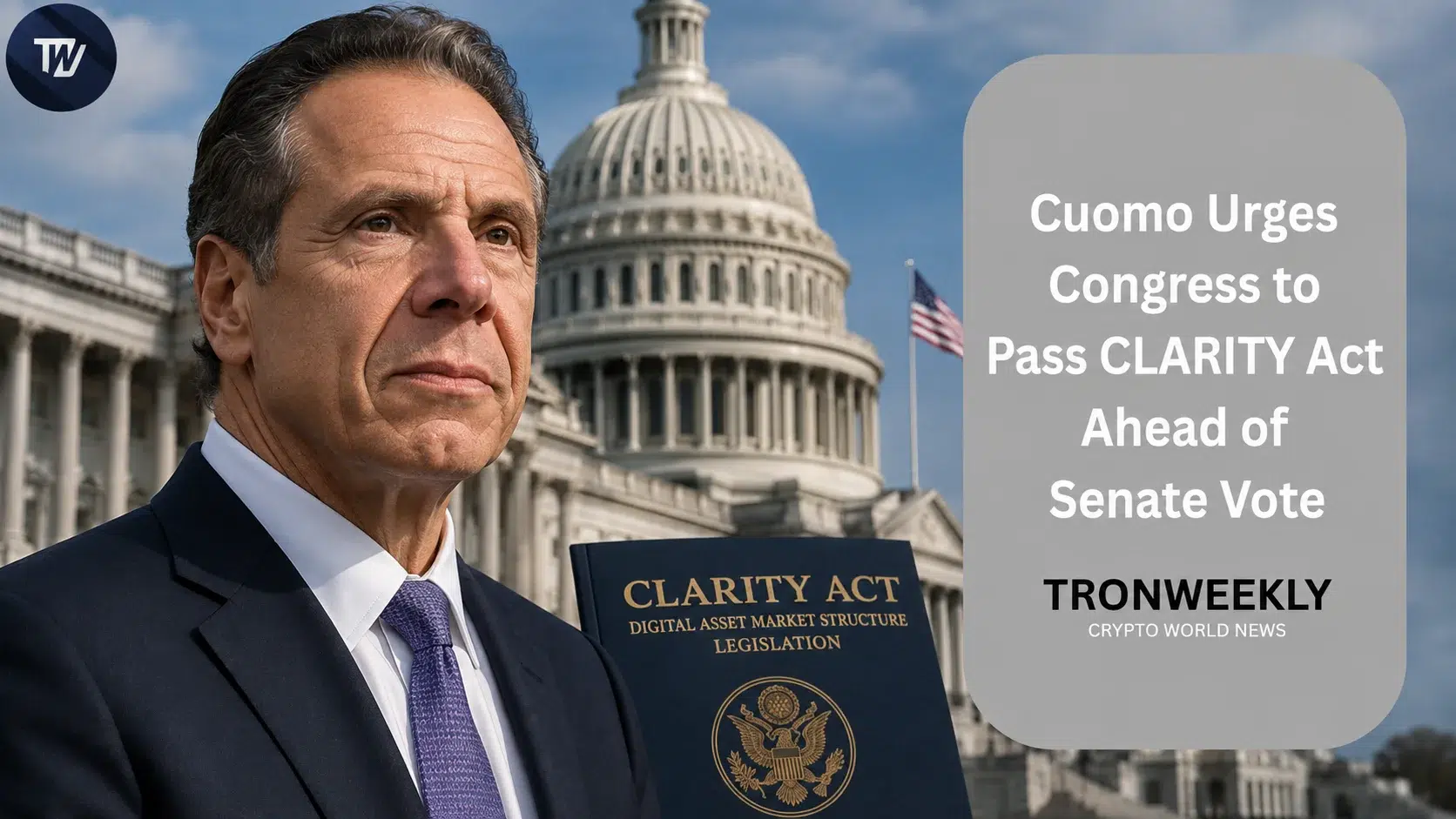
Former New York Governor Andrew Cuomo urged Congress on Tuesday to approve the CLARITY Act, formally titled the Digital Asset Market Clarity Act, warning that regulatory uncertainty could weaken U.S. leadership as other economies adopt comprehensive rules for fast-growing digital asset markets.
Speaking at the SALT Conference in Jackson Hole, Wyoming, Cuomo said American cryptocurrency firms need federal requirements. He added that the United States is trailing the European Union, whose Markets in Crypto-Assets regulation, known as MiCA, has applied across the bloc since the end of 2024. Cuomo, who resigned as governor in 2021 amid sexual harassment allegations that he denied, has rarely spoken on crypto policy, which made his intervention notable at a conference dominated by asset managers and industry executives. The House passed the CLARITY Act in July 2025, leaving the Senate as the bill's remaining step in Congress.
How the CLARITY Act Would Divide SEC and CFTC Oversight
The proposal would determine whether digital assets fall under securities laws or commodities laws. It would also split market oversight between the Securities and Exchange Commission and the Commodity Futures Trading Commission. Under the bill's framework, the CFTC would take the lead on spot trading of assets classified as digital commodities, while digital assets deemed securities would stay under the SEC.
JUST IN: 🏛 Former NY Gov. Andrew Cuomo urges Congress to pass the CLARITY Act, warning the U.S. is losing ground to rival nations on crypto regulation. Unlikely messenger, hard to argue with the point. — Watcher.News (@watchernewsx) August 19, 2026
JUST IN: 🏛 Former NY Gov. Andrew Cuomo urges Congress to pass the CLARITY Act, warning the U.S. is losing ground to rival nations on crypto regulation. Unlikely messenger, hard to argue with the point.
Cuomo said the CLARITY Act would tell companies what regulators expect before products are offered to consumers. He said businesses need certainty before regulations are enforced.
He also argued that federal legislation could create more durable standards than rules issued by regulatory agencies, since those rules can be changed by a different president when appointing SEC and CFTC chairs.
Industry executives support the CLARITY Act in part because they fear another administration could revive aggressive enforcement. GSR Chief Legal and Strategy Officer Josh Riezman said such a shift could amount to a return to Gensler-era enforcement.
What Could Shape the September 15 CLARITY Act Vote
Former SEC chair Gary Gensler sued many crypto companies during the Biden administration for allegedly offering unregistered securities, including cases against Coinbase, Binance, and Kraken.
Gensler said strong enforcement was necessary because fraud remained common in digital asset markets. Riezman said current SEC and CFTC officials may craft new rules, but future officials could later overturn them.
A CFTC spokesperson said the congressional law would create rules that would remain workable under different administrations. The agency also said it is willing to support U.S. leadership in digital assets even if the legislation does not pass.
The Senate is scheduled to hold a procedural vote on the CLARITY Act on September 15. Negotiations are ongoing over ethics, enforcement, and rewards tied to stablecoin ownership. The stablecoin questions come after Congress passed its first major crypto law, the GENIUS Act, which set federal rules for payment stablecoins in 2025.
While many Democrats support federal crypto legislation, they are pushing for stronger protections against fraud and money laundering. Those demands are being used in negotiations ahead of the vote.
Why White House Ethics Talks Could Delay the CLARITY Act
Senators Ruben Gallego, a Democrat, and Thom Tillis, a Republican, are still waiting for the White House to respond to their ethics rules proposal, which remains an obstacle to passing the bill. Their bipartisan pairing reflects the unusual coalitions the legislation has drawn in both parties.
Separate agency efforts are also moving ahead while Congress debates the CLARITY Act. SEC Chair Paul Atkins is leading efforts to adopt regulatory measures, while CFTC Chair Michael Selig has expanded derivatives activity, including perpetual Bitcoin futures trading. However, agency-led changes would not create lasting rules because a future administration could reverse them without congressional approval.
Cuomo said the CLARITY Act would not solve every problem in the cryptocurrency market. He said scandals and links to criminal activity have created trust issues that the industry itself must address.

