Crypto voters prioritize candidates’ stances ahead of midterms, but polling tells two different stories
Key Takeaways
- •Stand With Crypto says 2.9 million U.S. advocates are aligned around digital asset policy ahead of the 2026 midterms.
- •A Politico and Public First survey found only 4% of the broader public and 7% of active digital asset traders viewed crypto policy as important in candidate choice.
- •Crypto-linked PACs had spent $189 million on the 2026 election cycle by late June, with Fairshake contributing $82 million.
- •The industry’s legislative priorities are the CLARITY Act and the GENIUS stablecoin bill.
- •The article says the main question is whether heavy spending will translate into measurable influence on competitive races and Senate timing.
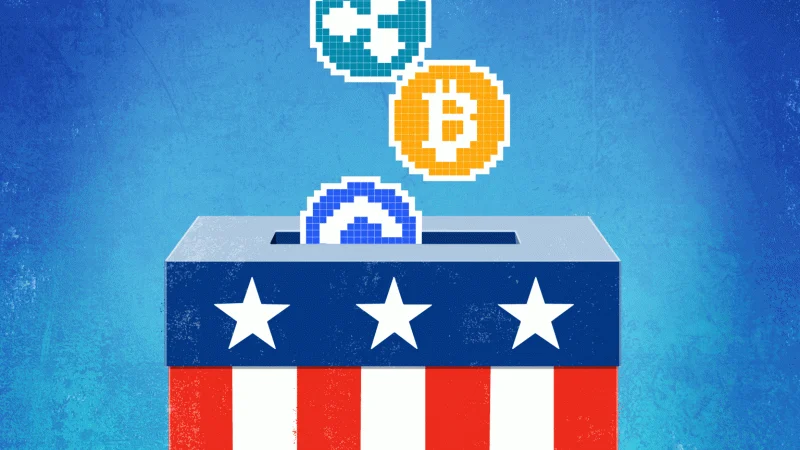
The crypto industry wants readers to believe it has built an unstoppable voting bloc ahead of the November 2026 midterms. The actual electorate may have other plans.
Stand With Crypto, the advocacy group that has become the industry’s loudest political megaphone, says 2.9 million US advocates are ready to head to the polls with digital asset policy at the top of their minds. Based on the group’s own polling, about 70% of crypto owners say a candidate’s position on legislation such as the CLARITY Act will affect how they vote. The group also says 80% of those voters are “almost certain” to turn out.
Those figures are striking, but they differ sharply from what independent researchers found.
The polling gap no one wants to talk about
A May 2026 survey by Politico and Public First presents a much less favorable picture. Only 4% of the broader US population said they would factor crypto policy into candidate selection. Even among people who actively trade digital assets, just 7% said it was an important issue.
Put another way, the crypto industry’s internal enthusiasm appears to be roughly 10 to 17 times higher than what neutral polling finds in the wider public.
Follow the money, not the polls
Whatever questions remain about crypto’s voter influence, its financial power is clear. Crypto-linked political action committees had poured $189 million into the 2026 election cycle as of late June, making the industry the largest sector spender this cycle.
Fairshake, the flagship crypto super PAC, accounted for $82 million of that total.
The legislative agenda behind the spending centers on two bills: the CLARITY Act, which would create clearer regulatory categories for digital assets, and the GENIUS stablecoin bill. Stand With Crypto has been portraying Senate action on these measures as urgent and linking the legislative timetable to the approach of the election.
To carry out that strategy, the group released a 2026 candidate questionnaire in November 2025 designed to map where every politician stands on digital asset regulation.
The contrast between voter interest and spending is why the next few months matter for both lawmakers and the crypto industry. Elections can magnify small issue blocs when races are close, but polling suggests crypto is still far from a top-tier concern for most Americans. That makes the sector’s financial campaign more visible than its electoral base, even as it continues pressing for rules that would define how digital assets are categorized and overseen.
As November approaches, the key question is not whether crypto has money to spend; it clearly does. It is whether that spending translates into measurable influence on competitive races and legislative timing, especially if the Senate takes up the CLARITY Act before voters go to the polls.