Crypto Market Stabilizes as Bitcoin Briefly Tops $77,000 After Fed Rate Hike and CLARITY Act Setback
Key Takeaways
- •The Senate’s Sept. 15 failure to advance the CLARITY Act removed a closely watched potential regulatory catalyst for the crypto market.
- •The Federal Reserve raised interest rates by 25 basis points, increasing concerns about further monetary tightening and contributing to weaker market sentiment.
- •Bitcoin remained near $76,000 after trading above $77,000 in the previous session, while Zcash and Hyperliquid recorded stronger gains.
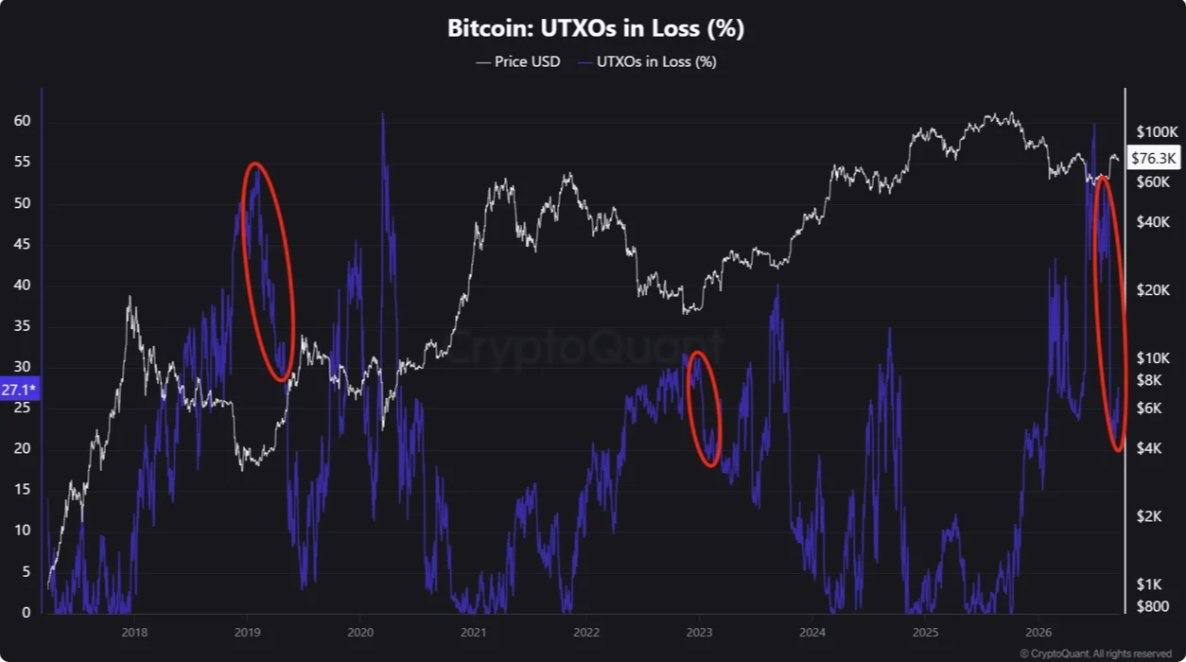
- •CryptoQuant analyst Crypto Dan said the declining share of UTXOs held below acquisition cost suggests the rally has more than short-term support.
- •Stablecoin inflows across exchanges have declined, although Binance recorded $1.23 billion in inflows on Monday, well above its two-month average.
The cryptocurrency market stabilized on Sept. 18 after absorbing two major headwinds tied to U.S. monetary policy and crypto regulation. Bitcoin held around the $76,000 level after briefly trading above $77,000 during the previous session, while several large-cap cryptocurrencies also remained higher. Zcash and Hyperliquid stood out with stronger gains.
The recovery followed a turbulent stretch in which the Federal Reserve delivered its first rate increase since 2023 and the Senate failed to advance the CLARITY Act, a market-structure measure that had been expected to set comprehensive federal rules for an industry that has largely operated under a patchwork of agency and state-level rules. Here is a closer look at the forces behind the setback and the market's steady response.
Market Steadies After Two Major Setbacks
The broad market gains came as a surprise given the recent setback experienced by the sector. On September 15, the much-anticipated vote on the CLARITY Act in the Senate failed, dampening hopes that the industry would receive comprehensive federal legislation. The outcome removed a legislative catalyst that market participants had been closely watching.
Analysts at Santiment noted that the CLARITY Act setback doused sentiment across the crypto markets. According to the firm, September 14 marked an extreme period of FOMO for the crypto community, with a bullish narrative surging ahead of the vote.
The failed vote weighed on market sentiment, and the pressure deepened when the U.S. Federal Reserve raised interest rates by 25 basis points — a quarter of a percentage point. The decision marked the first rate hike in three years and signaled potential tightening ahead. While Fed Chair Kevin Warsh said nothing about further hikes, the unanimous decision to raise rates, combined with comments about inflation, suggests there could be more increases this year.
Unsurprisingly, the CLARITY Act failure and the rate increase that followed have now wiped out the crypto market's FOMO, with fear replacing euphoria. That shift is evident in the Fear and Greed Index, a sentiment gauge scored from 0 (extreme fear) to 100 (extreme greed), which currently sits at 64/100 — still in greed territory but moving closer to neutral.
Analyst Says Bear Market Return Highly Unlikely
Despite the turbulence, experts believe the broader structural picture remains intact and that the chances of a return to the bear cycle are increasingly unlikely. CryptoQuant's Crypto Dan pointed to a rapid decline in the percentage of UTXOs in loss — unspent transaction outputs held below their acquisition cost — which he said confirms that the recent rally is not just a short-term rebound. In his assessment, there is enough momentum to end the bear market and transition to a bullish cycle.
While he acknowledged the recent setbacks, Dan does not think they will affect market sentiment over the long term. He described them as short-term headwinds, noting that they are unlikely to "completely reverse the on-chain structural changes already taking place and push the market back into a full bear cycle."
Nevertheless, there are still some worrying signs. CryptoQuant data show that stablecoin inflows across exchanges have been declining, even as inflows to Binance remain robust. The exchange recorded $1.23 billion in stablecoin inflows on Monday alone, far above its average over the past two months. High stablecoin inflows — the dollar-pegged tokens traders commonly use to fund exchange purchases — were one of the defining features of Bitcoin's rally from $62,000 to $80,000.
This article is for informational purposes only and does not constitute financial or investment advice. On-chain indicators, sentiment data, and analyst views do not guarantee future cryptocurrency performance.
This article was originally published by The Market Periodical.

