Crypto Market Falls as Bitcoin Slips Below $70,000 Amid Rising US Bond Yields and ETF Outflows
Key Takeaways
- •Bitcoin dropped below the $70,000 support level as the total cryptocurrency market capitalization fell more than 5.7% to $2.3 trillion in 24 hours.
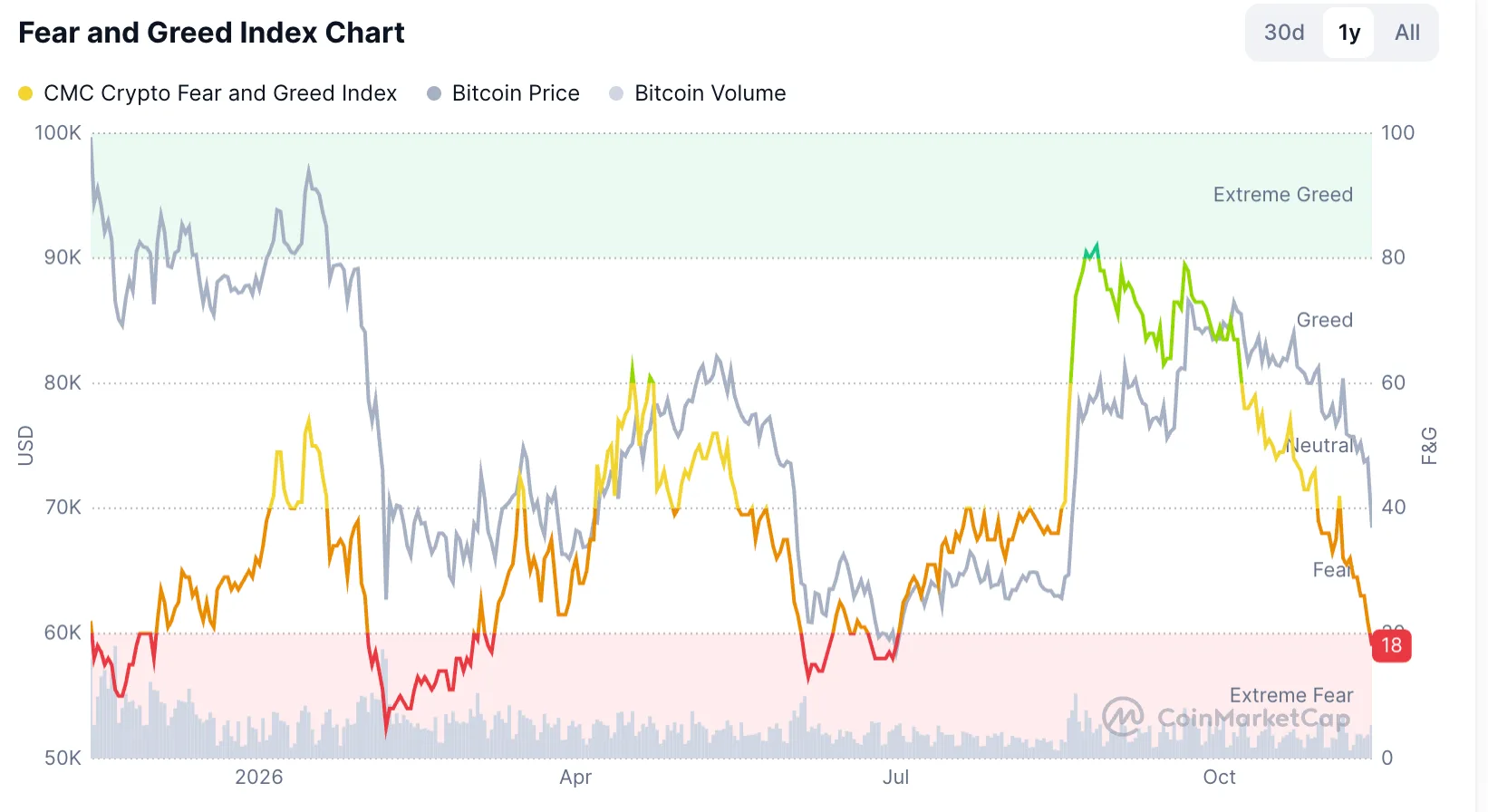
- •The Crypto Fear and Greed Index fell to 18, marking a 67-point reversal from its September high of 85 and signaling extreme fear among investors.
- •Stronger-than-expected US jobs and CPI data pushed bond yields higher and strengthened expectations of a Federal Reserve rate hike, potentially 0.50%, at the December meeting.
- •Spot Bitcoin ETFs lost over $1.8 billion this month, more than triple October's outflows, while XRP ETFs recorded their first monthly outflows since March.
- •Bitcoin fell below the 61.8% Fibonacci retracement level along with its 50-day and 100-day exponential moving averages, a technical breakdown that analysts say confirms a bearish outlook.
The cryptocurrency market declined on November 13, with Bitcoin and most altcoins trading in the red. Bitcoin dropped below the crucial support level of $70,000, while the total valuation of all tokens slipped by more than 5.7% over the past 24 hours to $2.3 trillion. Among the day's top laggards were GateToken (GT), Monero (XMR), Stacks (STX), Uniswap (UNI), and Venice Token (VVV).
Fear and Greed Index Sinks to 18
One factor behind the decline is a sharp deterioration in sentiment. The Crypto Fear and Greed Index has dropped to 18, deep within the extreme fear zone, down from a September high of 85. The gauge matters because it measures overall sentiment in the crypto industry, drawing on several key metrics, including Bitcoin's price action, activity in the derivatives market, and social media trends.
Historically, Bitcoin and other cryptocurrencies have tended to perform well when the index is rising and to struggle when it is falling. Past crypto bull markets have often begun when the index dropped into the extreme fear zone, while market cycles have tended to peak once it jumped into the extreme greed zone. That history is why the current reading is drawing attention: the 67-point swing from September's high captures how quickly conditions have reversed, and where the index goes from here will indicate whether sentiment stabilizes or keeps deteriorating.
Rising US Bond Yields Weigh on Prices
The market is also reacting to the bond market, where yields have moved higher. Data shows that the ten-year yield rose to 5.12%, while the 30-year and five-year yields jumped to 5.4% and 4.96%, respectively.
The increase in yields follows a run of stronger-than-expected macroeconomic numbers. Data released last week showed that the US economy created 165,000 jobs in October, while the unemployment rate fell to 4.1%. Another report released this week showed that both the headline and core Consumer Price Index (CPI) rose at a faster pace than expected last month.
Those figures have strengthened expectations that the Federal Reserve will decide to raise interest rates at its December meeting, with Fed official Christopher Waller advocating for a 0.50% increase. Bitcoin and other risky assets often underperform when the Federal Reserve is hiking rates, because higher rates make riskier investments less attractive and prompt investors to move toward the safety of fixed income. The December meeting is therefore the next scheduled checkpoint for this particular headwind, since it is where policymakers are expected to act on the same jobs and inflation data that have lifted yields.
Bitcoin and Altcoin ETF Outflows Accelerate
Flows in the exchange-traded fund (ETF) market have added further pressure. Spot XRP ETFs have lost more than $18 million in assets this month, a notable development because it marks the first month of outflows since March.
Spot Bitcoin ETFs have shed over $1.8 billion in assets, more than three times what they lost in October this year. Ethereum ETFs lost over $695 million this month, after losing $1.6 billion last month.
Rising ETF outflows put additional pressure on the crypto market by increasing sell-side supply, and they signal that institutional and smart-money investors are starting to sell their assets. Because ETF flows are tallied from daily creations and redemptions, they offer one of the most direct public windows into institutional positioning, which is why a sustained flip from inflows to outflows carries outsized signaling weight. The ongoing outflows have coincided with falling futures open interest, with the total dropping by more than 6% in the last 24 hours to $119 billion. These developments have also coincided with the recent midterm elections, in which Democrats won the House and the Senate by a large margin.
Technical Weakness Adds to the Pressure
Bitcoin's technical picture has contributed to the broader market weakness. According to the analysis, BTC has been in a steep sell-off and has just dropped below the 61.8% Fibonacci retracement level. In most cases, a move below this support level confirms a bearish outlook.
The coin has also fallen below its 50-day and 100-day Exponential Moving Averages (EMA), a sign that bears have prevailed. The report concluded that the cryptocurrency will likely continue falling, a scenario that would drag the rest of the crypto industry lower. Traders tracking this setup will be watching whether Bitcoin can reclaim the 61.8% level and the two moving averages, since the bearish case outlined in the analysis rests on price remaining below them.
This article provides cryptocurrency market information and does not constitute financial or investment advice. Market prices, ETF flows, and technical indicators can fluctuate rapidly, and macroeconomic conditions do not guarantee particular cryptocurrency price outcomes.
This article is based on reporting originally published on The Market Periodical.

