Crypto Laundering a 'Material Risk' for UK Ahead of 2027 FATF Review, RUSI Taskforce Warns
Key Takeaways
- •FATF assessors will visit the UK in June 2027, months before the mandatory crypto regime begins on October 25, 2027, with the evaluation report due to be agreed at FATF's February 2028 plenary.
- •Crypto laundering is rated a serious threat: the City of London Police estimates 66% of UK investment fraud involves crypto, and the 2025 National Risk Assessment raised crypto money laundering to high risk from medium in 2020.
- •The taskforce doubted the UK could show sufficient implementation by the FATF visit, saying it had acted more conservatively than Hong Kong, the EU, and Singapore, with over-the-counter brokers estimated to launder hundreds of millions of dollars annually.
- •Because the FCA regime centers on identifiable crypto firms, the highest-risk activity could fall outside its perimeter, including Tether's USDT, which a July 2025 Treasury report said was extensively exploited by Russian-speaking laundering networks.
- •The Metropolitan Police's £5.5 billion crypto seizure was cited as an encouraging sign of UK capability, but members said such outcomes are too rare and flagged resourcing of the UK Financial Intelligence Unit as a likely vulnerability.
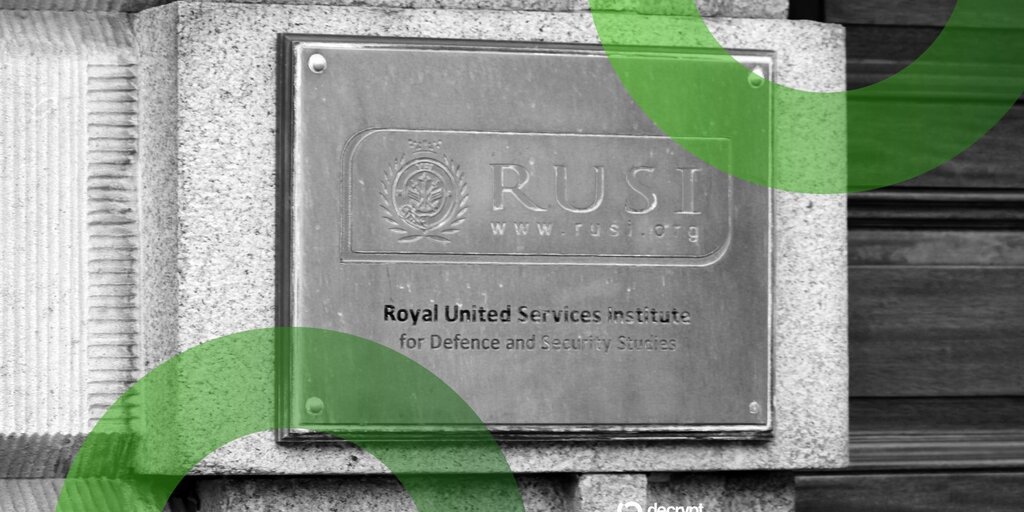
A taskforce convened by the Royal United Services Institute (RUSI) has warned that crypto laundering poses a "material risk" to the United Kingdom ahead of its 2027 Financial Action Task Force evaluation, cautioning that new rules could push the riskiest crypto activity outside the regulator's reach and onto law enforcement.
Britain's new crypto regime will still be in transition when assessors from the global anti-money laundering standard-setter arrive next year, and the country will be judged on whether it can enforce against crypto laundering, according to the taskforce's report, published on Friday.
The paper sets out the issues the London-based defense and security think tank's taskforce expects to dominate the UK's 2027 evaluation by the Financial Action Task Force (FATF). The Paris-based body sets global standards against money laundering and terrorist financing, and its peer reviews, known as mutual evaluations, grade countries on whether their rules work in practice. The UK's report is due to be agreed at FATF's February 2028 plenary.
The taskforce, made up of experts from the private sector, law enforcement and civil society, met in September; its discussions are not attributed to individual members. FATF assessors are due to visit the UK in June 2027, while the country's full crypto regime does not take effect until October 25, 2027.
A first test for crypto
This will be the first UK evaluation in which FATF considers crypto, and the taskforce was clear that crypto is a "material risk" for the country. The City of London Police assesses that 66% of investment fraud in the UK involves crypto, according to the report, while the UK's 2025 National Risk Assessment rated crypto money laundering high risk, up from medium in 2020.
The UK brought crypto firms under its money laundering rules in 2020, and legislation passed in February created a statutory crypto regime. The Financial Conduct Authority (FCA) set out which crypto activities it will regulate in April and finalized its rulebook in June, but the mandatory regime does not take effect until October 25, 2027.
The taskforce doubted the UK would be able to show adequate implementation by the time FATF visits in June, and said the UK had moved more conservatively than Hong Kong, the EU and Singapore. Members were unanimous that assessors would examine this, and pointed to over-the-counter brokers, which the National Crime Agency estimated in the 2025 risk assessment are likely to launder hundreds of millions of dollars a year.
Enforcement gaps
The taskforce cited the Metropolitan Police's £5.5 billion (about $7.3 billion) crypto seizure, linked to a Chinese professional money launderer sentenced in 2025, as an encouraging sign of what the UK criminal justice system can do when it has the capacity. But one member said the success had not been repeated in enough cases, and that the UK had barely scratched the surface of crypto laundering. FATF is expected to test whether results match the risk rather than rest on one headline case, the report said.
It also warned that because the UK's regime, which resembles the EU's Markets in Crypto-Assets Regulation, focuses on identifiable crypto firms, it risks pushing the highest-risk crypto outside the FCA's perimeter. That would leave law enforcement to trace assets the regulator cannot reach, such as Tether's USDT, with the taskforce pointing to a July 2025 Treasury report that flagged the stablecoin as having been "extensively exploited" by Russian-speaking laundering networks. Members doubted law enforcement had been given the capability and resources to keep pace.
The taskforce did praise UK international cooperation, including Operation Destabilise, which targeted Russian-speaking networks converting street cash into crypto. But it flagged resourcing of the UK Financial Intelligence Unit and law enforcement's economic crime capacity as likely vulnerabilities.
Wider FATF pressure
FATF has been pressing countries on crypto enforcement more broadly. In July, it said nearly 93% of jurisdictions it surveyed had yet to apply its standards to qualifying DeFi platforms.
RUSI has previously argued that banning crypto privacy tools would be counterproductive, and in August reported that North Korea increasingly launders stolen crypto through criminal networks. The taskforce will meet again this month to examine trends from recent evaluations.

