CoinShares: U.S. Data Center Grid Constraints Could Lift AI Revenue Share for Listed Bitcoin Miners
Key Takeaways
- •Global digital asset investment products recorded $1.65 billion in inflows in the first three trading days of the week, after $2.94 billion the previous week, the year's largest weekly inflow.
- •Bitcoin products attracted $976 million and Ethereum $478 million, together accounting for most of the latest inflows.
- •Total crypto ETP assets under management rose to about $155 billion, with year-to-date flows returning to a positive $3.4 billion.
- •CoinShares projects AI-related revenue will grow from roughly 30% to about 70% of listed Bitcoin miners' revenue by year-end.
- •U.S. data-center power constraints and the April 2024 halving are increasing the value of miners' powered infrastructure and the appeal of non-mining revenue streams.
Global digital asset investment products recorded $1.65 billion in inflows during the first three trading days of the week, according to CoinShares, following $2.94 billion in inflows during the previous week. The previous week represented the largest weekly inflow of the year, while the latest figures indicate continued demand for cryptocurrency investment products. The figures were highlighted in an update shared on X by @WuBlockchain, citing CoinShares.
Bitcoin and Ethereum accounted for most of the latest inflows, attracting $976 million and $478 million, respectively. Meanwhile, total crypto ETP assets under management rose to roughly $155 billion, with year-to-date flows returning to a positive $3.4 billion.
Beyond flows, CoinShares highlighted a developing trend among listed Bitcoin miners, projecting that revenue generated from artificial intelligence-related activities could increase substantially as constraints on U.S. data-center power infrastructure become more pronounced.
Bitcoin and Ethereum Lead Digital Asset Inflows
Bitcoin products attracted $976 million during the first three trading days of the week, making the cryptocurrency the largest recipient of investment flows during the period. Ethereum followed with $478 million in inflows. Together, the two assets accounted for most of the $1.65 billion recorded across global digital asset investment products.
The latest inflows came after $2.94 billion recorded during the previous week, which CoinShares identified as the largest weekly inflow of the year. The consecutive periods of positive flows helped push year-to-date investment flows back into positive territory, with CoinShares reporting a year-to-date figure of $3.4 billion.
Total crypto ETP assets under management also increased to about $155 billion, reflecting broader growth in capital held through digital asset investment products. The figures offer a snapshot of investment activity across cryptocurrency-linked exchange-traded products and other investment vehicles tracked by CoinShares.
U.S. Power Constraints Increase Value of Data Center Capacity
Beyond digital asset investment flows, CoinShares identified an emerging opportunity involving Bitcoin mining infrastructure and growing demand for artificial intelligence computing. The firm expects AI-related revenue to account for about 70% of listed Bitcoin miners' revenue by year-end, up from roughly 30%.
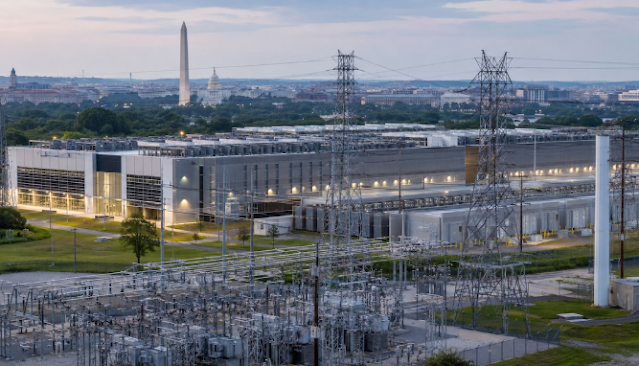
The projected increase is linked to growing constraints on the U.S. data-center electricity grid. As demand for computing capacity rises, access to existing facilities with sufficient power infrastructure can become increasingly valuable. This dynamic has become a widely discussed factor in the U.S. power sector, where grid interconnection queues and lengthy permitting timelines for new large-load connections have made already-powered sites comparatively scarce, and technology companies building out AI infrastructure have shown growing interest in securing such capacity.
Bitcoin mining companies have historically developed large-scale computing facilities and secured substantial amounts of electrical capacity to operate mining equipment. Some of that infrastructure can potentially be adapted for other high-performance computing applications, including AI-related workloads. CoinShares' assessment suggests that the scarcity of available power and suitable data-center infrastructure could increase the economic value of capacity already controlled by listed Bitcoin miners.
Bitcoin Miners Look Beyond Traditional Mining Revenue
The potential shift in revenue composition reflects a broader change in how Bitcoin mining companies can utilize their infrastructure. Bitcoin mining requires significant computing power and electricity, while AI workloads also depend heavily on data-center capacity, reliable power supplies, and specialized computing infrastructure. As a result, facilities built for one type of high-performance computing may offer opportunities for alternative uses where technical and commercial requirements can be met.
The interest in diversification also follows a period of tighter mining economics. Bitcoin's April 2024 halving cut the block subsidy from 6.25 BTC to 3.125 BTC, reducing revenue per block for miners and increasing the appeal of supplementary income streams that are not tied directly to Bitcoin's price or network issuance.
CoinShares estimates that AI-related revenue could rise from roughly 30% to about 70% of listed Bitcoin miners' revenue by the end of the year. The projection comes as U.S. data-center grid constraints become an increasingly important factor in the availability and value of powered infrastructure. Rather than focusing solely on cryptocurrency mining, some companies in the sector are positioned to explore additional revenue streams associated with computing demand.
CoinShares' latest assessment combines continued capital flows into digital asset investment products with changing economics surrounding Bitcoin mining infrastructure. While Bitcoin and Ethereum remained the primary destinations for investment flows during the reported period, the analysis also points to AI-related computing as an increasingly significant component of the business models of listed Bitcoin miners. How quickly grid constraints ease, and whether miners can convert powered capacity into long-term AI contracts on commercially viable terms, will be key factors to watch in assessing whether such projections materialize.
