Major Crypto Advocacy Groups Urge Senate to Pass CLARITY Act, Citing Stakes for XRP and Digital Asset Competitiveness
Key Takeaways
- •The CLARITY Act would establish a digital asset market structure framework and clarify regulatory roles for the SEC and CFTC.
- •The Digital Chamber, the Chamber of Digital Commerce, and the Blockchain Association have jointly urged Senate leaders to advance the legislation.
- •The article says regulatory uncertainty continues to limit institutional participation in crypto markets, including XRP-related activity.
- •Ripple’s ecosystem now includes RLUSD stablecoins, digital asset custody, tokenization, and enterprise blockchain infrastructure beyond cross-border payments.
- •The bill has advanced through the House Financial Services Committee and the House Agriculture Committee with bipartisan support, while Senate action remains the key next step.
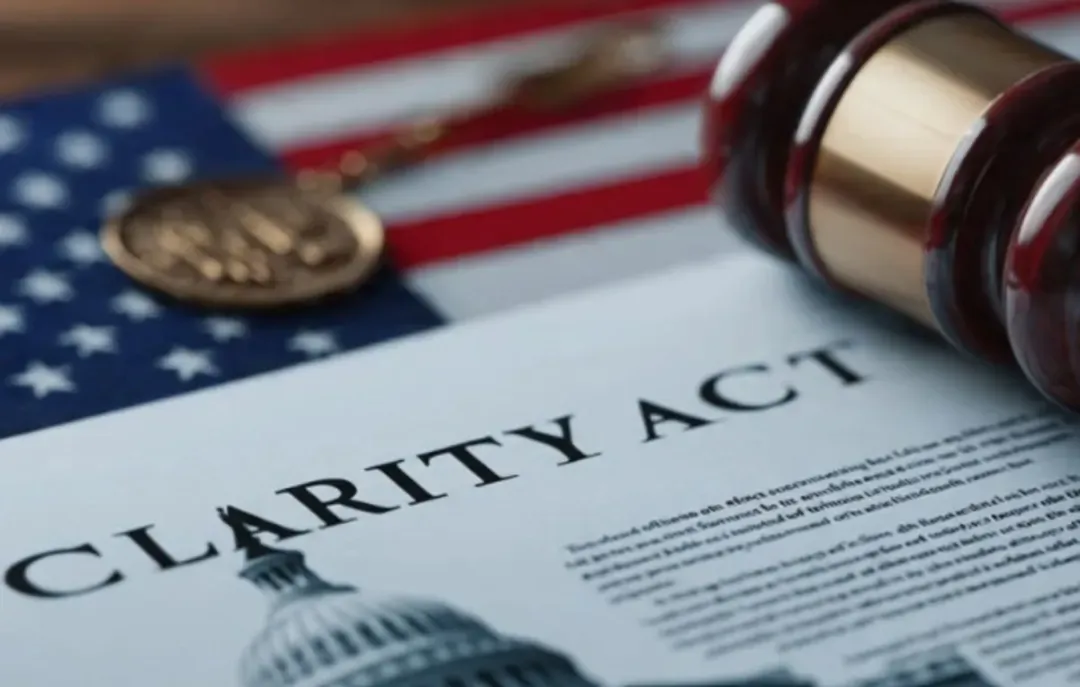
Three of the largest cryptocurrency advocacy organizations in the United States have jointly called on the U.S. Senate to advance the CLARITY Act, legislation that would establish a comprehensive market structure framework for digital assets by clarifying the division of regulatory authority between the SEC and the CFTC.
According to blockchain researcher BankXRP (X post), the Digital Chamber, the Chamber of Digital Commerce, and the Blockchain Association have delivered a unified message to Senate leaders urging passage of the bill. The groups argue that without clear regulatory guidelines, the United States risks ceding its competitive position in digital assets as other jurisdictions move forward with more defined rules. The European Union's Markets in Crypto-Assets (MiCA) regulation, which took full effect in 2024, has already provided crypto businesses operating in the EU with a harmonized compliance framework, while jurisdictions such as Singapore, the United Arab Emirates, and the United Kingdom have also advanced their own digital asset regimes.
Regulatory Clarity and XRP
For XRP, the implications of the legislation are particularly significant. The CLARITY Act seeks to address one of the primary obstacles facing the digital asset: regulatory uncertainty.
Although Ripple has largely concluded its legal proceedings with the U.S. Securities and Exchange Commission (SEC), the broader cryptocurrency market continues to operate without definitive rules delineating when digital assets are classified as securities versus commodities. This ambiguity has kept many institutional investors from participating in the market.
A comprehensive regulatory framework could alter that landscape. Clear rules would provide banks, payment providers, asset managers, and investment firms with greater confidence to develop products and services around XRP, reducing legal exposure and facilitating long-term capital commitments.
Ripple's Expanding Ecosystem
Ripple's business has expanded well beyond its original cross-border payments focus. The company now operates in multiple segments, including stablecoins through RLUSD, digital asset custody, tokenization, and enterprise blockchain infrastructure. Regulatory certainty would enable financial institutions to adopt Ripple's suite of products without concerns about shifting compliance requirements.
The XRP Ledger could benefit as well. Developers and enterprises would be more inclined to launch decentralized finance (DeFi) applications, tokenize real-world assets, and build financial products on a blockchain operating under clear regulations. Increased development activity would likely drive higher network usage, broader utility, and stronger long-term demand for XRP.
Institutional Participation
The legislation could also accelerate institutional involvement in the XRP ecosystem. Exchanges, custodians, brokers, and ETF issuers would gain greater confidence in expanding XRP-related offerings, creating additional pathways for institutional capital to enter the market.
The coordinated push by the Digital Chamber, the Chamber of Digital Commerce, and the Blockchain Association underscores the industry's growing political momentum for comprehensive cryptocurrency regulation in the United States. The CLARITY Act previously advanced through the House Financial Services Committee and the House Agriculture Committee with bipartisan support, but its path through the Senate—where the Banking Committee would play a central role in shaping any companion legislation—remains the key variable for market participants watching whether a final bill can reach the president's desk.
For XRP, the CLARITY Act represents more than a regulatory reform measure. It has the potential to remove one of the remaining barriers to institutional adoption, enabling Ripple's expanding ecosystem and the XRP Ledger's increasing real-world utility to support sustained long-term growth.
Source: Coinpaper

