How Funded Trading Accounts Work for Crypto Traders
Key Takeaways
- •Prop firms typically pay traders between 70% and 80% of profits on funded accounts, with some splits reaching 90% or more through paid add-ons or sustained consistency.
- •Funded accounts use simulated capital that mirrors live markets, but payouts are real and are paid from the firm's own revenue once targets are met.
- •Crypto leverage in funded accounts is far more restricted than forex, with most firms allowing only up to 1:2 and the most generous capping at 1:5.
- •All crypto prop firms offer instruments as CFDs, meaning traders do not own the underlying coins, hold wallets, or settle transactions on a blockchain.
- •Breaching rules such as daily loss limits or maximum drawdowns at the funded stage can close the account immediately and send the trader back to the challenge phase.
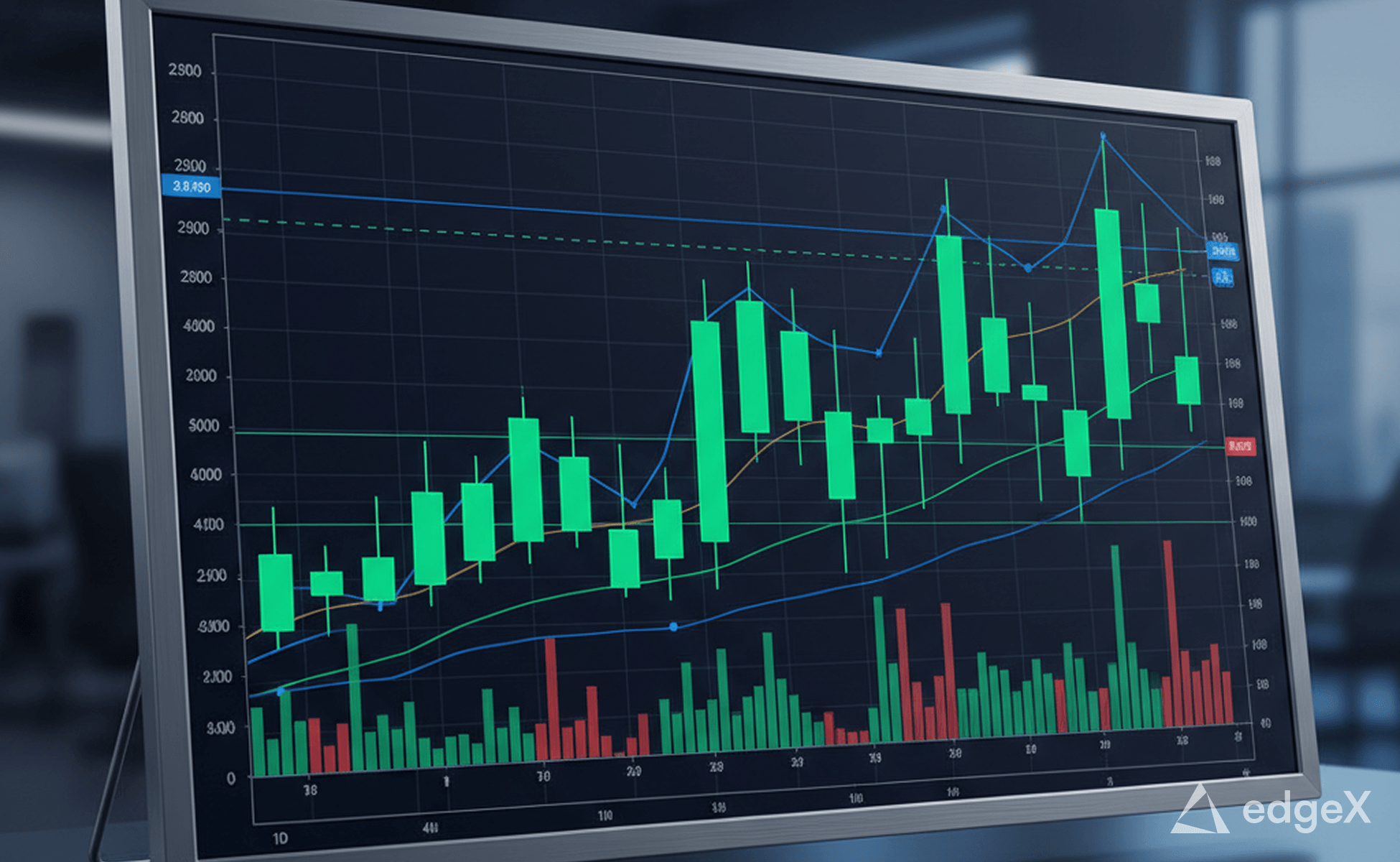
The cryptocurrency market is one of the toughest environments for traders. Unlike traditional financial markets, crypto never sleeps and often experiences very high price volatility. Those conditions can produce traders who can read a chart better than most professionals ever will.
Even so, that skill may be of little use to someone trading with a $500 account. Limited capital can make it difficult to generate returns large enough to justify continuing. Funded trading programs are designed to address that problem.
For crypto traders considering the funded route, this guide explains how qualification works, what happens inside an evaluation challenge, which risk rules determine whether an account succeeds or fails, how proprietary trading firms structure payouts, and how the setup compares with trading crypto from a personal exchange account.
What a Funded Trading Account Actually Is
Funded trading is a structure in which a company provides capital for a trader to use and then shares the profits. The arrangement allows traders to take larger positions because they are working with a bigger pool of capital.
Before granting access to that capital, however, the company — often called a prop firm — first wants to confirm that a trader can produce the results it expects. To do that, firms place prospective traders into a test.
Traders typically pay a fee to enter the test, also called a challenge or evaluation. The central requirement is simple: reach a specified profit target without losing too much money. If the trader passes, the company provides a funded account.
At that point, the money starts to matter. If trades generate gains, the firm may pay the trader a share of those profits. The split can be 75%, often 80%, and in some cases as high as 95% or even 100%. But if the trader breaks any rule at the funded stage, access to the account can be lost and the trader may have to begin again from the challenge phase.
It is also worth noting that the capital in a funded account is usually dummy funds. In other words, the money is not real cash, and the trading environment is simulated. Even so, price feeds and market conditions mirror the live market closely. The payout itself is real: when the trader hits the required targets, the firm pays from its own revenue.
In short, a funded trading account lets traders seek larger returns without risking their own funds.
How Traders Qualify for Funded Capital
Before a prop firm works with a trader, certain requirements must be satisfied. Common examples include completing KYC, which generally requires the trader to be at least 18 years old, and paying an upfront fee to take the test.
Before even paying the entry fee, traders must decide whether they want to take the evaluation route or move directly to a funded account. The direct route may not be available at every firm, but top prop trading firms typically offer instant funding.
Option 1: The evaluation route
The evaluation route is the traditional path. Traders must first pass a challenge and prove they can hit a profit target without violating the rules.
This process is often multi-step, although some firms use a single-phase version. Firms use the evaluation to test a trader’s discipline, risk management, and profitability before granting access to live capital.
A typical firm may divide the process into four phases.
In phase one, the firm checks profitability. The trader must show that they can make money while staying within strict risk boundaries. The test often has no time limit, but it usually requires a minimum number of active trading days.
In phase two, the firm checks consistency. The goal is to show that the Phase 1 result was not simply a lucky trade.
In phase three, the firm conducts identity verification and checks documents such as tax records. Once that is completed, the two parties sign an agreement under which the trader becomes a contractor. The agreement sets out key terms, including the profit split.
The final phase is when the firm provides the login details for the funded account. From that point on, each trade and each dollar earned becomes real money in the trader’s pocket.
Option 2: Instant funding route
Instant funding is an alternative route that is aimed mainly at traders who believe they can produce returns without an extended practice phase. This route skips the first two stages of the evaluation process.
The convenience usually comes at a higher price, because the entry fee is typically higher.
After the fee is paid and identity verification is complete, the prop firm assigns a funded account with predefined risk parameters. Firms apply strict risk-management rules from the first trade because they have not had the chance to test the trader’s skills in advance.
Traders must comply with daily loss limits and maximum drawdown rules. Breaking any of these rules can lead to immediate account closure, with no refund of the setup fee.
The Risk-Management Rules That Decide Pass or Fail
Risk management in funded trading refers to the rules and guidelines a trader must follow when working with a prop firm. Firms create these rules so traders behave in ways the firm considers acceptable. The trader can pursue income through trading, while the firm can be more confident that the trader fits its model.
The most common rules are account-level protection rules. These are financial limits designed to cap how much money a trader can lose before the account is taken away. Firms use them as an automated safety net to protect capital from severe losses. They include:
- Daily loss limits: the maximum amount a trader may lose in a single day.
- Maximum drawdown limits: the total amount the account may decline from its highest peak.
- Trailing drawdowns: a loss limit that rises along with account profits.
Position sizing and trade execution rules
These rules govern how much volume a trader can use and how trades may be entered or exited. They are intended to enforce consistent, professional risk practices rather than gambling behavior. They include:
- Lot size restrictions: limits on the maximum volume or contract size that may be opened at once.
- Stop-loss mandates: requirements that many firms impose to place a protective exit order on every trade.
- Consistency rules: rules that prevent traders from meeting targets through a single lucky trade.
- Risk-to-reward ratios: in some cases, firms require setups where the potential profit is at least double the potential loss.
The third category consists of operational and event risk rules. These are calendar-based or time-based restrictions designed to keep traders away from highly unpredictable market conditions. They protect both the firm and the trader from extreme spikes, platform freezes, and sudden gaps outside normal trading conditions. They include:
- Weekend holding bans: rules requiring traders to close trades before Friday’s market close to avoid weekend gaps. Not all firms use this rule.
- News trading restrictions: bans on trading minutes before and after high-impact news events.
- Inactivity limits: requirements that traders place at least one trade within a certain time period to keep the account active.
Crypto-Specific Considerations Inside a Funded Account
At first glance, crypto trading in a funded account can resemble forex or indices trading, but traders who overlook the differences can learn expensive lessons. As noted earlier, crypto markets are especially volatile, and that affects how firms design their rules.
1. Leverage caps are much lower than in other asset classes
In forex, many instruments offer leverage of 1:20 or 1:30, and some go as high as 1:100. By contrast, most prop firms allow only up to 1:2 for crypto assets, while the most generous may stop at 1:5.
That is not necessarily stinginess. Crypto’s daily price swings are often large enough that high leverage can turn small moves into account-ending losses very quickly. For that reason, firms keep leverage low to protect both their capital and the trader’s capital.
This affects position sizing. For example, a $10,000 account at 1:3 leverage provides $30,000 of buying power, not the $200,000-plus that might be available in forex at higher leverage on the same balance.
2. Crypto markets never close
Forex and asset classes such as stocks have sessions and weekends. Crypto, by contrast, trades every hour of every day.
Because of that, some firms charge overnight funding costs, often called swap fees, on positions held past a daily cutoff. These charges are usually higher for crypto than for forex, and some firms triple them on certain nights to account for weekend exposure.
If a trader’s strategy involves holding positions for several days, those fees can reduce profitability, so they need to be included in advance.
3. You are trading a CFD
A CFD, or Contract for Difference, is a financial contract that allows a trader to speculate on whether an asset’s price will rise or fall without owning the asset itself. Instead of buying the actual asset, the trader enters into an agreement to exchange the cash difference between the opening and closing price.
All crypto prop firms offer instruments as CFDs. That means that when a trader opens a BTCUSD or ETHUSD position in a funded account, they are trading a contract that tracks the coin’s price movement. The trader does not own the underlying asset, does not hold a wallet, and nothing settles on a blockchain.
In practical terms, a crypto-funded account does not mean the firm is buying and holding actual coins for the trader. The price feed tracks spot and futures markets closely enough that profit and loss reflect real market movement, but execution remains entirely within the firm’s platform.
How Payouts Work
When a trader opens the first trade in a funded account and the position performs well, the firm shares the return according to the payout terms in the contract.
That split determines how much of the profit the trader actually receives. Most firms start traders at between 70% and 80%. A firm such as OneFunded sets the default trader share at 80%, with an option to increase it to 90% through a paid add-on.
Some firms offer a fixed split at checkout, meaning the percentage purchased remains in place for the life of that account. Others increase the split gradually as the trader demonstrates consistency over several profitable months.
Payout schedules also vary. One firm may commit to the first payout 15 days after the first trade in the funded account, then move to a twice-monthly schedule. Some firms allow weekly payouts through a paid add-on.
Some companies also refund the evaluation fee once the trader passes and receives the first payout. That bonus usually does not apply if the trader chose instant funding.
Funded Account vs. Trading Crypto on Your Own Exchange Account
The differences between a personal account and a funded program are substantial. Traders comparing the two should look closely at the rules, costs, and risk structure before deciding which route to take.
Preparing Before You Start a Challenge
Understanding how funded trading accounts work is only the first step. Before paying for a first challenge, traders should start by reading the rules. That should happen before even finding the signup button. Traders need to understand the daily loss limit, the drawdown type, the consistency rule, and the list of prohibited strategies. A rule that is only half understood during a challenge is a rule that is likely to be broken.
Next, traders should apply their usual position sizing to the account’s actual numbers. If a trader normally risks 2% per trade on personal capital, they should see what that means against a $2,000 daily loss cap on a $50,000 account, for example. The goal is to avoid breaching the limit on day one.
For traders who choose the evaluation route, a few habits can improve the odds of success:
- Treat the evaluation as a risk test. The firm is not only watching how traders lose, but also how they win.
- Never increase size to recover from a losing day. Revenge trading is one of the fastest ways to break a drawdown limit that a normal day would not have touched.
- Match the account size to fee comfort. A larger account means a larger entry fee, so traders should choose a size they can afford to fail at least once.
- Backtest against the specific rules. A strategy that works on a personal account can still fail a challenge because of how the firm measures drawdown.
If those points are handled correctly, the challenge becomes a test of whether the trader already has the discipline the firm is looking for.

