How macro forces rewrote crypto’s playbook in 2026
Key Takeaways
- •Bitcoin declined 54% from its October 2025 peak near USD 126,000 to a July trough of roughly USD 58,000 and traded below USD 60,000 at the time of writing.
- •Federal Reserve policy and inflation near 3.7%, rather than Bitcoin halving cycles, drove crypto price action in 2026, with Bitcoin tracking U.S. equities, inflation expectations and dollar liquidity.
- •The EU's MiCA regulation entered full force and U.S. GENIUS Act implementation advanced, establishing stablecoin reserve and disclosure standards that encouraged institutions to deploy capital on-chain.
- •Stablecoin market capitalization rose modestly to roughly USD 287-310 billion while adjusted monthly transfer volume surged 41.4% between January and September 2026, and tokenized real-world assets grew 51% to between USD 38.6 billion and USD 39.2 billion.
- •Spot Bitcoin ETFs posted a record USD 5.4 billion in net outflows during the first half of 2026, and cumulative year-to-date net outflows reached USD 1.56 billion as of November 13, 2026.
Crypto’s 2026 performance revealed a sharp divide: token prices suffered a bruising retreat while on-chain settlement infrastructure attracted growing interest from Wall Street. After peaking near USD 126,000 in October 2025, Bitcoin fell 54% to a July trough around USD 58,000. It briefly stabilized between USD 62,000 and USD 65,000 in mid-November before slipping below USD 60,000 at the time of writing.
Total crypto market capitalization remained under pressure between USD 2.1 trillion and USD 2.5 trillion, while sentiment stayed in extreme fear. Even so, the downturn differed from previous crypto winters. Drawdowns exceeded 75% in both 2018 and 2022, whereas losses in 2026 remained shallower as institutional infrastructure expanded beneath the market’s decline.
The developments accelerated crypto’s transition from a relatively independent speculative asset into a regulated asset class integrated with traditional finance, according to Crypto Valley Journal.
From speculation to regulation
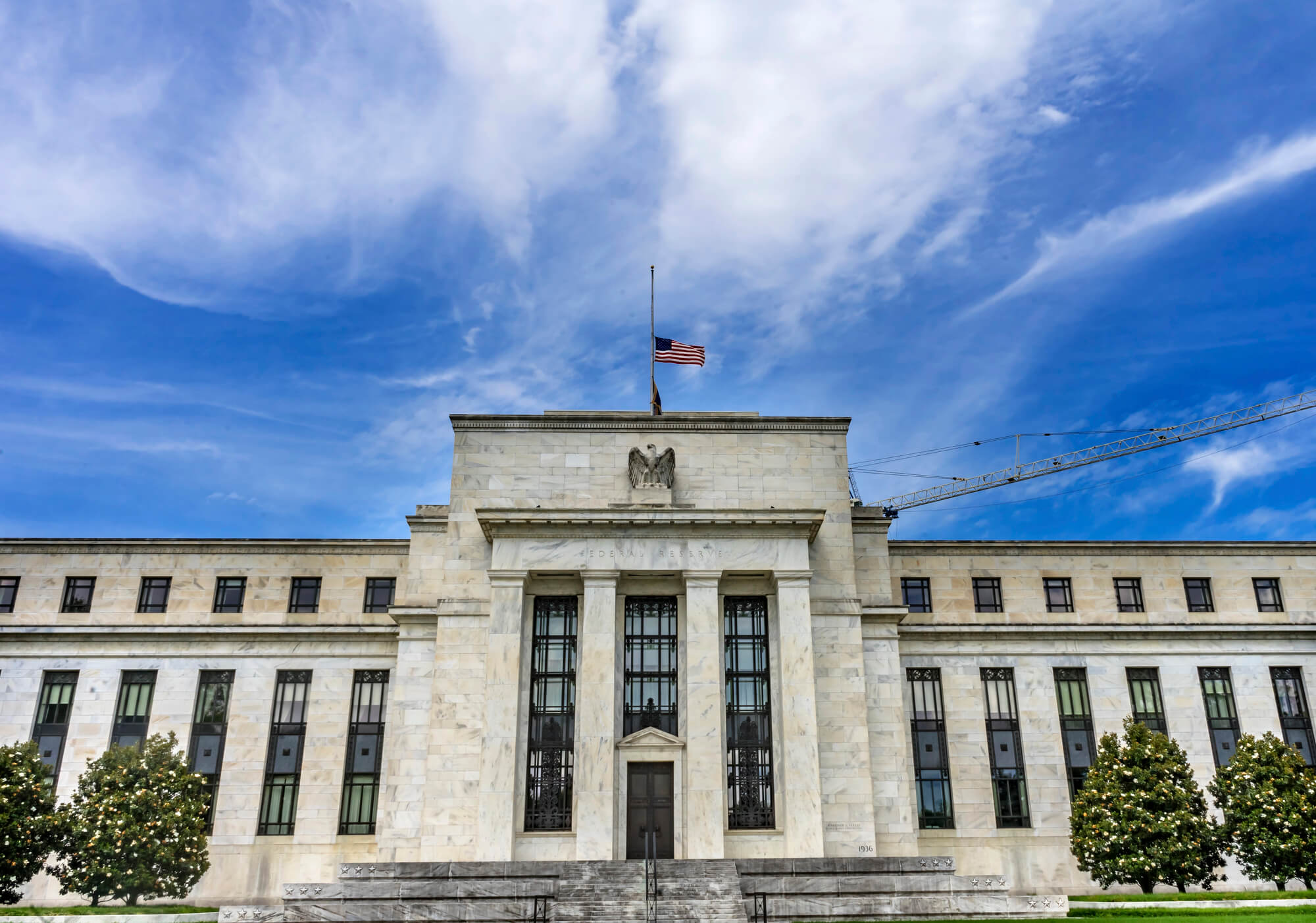
Macroeconomic conditions dictated price action throughout 2026. Four-year Bitcoin halving cycles were no longer treated as a standalone framework for assessing market direction. Instead, attention centered on the Federal Reserve.
Consumer inflation hovered near 3.7%, while 10-year Treasury yields approached 5%. That left Bitcoin competing directly with a risk-free rate approaching 4%. Investment in artificial intelligence supported the broader economy and gave the Federal Reserve room to keep interest rates higher in its effort to combat inflation.
The Fed held rates steady at the end of October while maintaining a hawkish tone. Prediction markets subsequently priced in tighter policy, briefly pushing Bitcoin to an intraday level of USD 65,020 by mid-November. Bitcoin increasingly traded as a high-beta extension of traditional risk assets, tracking U.S. equities, inflation expectations and dollar liquidity closely. For readers tracking prices, that shift meant Federal Reserve meetings and inflation releases carried more signal for crypto than halving schedules did.
Regulators also removed major compliance barriers. The European Union’s Markets in Crypto-Assets Regulation, or MiCA, entered full force, while implementation of the U.S. GENIUS Act advanced. Together, these developments established clear standards for stablecoin reserves and disclosures.
Broader market-structure legislation remained unresolved, but the regulatory clarity around stablecoins gave institutions sufficient confidence to deploy capital on-chain. Spot exchange-traded funds normalized institutional access, while crypto infrastructure expanded beyond trading to serve as a settlement and collateral layer for traditional assets. The progress of that unresolved legislation remained the principal regulatory item for market participants to monitor as institutional participation widened.
Stablecoins and tokenized assets expand
While risk tokens struggled, stablecoins and tokenized real-world assets continued to grow in both scale and usage. Stablecoin market capitalization increased modestly to a range of approximately USD 287 billion to USD 310 billion. Adjusted monthly transfer volume, however, surged 41.4% between January and September 2026.
The increase was driven by higher turnover of existing balances. Asia-Pacific represented 50.8% of tracked payment-corridor volume and relied primarily on U.S.-dollar stablecoins for cross-border payments, remittances and business-to-business settlements. Visa and Mastercard also expanded their stablecoin pilots. For analysts, the divergence between modest supply growth and surging throughput became a key indicator of whether stablecoin adoption was deepening.
Institutions and protocols meanwhile placed idle stablecoins in tokenized U.S. Treasuries to earn yield and settle trades around the clock without leaving the blockchain. The total value of tokenized real-world assets rose 51% to between USD 38.6 billion and USD 39.2 billion.
Tokenized U.S. Treasuries led the market, with USD 14 billion distributed across BlackRock’s BUIDL, Franklin Templeton’s BENJI, Ondo’s USDY and Circle’s USYC. Private credit also continued to expand.
Bitcoin maintains its relative position
Capital largely bypassed altcoins in 2026 and concentrated in Bitcoin. Bitcoin did not take center stage because it attracted massive waves of new capital. Rather, it retained the strongest institutional consensus in a contracting market.
Exchange-traded funds addressed issues involving custody, taxation, brokerage access and private-key management. More favorable U.S. regulation also made Bitcoin the lowest-cost and most liquid digital asset for institutions to hold.
The flow data was more complicated. Spot Bitcoin ETFs recorded a record USD 5.4 billion in net outflows during the first half of 2026. Flows briefly turned positive in late September before reversing into heavy November outflows amid expectations of higher interest rates. As of November 13, 2026, cumulative year-to-date net outflows stood at USD 1.56 billion. Reported daily, these flows functioned as a public barometer of institutional positioning.
Corporate treasury purchases also weakened. Strategy began executing phased sales in late May to cover pressure from preferred-stock dividends. Bitcoin nevertheless retained relative strength because institutions typically sell it last when reducing risk and buy it first when returning to the market.
Crypto fundamentals become more important
High interest rates increased the opportunity cost of holding capital. At the same time, token saturation diluted investor attention, while institutional desks assessed digital assets through stricter valuation frameworks. Speculative narratives consequently collapsed in 2026.
According to DefiLlama, crypto protocols generated approximately USD 11.68 billion in on-chain revenue during the year to date. That figure placed projected full-year revenue near USD 13.9 billion. In place of collapsed speculative narratives, that revenue data offered analysts a fundamentals-based yardstick for comparing protocols’ underlying business performance.
Using revenue for token buybacks became the primary mechanism for linking business performance with token prices. Hyperliquid, for example, directed the bulk of its revenue toward HYPE token buybacks. Revenue generation alone, however, did not automatically increase a token’s price because value-capture mechanisms remained unclear across many protocols.
A traditional, broad-based altcoin season was not expected to reappear in the short to medium term. Instead, future altcoin gains were expected to occur through differentiated, structural rallies in which capital concentrates among the minority of projects with real revenue, clear value capture and institutional access channels.
This article is provided for general informational purposes only and does not constitute investment, legal or financial advice, or an offer or solicitation to buy or sell any financial instruments or digital assets. Any views expressed are based on current market observations and are subject to change. Past performance is not indicative of future results. Digital assets are volatile and may not be suitable for all investors. Readers should conduct their own independent research and seek professional advice before making investment decisions. Restrictions may apply.

