Crusoe Orders 13 Gas Turbines From ProEnergy to Power AI Data Centers
Key Takeaways
- •Crusoe signed a contract with ProEnergy on April 16, 2026, for 13 PE6000 aeroderivative gas turbine generator sets totaling 650 MW of generating capacity for its hyperscale data center projects.
- •The turbines are expected to arrive by summer 2027, far sooner than the six-year average delivery time currently seen for new US gas turbine orders.
- •Each PE6000 unit is rated at 50 MW, is based on the GE CF6-80C2 jet engine core, and offers fast-start capability with the ability to run on multiple fuels.
- •Global turbine orders exceed 100 GW against annual manufacturing capacity of 60-70 GW, and long grid connection delays are driving data center developers to secure on-site generation.
- •Together with a prior GE Vernova order of nearly 1 GW, the deal brings Crusoe's contracted on-site generation to roughly 1.6 GW following its September 2026 cancellation of a $1.25 billion Boom Supersonic turbine order.
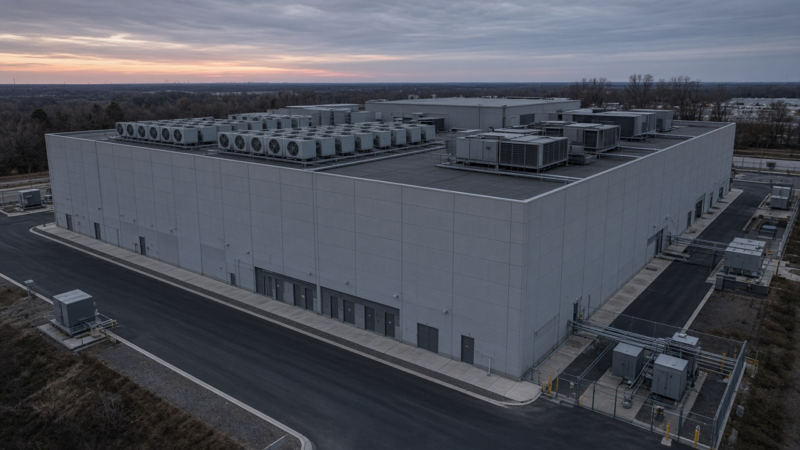
Crusoe, the AI infrastructure company, has signed a contract with ProEnergy for 13 aeroderivative gas turbine generator sets, adding 650 MW of jet engine-derived, on-site power to its upcoming hyperscale data center projects. The agreement was signed on April 16, 2026, and the turbines are expected to arrive by summer 2027.
That timeline is the standout detail in the deal. New US gas turbine orders now take six years on average to deliver, according to one analyst cited by Reuters, which makes a 2027 arrival date the closest thing to express shipping in today's market.
What Crusoe Is Buying
The order covers 13 of ProEnergy's PE6000 units, each rated at 50 MW. Combined, they provide 650 MW of generating capacity destined for facilities that the industry has started calling "AI factories."
The PE6000 is not a conventional power plant turbine. It is built on the GE CF6-80C2 engine core, a jet engine design adapted for life on the ground. The platform offers fast-start capability and can run on several different fuels, which gives operators flexibility when fuel supply or pricing shifts.
ProEnergy plans to put the units through factory testing and quality checks at its facility in Sedalia, Missouri, before they ship.
A Crowded Line for Turbines
Crusoe's order fits into a broader scramble for power equipment. Utilities, developers, and AI companies are hunting worldwide for second-hand gas turbines, according to Reuters. Some are bringing mothballed machines back online, while others are converting retired jet engines into stationary generators.
The supply math explains the urgency. Global turbine orders now top 100 GW, while annual manufacturing capacity sits at 60-70 GW. Demand is outrunning factory output by a wide margin, and the delivery queue keeps growing.
Grid connections offer little relief. Utilities are imposing long waits for new hookups, leaving developers facing multi-year delays before they can draw power from the network. These bottlenecks have pushed data center developers toward securing their own on-site generation.
Crusoe is not alone in going the converted-engine route. xAI has deployed eight similar converted turbines to support its Colossus 2 data center in Mississippi.
Crusoe's Broader Power Playbook
The ProEnergy deal is one piece of a wider power procurement strategy. Crusoe previously placed an order with GE Vernova for about 29 LM2500XPRESS packages, totaling nearly 1 GW of generating capacity. Taken together, the two contracts put roughly 1.6 GW of ordered on-site generation in Crusoe's column.
Not every bet has held. In September 2026, Crusoe canceled a $1.25 billion order with Boom Supersonic for 29 of its Superpower turbines, leaving the ProEnergy and GE Vernova orders as the core of its contracted turbine supply. With factory testing in Sedalia the next step before shipment, the summer 2027 delivery window is the milestone to watch as this capacity moves from contract to the data center floor.

